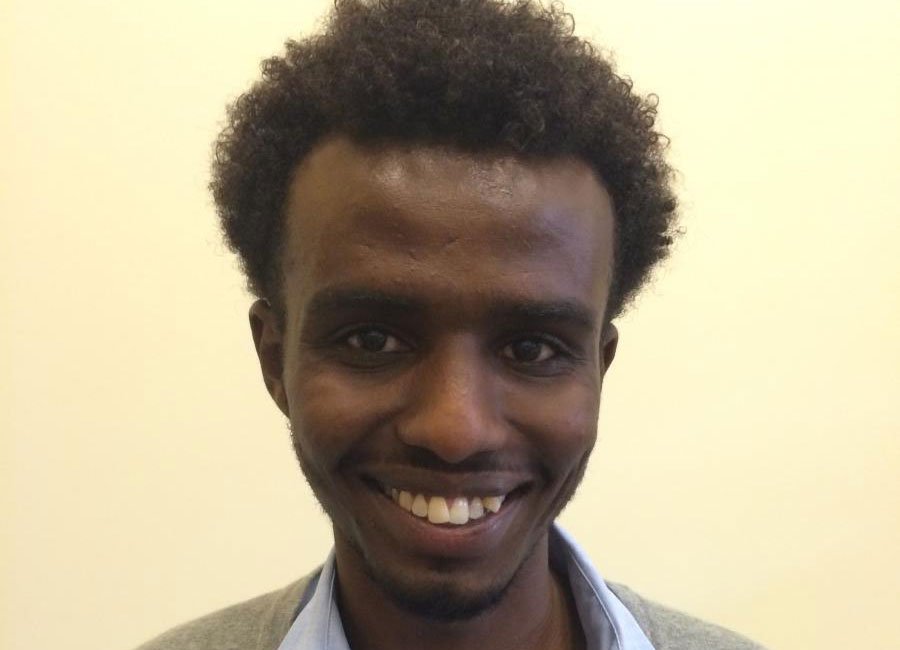
Since the early 1990’s, a thriving community of Minnesota Kurds has grown around the Moorhead area, and today numbers more than 1100. Most of the Minnesota Kurds are from Iraqi KurdistanOn July 3, a group of Minnesota Kurds gathered at the offices of the Kurdish Community of America in Moorhead to talk about their lives in America, their worries for their relatives in Iraq, and their hope for an independent homeland as Iraqi Kurdistan faces attacks from ISIS extremists and deals with the challenges of harboring over a half million war refugees from Iraq and SyriaFor these Minnesota Kurds, their most immediate concerns are for the safety of their relatives back in Iraqi Kurdistan. When ISIS extremists swept across northern Iraq less than a month ago, the Iraqi army crumpled and melted away, leaving the Kurdish Peshmerga army alone to face the ISIS fighters.So far the Peshmerga have held firm against ISIS, but relatives of the Moorhead Kurds talk of ISIS attacks along a 600 mile front every day. All the Moorhead Kurds in the KCA office have relatives serving on the Peshmerga front lines. One relative was wounded in action near Kirkuk, hit in the abdomen by an ISIS sniper’s bullet. Another Minnesota Kurd has a father who is a Peshmerga general, serving near Shingal. She shared her relative’s story about a Sunni sheikh who fled ISIS controlled territory and took refuge behind Peshmerga front lines. ISIS demanded that the Peshmerga turn over the sheikh. When her father and other Kurdish commanders refused, ISIS shelled Peshmerga positions, killing several Kurdish soldiers.Billions of American dollars were spent arming the Iraqi army. Piles of those weapons were abandoned by Iraqi soldiers as they melted away, and relatives are telling the Moorhead Kurds that ISIS is now using this state-of-the-art heavy American weaponry against the often older and lighter arms of the Peshmerga.The Minnesota Kurds also reported that Iraqi Kurdistan has taken in over 500,000 war refugees from both Syria and Iraq. Often the refugees come from religiously and ethnically oppressed communities threatened by extremists with destruction: Christians, Yazidis, Turkmen, Mandeans, and even some of the few Jews left in Iraq have found shelter in Iraqi Kurdistan. Relatives have told the Moorhead Kurds that the refugees are crowded into camps, schools, administrative buildings and shopping centers. Combined with the war raging a short distance away, relatives are telling the Minnesota Kurds that the Iraqi Kurdistan infrastructure is cracking under the stress: often there is no electricity and no running water, gas and other basic needs have tripled in price, gas lines now can be over a mile long, and some basic foods have disappeared.The Moorhead Kurds said that while Iraqi Kurdistan has made great economic progress since the American interventions, the continuous upheavals of rebellions, massacres, suicide bombings, ethnic cleansings and demolitions of mosques and churches in the rest of Iraq threaten to also drag down Iraqi Kurdistan. For many Americans the Iraqi intervention has been a mistake and a disappointment. But The Moorhead Kurds quickly pointed out that in one part of Iraq the American dream of a prosperous, tolerant, peaceful middle eastern democracy has largely been achieved: Iraqi Kurdistan.The Moorhead Kurds said that Iraqi Kurdistan is the one part of Iraq to have used the opportunities provided by the American protection and intervention to build modern institutions and infrastructures: a functioning legislature, free elections, relative peace, and a booming economy with skyscrapers dotting the skyline of Erbil and oil pipelines running from Iraqi Kurdistan through Turkey. The Moorhead Kurds said this was in spite of the antagonism of the Iraqi Maliki government, who earlier this year cut off revenues for Iraqi Kurdistan.The Moorhead Kurds also stressed that The Iraqi Kurds have a secular society: that most are Sunni Moslems, but there are also Kurdish Christians, Yazidis, Shiites, and Jews. They said that what bonds them together is their language and culture, not their religion. The Minnesota Kurds view Iraqi Kurdistan as a Middle East island of toleration, moderation and democracy.Given the unending upheavels engulfing the southern 2/3 of Iraq, the Minnesota Kurds said that the only way to protect this Kurdish success is for Iraqi Kurdistan to break away from the rest of Iraq and become an independent nation.They said that many Minnesota Kurds want to go to Iraqi Kurdistan and help their families in this hour of need and hope. But they also emphasized that they thought the best way for the Minnesota Kurds to help was not to pick up a gun, but to pick up a pen and tell others the story of the Iraqi Kurds, and urge elected officials to support an independent Kurdistan.The Minnesota Kurds in the KCA office also told their own stories of how they ended up in Minnesota. Continue Reading