
Local Jewish author Deborah Jiang Stein explores her troubled beginnings in new memoir
|
It’s not every day you get the opportunity to read a personal memoir written by your next-door neighbor.
Twin Cities Daily Planet (https://www.tcdailyplanet.net/category/books/page/22/)
It’s not every day you get the opportunity to read a personal memoir written by your next-door neighbor.
It’s been such a busy year already, I haven’t had time to take us all on a look back at the year that was for Lao Minnesotan artists and our friends and family in 20 Continue Reading
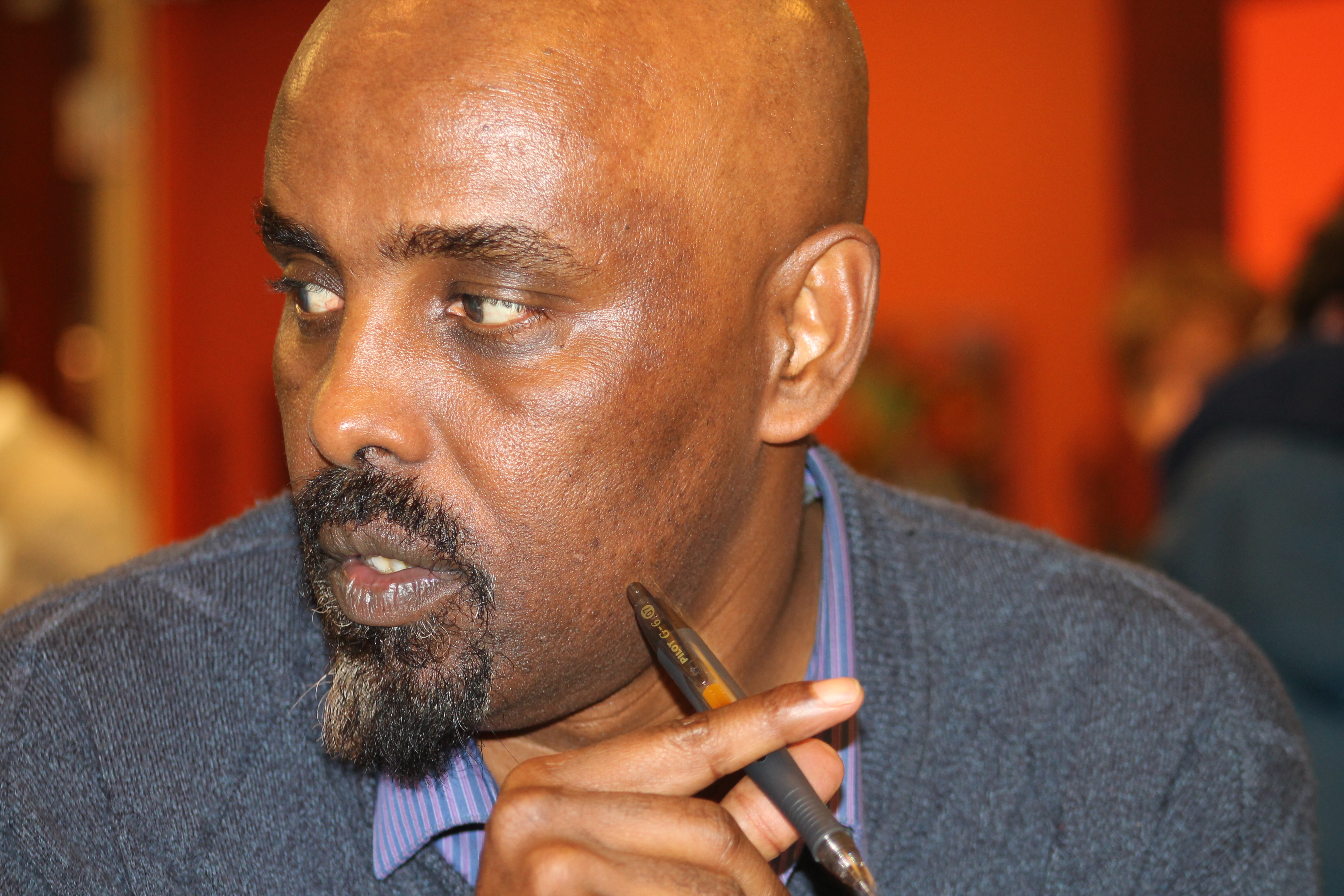
Minnesotans who were curious about what drove the largest concentration of immigrants from the East African country of Somalia to snow-covered Minnesota gathered January 24 at the African Development Center (ADC) in Minneapolis.Nearly 100 people in attendance sought answers from Ahmed Ismail Yusuf, the author of “The People of Minnesota: Somalis in Minnesota,” which is the latest in a book series published by the Minnesota Historical Society Press documenting the lives of Minnesota communities. The series includes titles focused on African-Americans, Hmong, Jews, Ojibwe and Swedes, among others.In partnership with the Minnesota Historical Society, ADC hosted Minnesota communities to celebrate the book’s January release and to join Yusuf for book reading and signing.Three words were an integral part in drawing the community in Minnesota, Yusuf told the audience, consisting of Somalis and Americans. The words are: sahan, meaning pioneer; martisoor, or hospitality; and war, which means news.In early 1991, when Somalis started fleeing from the civil war in their country, they flocked to the United States and scattered throughout the country. At that time, San Diego housed the largest group.Because of the high cost of living in San Diego and the high unemployment at that time, Yusuf said, Somalis had to search for a place where they could find employment for low-skilled workers and save money to support their families at home.One group from San Diego discovered well-paying jobs at a meat and packing company in Marshall, Minnesota. They were hired on the spot. Continue Reading

Yesterday at Mass at Basilica of St. Mary visiting Priest, Fr. Pat Griffin, in his homily, included a snippet of Martin Luther King’s writing: “We are caught in an inescapable network of mutuality, tied in a single garment of destiny. Whatever affects one directly, affects all indirectly….” Continue Reading

This is the final article in a six-part series about the future of the Southeast Library in Minneapolis. Previously, part 5: What does the community need today?The Southeast Library serves diverse neighborhoods that include minorities and international students, says Southeast librarian Eric Heideman.“University students use it a lot,” Heideman said. “It serves a very diverse group, including many different ethnic groups and cultures. There has been an increase in the number of parents with small children in recent years.”Heideman, who began as a children’s librarian in 1998, became head librarian for the building in June 2001. He continues with weekly story time at 10:30 a.m. most Saturdays for families with children ages 2 and above. Continue Reading

This is the fifth article in a six-part series about the future of the Southeast Library in Minneapolis. Previously, part 4: A historic building.Before selecting a location for a new library, Hennepin County commissioner Peter McLaughlin said, “The first-level issue is what kind of library should we actually create. There’s an argument that would suggest that this is not your garden-variety neighborhood library. Of our 41 libraries, should this one be something different because of its proximity to the University of Minnesota?” “We need to explore that question, think about programs and think about what kind of building you need and then you get to the location,” McLaughlin said. “We will get a lot of community input on what it would look like.” Koob said the library has a “community-engagement process” to plan for each library. “We haven’t planned it yet so we don’t know what this will look like,” Kelli Koob, coordinating librarian in the Hennepin County Library’s Capital Projects Office, said. Continue Reading
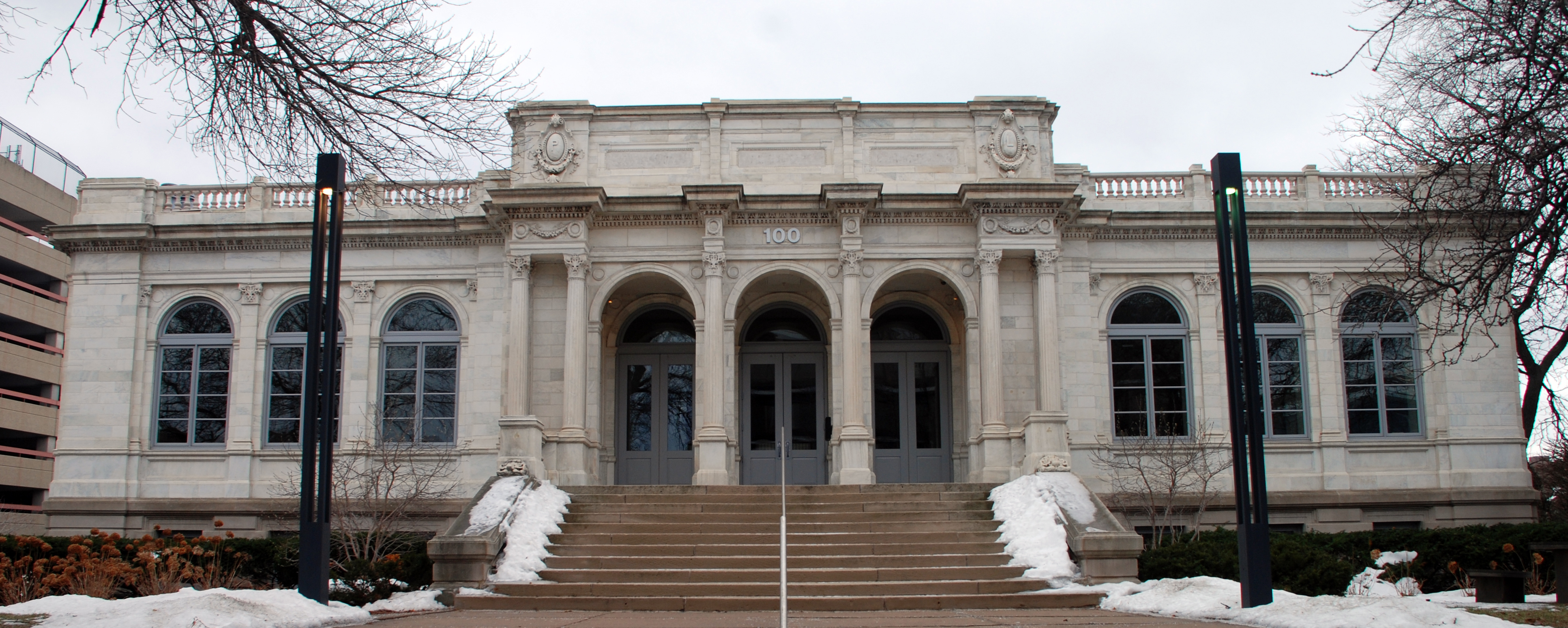
This is the fourth article in a six-part series on the future of the Southeast Library in Minneapolis. Previously, part 3: Marcy-Holmes loves its library.Some neighborhood residents have said they’d like to preserve the Southeast Library building for historic reasons as an example of the late Ralph Rapson’s modern architecture.The Southeast Library building, designed by the late Minneapolis architect Ralph Rapson, opened in 1963 as the University branch of the State Capitol Credit Union, now Affinity Plus. Four years later, the building, an example of modern architecture, became the Southeast Library around Christmas 1967.Between 1904 and 1967, the Southeast Library was in the white marble Pillsbury building at 100 University Ave. S.E. on the corner of University and Central (above). The building houses the Phillips philanthropic foundation. Continue Reading

This is the third article in a six-part series on the future of the Southeast Library in Minneapolis. Previously, part 2: Design library dreams for Prospect Park.The Marcy-Holmes board passed a resolution October 16 calling for keeping the Dinkytown library in their neighborhood because “it has always been an important part of our community and because it is accessible to all the Southeast neighborhoods via public transportation and serves our neighborhood’s 10,000 residents, including students at the University of Minnesota.”The board appointed a Southeast Library Task Force consisting of residents Bean, Kathleen Reilly, Ardes Johnson, Harriet Johnson, and Mary Kay O’Hearn.Jo Radzwill, co-chairwoman of the Marcy-Holmes land use committee, said small neighborhood focus groups consistently show strong use of the library and a demand for more hours.“One student likes the Chinese-lesson videos there,” Radzwill said. “Who knew? One of the sorority house directors said her residents frequently go there to do homework because of the wi-fi access. It is a more central location than the campus library on the West Bank and it’s so close to campus.”“It’s also easy to get to. Continue Reading

This is the second article in a six-part series on the future of the Southeast Library in Minneapolis. Previously, part 1: A part-time library isn’t enough.Some Dinkytown and Marcy-Holmes neighborhood residents fear that Prospect Park will compete for the location of a new Southeast Library, choosing a site that would be less convenient to residents of both Marcy-Holmes and Como neighborhoods.Dick Gilyard, an architect who lives in Prospect Park, presented a slide program last spring that proposed a library at the 29th Avenue light rail station as part of his neighborhood’s plan for the transit corridor along Washington and University avenues. Too late. “That train has already left the station,” McLaughlin said. “The station is under construction, and there is no room for a library.”Gilyard continues to advocate for a new library in the Prospect Park area, but he insists that his plan is separate from the future of the Southeast Library at Dinkytown.“That will be decided by others—the county through its community-engagement process,” he said. “We’re now talking about a different kind of library with a theme-based focus independent of what Hennepin County decides to do with the Southeast Library.”Gilyard said the Textile Center at 3000 University Ave. Continue Reading

This is the first article in a six-part series on the future of the Southeast Library in Minneapolis.Will Southeast Minneapolis ever get a new community library?While some community residents complain that replacing the library at Dinkytown has been repeatedly delayed, county officials say planning for a new building could begin late this year.The library at 1222 Fourth St. S.E. serves University of Minnesota students and residents of four adjacent neighborhoods: Marcy-Holmes, Como, University and Prospect Park/East River Road.The current building is widely perceived to be inadequate, even for a library open only three days a week. (Hours are noon to 8 p.m. on Tuesdays and Thursdays and from 10 a.m. to 6 p.m. on Saturdays.) The building is not accessible for people with disabilities and it lacks parking and necessary interior space.The county’s 2012 Capital Improvement Program stated that the building has 13,000 gross squire feet, of which only 4,700 are usable as library space for staff and customers. The CIP also stated that planning for a new building should have begun in 2011. “Since Hennepin County took it over, Southeast keeps moving to the bottom of the list for a new library,” said Melissa Bean, executive director of the Marcy-Holmes Neighborhood Association. Kelli Koob, coordinating librarian in the Hennepin County Library’s Capital Projects Office, will be the project manager for a new Southeast Library.“The Southeast Library has changed its timeline a number of times,” Koob said. “All of our projects have done. Continue Reading