Kindergarten teacher David Boucher wants time to play. “I would like to see more recess because studies show that more play time makes kids more attentive. It is hard for them to stay focused without play or movement. In fact, it leads to more behavior problems.”
“We have a national curriculum; we just don’t want to admit it,” said Southwest High Principal Bill Smith, describing the way that Focused Instruction fits in the larger picture of curriculum. Minneapolis Public Schools (MPS) have mandated Focused Instruction for all schools and teachers, and opinions about the usefulness of this initiative vary widely.
“Science teachers like things numbered, sequenced, and bullet-pointed,” said science teacher Michael O’Connor. “I can see why English or social studies teachers might not like this approach, though.”
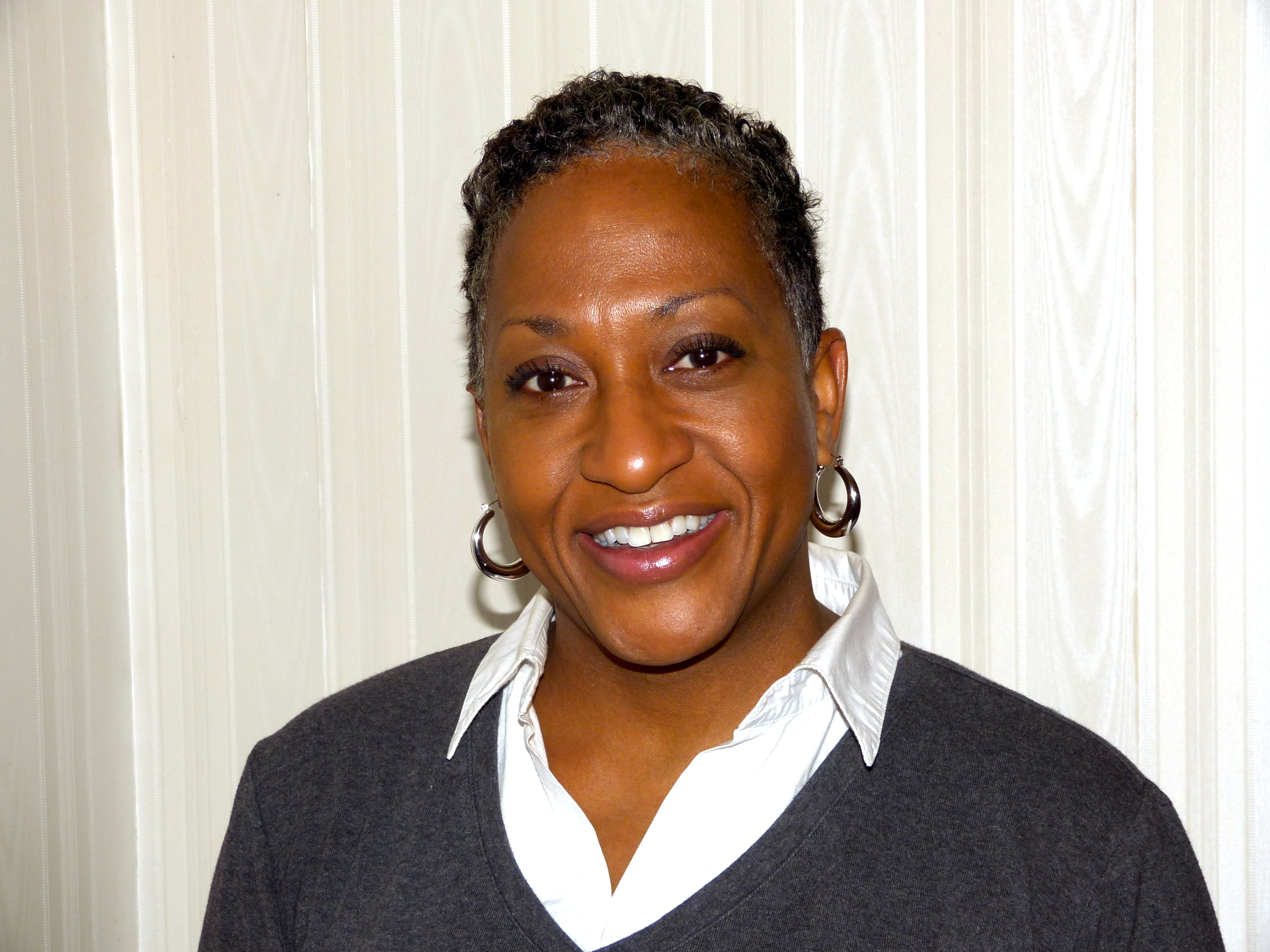
Minneapolis Public Schools teacher Pia Payne-Shannon works at Nellie Stone Johnson Elementary School in north Minneapolis, where she teaches English Language Arts classes to 6th and 7th graders. Recently, I spoke with her about the impact of the Minneapolis Public School district’s implementation of Focused Instruction on her classroom.Can you tell me what Focused Instruction is?Focused Instruction, in my opinion, is an attempt to implement a one-size fits all, standardized curriculum across the district. It is also being promoted as a scripted curriculum in which novice teachers, with no classroom or curriculum experience, can come in and teach units without any prior knowledge. It is a form of test prep curriculum with very little creativity.Why haven’t you participated in making Focused Instruction materials?Before Focused Instruction came around, teachers worked collaboratively, by grade level, on planning for their classes. We shared assignments and created model units and lesson plans. Continue Reading
If the full implementation of “Focused Instruction” is a priority for the Minneapolis Public Schools (MPS), according to Superintendent Bernadeia Johnson, what does this mean for a Minneapolis public school teacher?Roosevelt High School teacher Jill Jacobson, who has been a social studies teacher in Minneapolis for eighteen years, was a member of the three person team who wrote lesson plans and tests for the district’s secondary world history teachers.For Jacobson, agreeing to be part of the team creating Focused Instruction materials was an attempt to have greater control over what shape the materials would take. Prior to Focused Instruction, Jacobson says that history teachers have “always followed Minnesota state standards,” but teachers have “always known that you can’t teach them all” in one year. State standards were seen by teachers more as an “umbrella,” with benchmark points being used by teachers as different ways to ensure the standards were being met. Being able to choose different areas or benchmarks to focus on meant teachers could “build classes around a focus, and a teacher’s strengths.”With Focused Instruction, however, Jacobson says all of the benchmark points for the state standards are now required. For her, this taps into a debate about how history classes should be taught: Is it better to “dip in and do a survey course,” which is the approach Jacobson sees with Focused Instruction, or is it better, in the age of information, for a teacher to encourage more “depth and critical thinking” by concentrating on key aspects of a topic?According to MPS, Focused Instruction is a standards-based approach to teaching, and one of the district’s “key strategies for raising the achievement of all students, closing the achievement gap and preparing students for college and careers.” A hallmark of Focused Instruction is the way it provides lesson plans, learning targets (what students should know by the end of a unit), curriculum units, and end-of-unit benchmark tests to classroom teachers.Read more articles at Focus on Teaching — and tell us about your experience, with an email to editor@tcdailyplanet.net.This debate has been continued, for Jacobson, with the district’s approach to benchmark assessments for high school social studies classes. Continue Reading
Does “Focused Instruction” threaten the diversity of programs and learning options in Minneapolis Public Schools? Or is it a necessary tool in attacking the achievement gap? Will it help students by standardizing curriculum and instruction across schools? Or will it handicap them by making it harder for teachers to focus on specific needs of students in their classrooms?From Anishinabe Academy, an elementary school with a Native American focus, to dual immersion schools, Open schools, and traditional community schools, the list of unique program options within the Minneapolis Public Schools (MPS) is a long one. While all MPS schools must meet the Minnesota state standards in education, they have used diverse methods to impart those standards to their students.Now MPS is implementing Focused Instruction, a set of guidelines prescribing what to teach, how to teach it, how and when to test students, and what to test them on. Continue Reading
Milken Educator Award winner Natalie Rasmussen taught at Minneapolis North High for 20 years, including the Summatech years. In 2010, Rasmussen took a new job at the Blake School, as chair of its PreK-12 science department.
“They drown-proofed us repeatedly.”For Minneapolis North High School graduate Dr. Ronda Chakolis, learning how not to drown in deep water, literally, was an important part of the North High magnet program, called Summatech, that she attended. Chakolis remembers being taken to the pool at nearby Franklin Middle School and getting tipped over in a canoe, in an exercise designed to teach students to survive a potential drowning.In a less literal sense, Chakolis remembers her whole high school experience in the Summatech program as being about “drown-proofing.” Summatech, which was prominent at North High in the 1980s and ‘90s, was built around a hands-on math, science, and technology curriculum. For Chakolis, who was always interested in these subjects, attending Summatech also meant learning not to drown by being immersed in the real-world coursework of scientists and academics, and learning how to succeed.Dr. Rhonda Chakolis Today, Chakolis is a pharmacist in Minneapolis, and she is part of a group of Summatech graduates who would like to see the program restored to North High, as part of the school district’s Five-Year Enrollment Plan. For Chakolis, one key aspect of Summatech was the way the teachers, especially the three African American women in the program who were science teachers, taught science-based protocols to their students. For example, Chakolis says she was taught dissection, how to properly dispose of materials, and how to use chemical equations, which are the kind of practical skills and knowledge she still uses today in her work. Peter Jirak Her fellow North High graduate, Peter Jirak, also vividly remembers his time in the Summatech program. Continue Reading
Sore subjects abounded at a November 20 “listening session” at Washburn High School in Minneapolis. Beginning with an apology letter from school board member Carla Bates, the meeting addressed the proposed $40 million expansion of Southwest High, as well as questions of overcrowded classrooms, school choice vs. community schools, and gifted and talented programs. The meeting, led by Minneapolis Public Schools (MPS) Associate Superintendent Cecillia Sadler, was held to inform the Area C community of southwest Minneapolis about the school district’s latest Five Year Enrollment Plan ideas. For related stories on Five Year Enrollment Plan, click here.The first issue emerged before the meeting started, when participants arrived at Washburn to find an unsigned letter placed on seats in the school’s auditorium. It was soon evident that the letter was from school board member Carla Bates, who was not in attendance. The letter addressed controversial remarks she had made at the November 12 school board meeting, when she said she made a “misstatement” when questioning the district’s plan to spend $40 million to add on to the over-crowded Southwest High School.At the school board meeting, Bates asked why the district would invest such money in Southwest, saying, “the most important kids we want to invest in are not even there.” This statement rippled through the Southwest community and Bates wrote the letter to “apologize for speaking so poorly,” because she believes “all of our kids are ‘the most important kids.’”What she intended to say, according to her letter, is that she believes investing heavily in adding on to Southwest is short-sighted for these main reasons: Washburn has more room for additional space, Roosevelt High School is gaining steam as a strong high school option, and her view that investing more in “high tech, individualized learning models” throughout the city makes sense.Some parents in attendance seemed to agree with Bates that adding on to Southwest was a short-term solution at best, since the school is already over-crowded, and more space is needed for the students who are there now, let alone those who are part of the expected enrollment growth in Area C.However, Area C parent Blaire Hartley was not sold on the idea that online learning options will help ease overcrowding at Southwest. Continue Reading