
OPINION | Invisible solution for costly problem

Farmers in West Central Minnesota will soon be confronted with challenges of how best to bring an entrepreneurial product to market, ignite economic development somewhere in Swift County or nearby, and, if past value-added processing history is repeated, add value to area farmers’ soybean crops.This represents all that is well with entrepreneurship and ground up economic development that utilizes Minnesota scientists’ talents and rural Minnesota resources. If successful, the result will be new high-tech products that also benefit humanity worldwide. The idea starts with two managers of the Glacial Plains Cooperative at Murdock who knew there had to be better, and greener ways, to store grain outside during and after harvests when production overwhelms storage capacity at country elevators and processing plants. With an idea in hand, Glacial Plains general manager Tom Traen and operations manager Doug Kavanaugh sought help from the Agricultural Utilization and Research Institute (AURI), the state agency created to encourage innovation and entrepreneurs.As travelers across rural Minnesota in the fall might suspect, losses occur to the piles of corn or other crops left outside unless they are covered by tarp or great sheets of plastic. This gets expensive; by some accounts, country elevators pay up to $50,000 for tarps to cover the outdoor storage.This is where Glacial Plains managers and publicly supported scientists at AURI make a good fit.Kavanaugh and Traen contacted AURI with the idea that there ought to be a farm-commodity, bio-based spray to cover the piles of grain, preserve them from rain and moisture and not harm the nutritional value of the grains.AURI chemists went to work on the idea at the agency’s labs at Southwest Minnesota State University at Marshall. A couple of formulae using soybean ingredients were tried and tested; a third formula seems to have hit the mark.A larger test is being planned this fall. Continue Reading

OPINION | Three reasons for slow recovery

As October was coming to a close, the U.S. Commerce Department presented the strongest findings yet that an economic recovery is underway by noting that the Gross Domestic Product (GDP) grew by 2.5 percent from July through September.Leading economists insist that is the rate of growth needed on an annualized basis to start cutting America’s unemployment. Unfortunately, the rate of growth was only 0.9 percent in the first half of this year.So, based on the numbers, how long before Minnesotans can start singing “Happy Days are Here Again”?Without being a spoilsport, Minnesota 2020 will only say there is reason for cautious optimism. The economy is growing. But we haven’t overcome three underlying problems that have held back the national and regional economies since the Great Recession ended in June 2009.First, we are a nation of consumers and that includes a highly productive Minnesota. Personal and household consumption of goods and services account for 70 percent of U.S. GDP. Continue Reading

Two sides on every coin

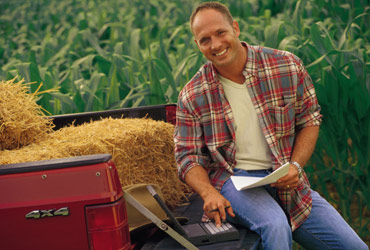
Minnesota farmers have nearly completed the fall harvest and the vast majority can declare victory, “mission accomplished,” or make some similar pronouncement to mark the end of a successful growing season.

Continue Reading

OPINION | Current policy won’t feed 7 billion

How much food do we throw away in this country?It’s a question veteran agricultural consultant and writer Jim Ruen recenly asked.He’s not just talking about food wasted from inefficient households, or from institutional and food industry feeding operations. Rather, what’s caught his attention is the steady stream of food recalls for food safety reasons that pull enormous quantities of food out of the supply chain.As recently as last week, several thousand cartons of eggs from a southern Minnesota farm had been recalled.  This is on top of October’s national recalls. USDA’s Food Safety and Inspection Service (FSIS) announced the recall of 377,775 pounds of ground beef from a Los Angeles meat company, 875 pounds of center cut steaks from an Oklahoma City meat company, 15,760 pounds of frozen chicken and steak fajita products from a Boulder, Colo., firm, and an undetermined amount of ready-to-eat, seasoned beef and shredded pork products from an Ohio company.These recalls came on the heels of a massive, multi-state recall of fresh cantaloupe that had consumers shying away from produce departments in grocery stores. That brought back memories of an earlier scare that nearly toppled the American apple industry in some states.A joint journalism project between MSNBC.com and the Carnegie-Knight News21 program on food safety noted that 48 million cases of forborne illnesses are recorded in America each year, of which 128,000 require hospitalization and from which 3,000 people die.USDA personnel have responsibilities at most domestic food processing plants where products enter interstate commerce. Continue Reading

OPINION | Business tools for wealth sharing

Two new business models gaining attraction and approval in legislatures nationwide hold promise for start-up companies and entrepreneurs.One is called a Benefits Corporation or B Corp, “which uses the power of business to solve social and environmental problems,” according to B Corp advocacy site B Lab. B Corps are different from traditional businesses because they:“Meet comprehensive and transparent social and environmental performance standards;“Meet higher legal accountability standards;“Build business constituency for good business.”This is community development that not only helps create jobs but encourages sustainable businesses. California has become the latest state to enact a law allowing B Corps.Another business model growing in popularity is L3C, a variant form of limited liability companies for charitable operations seeking to turn a small profit.“Minnesota should adapt both the B Corps and L3Cs to fit its needs,” said Bob Lang, creator of the L3C and founder of Americans for Community Development, group promoting the model. Moreover, he said, both new models would fit with Minnesota’s huge cooperative business infrastructure that also embraces social responsibilities.B Corps give companies protection to spell out social, community and environmental objectives for the companies’ operations and not simply focus on maximizing profits for shareholders.The new California law will allow companies greater access to social impact and venture capital investments, protect directors and officers from investor law suits for considering social goals, and validate social and environmental responsibility objectives for new companies, according to a Los Angeles Times blog post.This builds on an argument from Jay Coen Gilbert, a co-founder of the B Lab nonprofit in Philadelphia, in which he noted that California and most states don’t offer legal protection for companies to consider “non-financial factors” in business decisions.L3Cs combine the interests of nonprofit and for-profit entities. Nonprofit groups can invest in such ventures for helping and promoting social and community benefits that will be derived from successful operations.Such new ventures appeal to foundations that want to assist a community or group launch a new business, nonprofit organizations that seek the same objectives, and nontraditional, for-profit investors who are driven to invest for social impact as well as returns on equity.In many ways, both new business models would make companion business tools alongside Minnesota’s 308B cooperative law.In a recent interview, Lang said it troubles him to watch communities compete with each other to subsidize business movement and new plants only to have the company lay off workers, board up factories and offices, and move jobs and economic activity offshore within a few years.This is a waste of business venture capital and doesn’t lead to “good jobs” or “sustainable jobs” under any definitions, he said.Along that line, 2020 has repeatedly argued that an “economic recovery,” as most everyone wishes for now and the more politically callous hope for after the 2012 elections, won’t be a mere economic restoration. Continue Reading

OPINION | Farmers, 1099ers and multiplier effects

Dave Jensen is a small town entrepreneur who sees first hand what economists call the “multiplier effect.” Strong farm incomes are carrying the rural Minnesota economy right now as farm families make home improvements and buy equipment and other farm and household products and services.That has led to nine major remodeling jobs this fall for Jensen and his woodworking employees at Valley Woods in Wendell.“It’s the multiplier,” he said at a recent dinner gathering in a reopened restaurant in Elbow Lake. “Agriculture is driving it.”But that’s not all that is apparent as rural Minnesota flirts with an economic rebound. A new rural economic structure is emerging that will outlast the up and down cycles of the agricultural related economy.People finding work these days are likely to be independent contractors, or “free lancers.”  They work on projects without paid health care benefits or retirement plans. These are “self-employed” who use the 1099 tax forms, not employees who receive W-2 forms.Don Lottman, a carpenter in the Kerkhoven-Sunburg area, said skilled people can “find work” anywhere in the west-central Minnesota area right now. Most of it is ag related, he said, and most of it is for independent workers, or the “1099ers” as they are called, and not as full-time employees.This is known as the “1099 trend,” said Ben Winchester, a rural sociologist and demographer for the Minnesota Extension Service.Extension Service experts in Illinois and North Dakota have conferences planned this fall that will look at problems the 1099 trend may be causing families as well as opportunities it may be opening for prospective entrepreneurs. Continue Reading