As lawmakers haggle over food-aid cuts, some numbers to consider

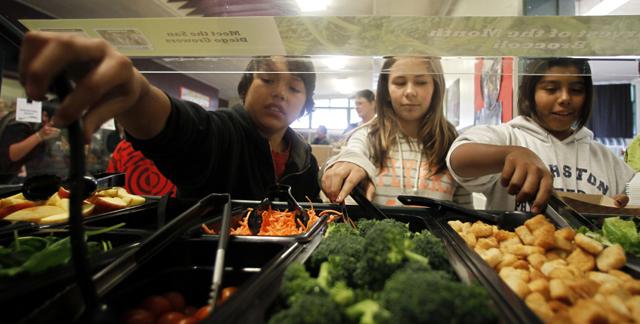
As you sit down to soup or salad or a sandwich for lunch today, consider this:The House Agriculture Committee in Congress is haggling over a proposal that would eliminate food assistance for up to 2 million to 3 million Americans and take food off the school lunch table for 280,000 children from low-income families, according to the Center on Budget and Policy Priorities.Advocates for the needy in Minnesota are carefully following – and anxiously awaiting – action by lawmakers. There’s a long, steep row to hoe before this measure could become law, but let’s take a peek at a couple of what-if effects.In black-and-white terms, if these kids don’t get breakfast and lunch at school, and their parents can’t afford to provide those meals, these children will lack the energy to pay attention and to learn. Further, an under-nourished child suffers long-term developmental, health and academic effects. Just ask experts at the Children’s Defense Fund Minnesota.Community Sketchbook focuses on the economic and social challenges facing communities, especially low-income communities and communities of color, and how people are trying to address them.It is made possible by support from the John S. and James L. Knight Foundation, The Minneapolis Foundation, and some Minneapolis Foundation donor advisors.Community Sketchbook articles may be republished or distributed, in print or online, with credit to MinnPost and the foundations.The current proposal, called the Federal Agriculture Reform and Risk Management Act (also known as the FAARM Act), focuses almost 80 percent of its spending on the Supplemental Nutrition Assistance Program (SNAP), frequently called food stamps, as well as other nutrition programs. Such programs aid the poor, which, the federal government defines as a family of four making an annual income of $23,050 or less.As presented, cuts from SNAP would eliminate $16.5 billion in spending over the next decade.The center’s bloggers, however, present this contrarian point of view:“Contrary to proponents’ claim that the bill’s SNAP cuts are needed to rein in program growth, CBO [Congressional Budget Office] has found that SNAP’s expansion in recent years primarily reflected the severe recession and that SNAP spending will fall significantly as the economy recovers. CBO projects that the share of the population that participates in SNAP will fall back to 2008 levels in coming years and that SNAP costs as a share of the economy will fall back to their 1995 level by 2019.”The center, by the way, describes itself as non-partisan, and makes a practice of researching and analyzing federal and state budgets and policies and their affect on low and moderate-income Americans.Change the lens to focus on Minnesota, where the number of students receiving free or reduced price lunch through the national School Lunch program has risen, from 30.4 percent in school year 2005-2006, to 37.3 percent last year, according to the State Department of Education and reported in The Minnesota 2020 blog.Here more than 15 percent of youngsters live at or below the poverty line, with a disproportionate number of those children in low-income families being children of color. Continue Reading
Rhode Island adopts ‘homeless bill of rights’: Do we need one?

Some believe the homeless deserve special protection, in fact their own bill of rights.Or so legislators and the governor of Rhode Island seem to think since the state last week celebrated the recent passage and signing of their own bill of rights for homeless persons, with some calling it a national model and the most comprehensive piece of legislation involving the homeless in the United States.The Rhode Island law is designed to “affirm” the rights of the homeless and prevent discrimination against them at a time when cities, including Philadelphia, San Francisco and St. Louis, have passed ordinances targeting the homeless or beefed up existing regulations.Community Sketchbook focuses on the economic and social challenges facing communities, especially low-income communities and communities of color, and how people are trying to address them.It is made possible by support from the John S. and James L. Knight Foundation, The Minneapolis Foundation, and some Minneapolis Foundation donor advisors.Community Sketchbook articles may be republished or distributed, in print or online, with credit to MinnPost and the foundations.As for Minnesota, we tend to take a different approach here, says Kenza Hadj-Moussa of the Minnesota Coalition for the Homeless, an umbrella group of 150 member organizations around the state.Simply put, local advocates for the homeless say, their goal is to house away rather than arrest away the problem, to solve it rather than “criminalize” homelessness.“Our focus is housing stability rather than passing a human rights law,’’ Hadj-Moussa says, though agreeing there should be no discrimination against people in homelessness.Homelessness tends to be criminalized at the local level when there are not enough social services available, argues Hadj-Moussa, the coalition’s communications director, stepping in to speak on behalf of the agency’s vacationing executive director.Here, cities and counties, particularly Minneapolis and Hennepin, house and help people rather than “criminalize” them, as advocates for the homeless call the trend toward policing the objectionable behavior of some homeless people.Getting people into housing restores their dignity, Hadj-Moussa (pictured, right) says. People can’t very easily address secondary needs like job training or meeting mental health needs without stable housing, she says.The Rhode Island law makes illegal unfair treatment of people because of their homeless status and includes the actions of police, health-care workers, landlords and employersMinnesota, because of its network of social service agencies and the fact that every county as well as the state have plans to end homelessness, already has in place safeguards for securing equal rights for the homeless, Hadj-Moussa says.Take Minneapolis, for example. If there’s a problem with untoward behavior of a homeless person — say someone brushing their teeth in the Convention Center bathroom or urinating in the street — says Hadj-Moussa, Minneapolis police can directly contact workers with St. Stephen’s Human Services Outreach Team to step in to address the problem. Continue Reading

Do you have an idea about how to reduce poverty?

Larry Jacobs: the University of Minnesota political science professor is a household word in political circles and among members of the media, who know he’s the go-to guy for in-depth analysis or the pithy quote on presidential and legislative politics and a variety of other topics.But, until now, I didn’t think poverty was necessarily one of those other topics.Now Jacobs is helping launch and spotlight the Ideas for Action Award, a competition sponsored by the Northwest Area Foundation and aimed at uncovering and furthering ways to reduce poverty long term.Community Sketchbook focuses on the economic and social challenges facing communities, especially low-income communities and communities of color, and how people are trying to address them.It is made possible by support from the John S. and James L. Knight Foundation, The Minneapolis Foundation, and some Minneapolis Foundation donor advisors.Community Sketchbook articles may be republished or distributed, in print or online, with credit to MinnPost and the foundations.Why now? “…We have a record number of poor and shocking silence about their plight…,” Jacobs told me, and “you’d have to search far and wide to find any discussion of poverty of a serious sort among presidential candidates. ’’That’s got to change, he implies.I pulled out the numbers. Officially 46.2 million Americans – 15.1 percent– qualify as poor, according to the U.S. Census accounts.In Minnesota, that figures at almost 11 percent – more than half a million people – who are officially poor.In case you don’t know, the federal government has set $23,050 as the 2012 poverty guideline for a family of four. Poverty takes a high toll among Minnesota’s African-Americans and American Indians, where the poverty rate exceeds 1 in 3.The goal of the competition, according to a University of Minnesota news release that seems to be written in that language unique to academia, is: “to instigate examination, discussion, evolution of practical ideas and eventually, implementation of policies that will help reduce poverty and build sustainable prosperity.’’More simply, Jacobs calls for “new thinking and renewed attention on what is working to create opportunities for those of low income.”And he urges action, as the deadline is June 29.“Send us a letter, a short letter. Continue Reading

Higher Ground: An innovative approach to fight homelessness

Enter, stage left.

On my way recently to tour Higher Ground, a new and multi-dimensional effort to move the chronic homeless and the working poor off Minneapolis streets into housing, I sat patiently at a green light, waiting while a weary, graying African-American man pushed a shopping cart heaped with all his worldly goods across the avenue.

Continue Reading

Report reveals stress and racial disparities of ‘kinship care’

About 21,000 – that’s 2 percent of all of Minnesota’s children — are being raised by grandparents, other relatives or close family friends, rather than strangers. And that can be a good thing.But what people at Children’s Defense Fund-Minnesota and a new report reveal as concerning are not only increasing numbers but also the financial, emotional and legal challenges these caregivers face. In addition, there are racial disparities.Their plea for more attention and more support for these families and their children comes in connection with a new Kids Count report from the Annie E. Casey Foundation showing that more than 2.7 million children in America fall into this practice called kinship care.Community Sketchbook focuses on the economic and social challenges facing communities, especially low-income communities and communities of color, and how people are trying to address them. It is made possible by support from the John S. and James L. Knight Foundation, The Minneapolis Foundation, and some Minneapolis Foundation donor advisors.Community Sketchbook articles may be republished or distributed, in print or online, with credit to MinnPost and the foundations.“These children ultimately will do better if their kin are not stressed in caring for them,’’ says Marcie Jefferys, public policy director for Children’s Defense Fund- Minnesota.She says such support for these families could include counseling and respite services, as well as assistance in obtaining guardianship.The report is “Stepping Up for Kids: What Government and Communities Should Do to Support Kinship Families.”Nationally over the past decade there has been an 18 percent increase in children living with relatives or close family friends because parents are unable to care for them.The report indicates a disturbing prevalence of such child-rearing situations among African-American families, where children are about twice as likely as the general population to be live with extended family or close friends at some time in their lives.In addition, the study cites U.S. Census data showing these kinship caregivers are “more likely to be poor, single, older, less-educated and unemployed,” thus more likely to struggle with the costs associated with child care and health insurance, according to the study.(Source: ‘Kids Count’ by the Annie E. Casey Foundation)Besides having problems accessing or not being aware they are eligible for such programs as Temporary Assistance for Needy Families (TANF), the caregivers are dealing with child trauma from parental separation and sometimes legal challenges because parents have not afforded them legal custody of their children, according to the study.Reasons behind the care giving being done outside the traditional mother-father situation, include death, child abuse or neglect, military deployment, incarceration or deportation. Continue Reading

Online and social-media charity contests raise money — and questions

Nonprofits are always trolling for new ways to raise funds, and never more so than in uncertain economic times. One of the newer approaches involves social media and online voting.Call it pick and click.Here’s how it usually works: The charity or nonprofit asks supporters to go to a particular company or product website or to Twitter or Facebook (or all three) and to vote for their cause. The cause with the most votes walks away with a major prize, often significant dollars.Yet cynics ask: Who benefits most from such a strategy — the non-profit or the corporation behind the give-away?A vote click is an uncertain chance for a charity to reap great reward, but a sure way of reinforcing the voter’s familiarity and recollection of a brand name or product.Right now, for instance in the East Metro, Dream of Wild Health hopes to win an orchard of fruit trees, courtesy of Edy’s Fruit Bars (Think Edy’s ice cream) and their Communities Take Root contest. If so inclined, vote online and click “list by state,” or at Facebook and Twitter.(You’ll notice another Minnesota agency is listed, but staff there tell me they pulled out of the contest.)Helping communityDream of Wild Health aims to help the Twin Cities American Indian community “reclaim their physical, spiritual and mental health” by growing healthy vegetables on their native-owned and grown 10-acre farm in Hugo and through other programs.“We grow the old seeds,” from a huge and precious collection of traditional Native American corn, squash and bean seeds gifted to them, explains the organization’s Executive Director Diane Wilson.Community Sketchbook focuses on the economic and social challenges facing communities, especially low-income communities and communities of color, and how people are trying to address them. It is made possible by support from the John S. and James L. Knight Foundation, The Minneapolis Foundation, and some Minneapolis Foundation donor advisors.Community Sketchbook articles may be republished or distributed, in print or online, with credit to MinnPost and the foundations.But the group has also been dreaming about an orchard for years, a place to grow fruits and berries, including chokecherries, important to a traditional American Indian lifestyle.The American Indian Family Center in St. Continue Reading

Feeding the poor: But is it healthy food?

For people in crisis, salad on the table likely isn’t first on their list of necessities. So it’s good to hear there are people seriously concerned about the menus at homeless shelters and meal programs feeding the poor.Boosting the nutritional quality and attractiveness of foods served and keeping costs manageable are among the key goals of the Healthy Meals Coalition in Ramsey County and their 20-some members. Now they’ve banded together to share healthy recipes, buy collectively and set guidelines.Their numbers are not insignificant. Meals for those in crisis dished up at 19 sites last year in Ramsey County tallied in at 1,066,000 in one of the most densely populated and racially diverse counties in the state in a challenging economy. A majority of those sitting down to eat there are African-Americans.People in crisis need healthy, tasty meals, including protein, fresh fruits, veggies and salads, and that’s what meal providers want to serve, says Julie Seiber, who is working with the coalition in connection with SHIP, a Statewide Health Improvement Program grant.Community Sketchbook focuses on the economic and social challenges facing communities, especially low-income communities and communities of color, and how people are trying to address them. Continue Reading