Early Morning Al’s
|
Take a look inside a morning at the historic and iconic Al’s Breakfast in Dinkytown Continue Reading
Twin Cities Daily Planet (https://www.tcdailyplanet.net/author/bkeller49/page/4/)

Take a look inside a morning at the historic and iconic Al’s Breakfast in Dinkytown Continue Reading

I had never felt more powerless than when I was diagnosed with breast cancer. My body, this husk that had held me, had betrayed me. While I was blithely going about my business, it was churning out malignant cells. Cancer consumes so much of your energy; the treatment, yes, but also keeping the scary thoughts at bay. You walk around hoping that you’re one of the Lucky Ones. Even though you’re already an Unlucky One because It got you in the first place. Continue Reading

The lucky winners in the supplemental budget Gov.

Editors Note: This article is being republished with permission from The Duluth Reader. The Duluth News Tribune (DNT) letter to the editor, Jan. 23, “Solutions promote jobs, ‘never’ produces wasteland,” compared the Bingham Canyon Mine in semi-arid Utah to PolyMet in water-intensive Minnesota.The writer, Bill Campbell, stated that PolyMet was a “solutions-driven company,” likening it to Rio Tinto/Kennecott, claiming Kennecott Utah Copper had “offered” to use reverse osmosis as a “solution” to the massive contamination at its Bingham Canyon Mine. He went on, “The result was marketable potable water, which was sold to downstream communities.” He neglected to mention that the affected residents of Salt Lake Valley, whose water was contaminated and undrinkable, were the very same communities the treated water was being sold to. The mining company polluted their water, and then the people got to buy it back. What a deal.Not only did Campbell choose Bingham Canyon to champion PolyMet and its proposed reverse osmosis, he also ridiculed use of “never, not ever, not anywhere” when defining metallic sulfide mines and water pollution. Continue Reading

Public schools are required by state and federal law to accept students with disabilities and to make appropriate accommodations for their learning.So when a district – despite its best of intentions – fails to meet the individual educational needs of such students, where are the students and their families to turn?That’s an issue Amy Christensen-Bruce grappled with for years before she discovered Academy of Whole Learning. The private school located in St. Louis Park primarily serves students with Autism Spectrum Disorder. Christensen-Bruce said it was the first school that was able gain her confidence that the unique needs of her now fourth-grade son – who has autism – were being met.Whether he was enrolled at a local public school or a charter school, Christensen-Bruce said her child struggled to learn at the rate she knew he was capable of.“A lot of the time, there were other kids (with special needs) that would need more attention than him, so he would get lost in the shuffle,” Christensen-Bruce said. “The help that my son needed, it just wasn’t getting done in the public schools.”Christensen-Bruce believes Academy of the Whole Learning is “getting it done.” But she realizes that because it is classified as a private school, enrollment opportunities are limited for many other families who could benefit from its unique learning environment that specializes in accommodating and adapting to the needs of children with autism.That’s why Christensen-Bruce supports HF1529, which would establish an education savings account for students with disabilities to use to attend schools that meet their needs.Sponsored by Rep. Kelly Fenton (R-Woodbury), the so-called “Education Savings Account for Students with Special Needs Act” aims to allow parents to more flexibly use the per pupil education funding allocated to their children with special needs.Fenton said the bill would give parents of children with special needs the power to choose the best educational options for their kids.These options include flexibility for parents to choose education-related therapies, tuition and fees at a nonpublic school specializing in a therapy or disability, textbooks and tutoring, or other education resources.The bill contains a provisions that would allow for the Department of Education to monitor and track expenses of the account to ensure the funds are being spent in accordance with the language of the proposed legislation.In Christensen-Bruce’s case, the provisions would alleviate the financial burden on her family for her son’s enrollment at Academy of Whole Learning. Continue Reading

Coming down from the great American (um… Continue Reading
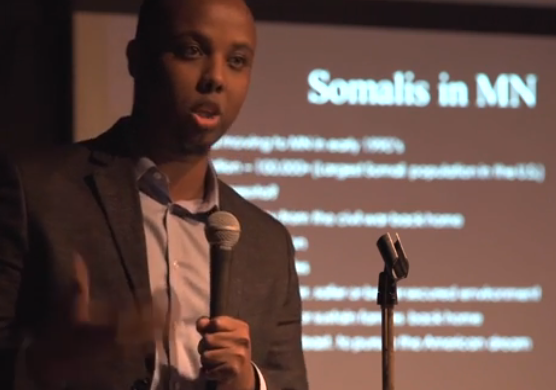
Mohamed Farah is co-founder and Executive Director of Ka-Joog, which enriches the lives of Somali-American youth in Minnesota through mentoring and guidance on education and employment. This month he joined other Minnesota leaders at the White House Summit on Countering Violent Extremism to talk about ways to prevent youth from being recruited by international extremist organizations. He received the 2012 City of Minneapolis Youth Leadership Award and FBI Director’s Community Leadership Award, and has also testified before the US Senate about Al-Shabaab recruitment and the critical importance of improving opportunities for Somali-American young people.EDTalks is a public speakers series that engages young professionals in public education issues in the Twin Cities. This EDTalk was given on October 28, 2014 by Beverly Cottman, a folktale storyteller and retired Minneapolis Public Schools teacher.EDTalks is presented by AchieveMpls and The Citizens League in partnership with Twin Cities Public Television, Young Education Professionals – Twin Cities and Young Professionals of Minneapolis. It is sponsored by a generous donation from the Verne C. Johnson Family Foundation, with additional support provided by the Bush Foundation. Continue Reading
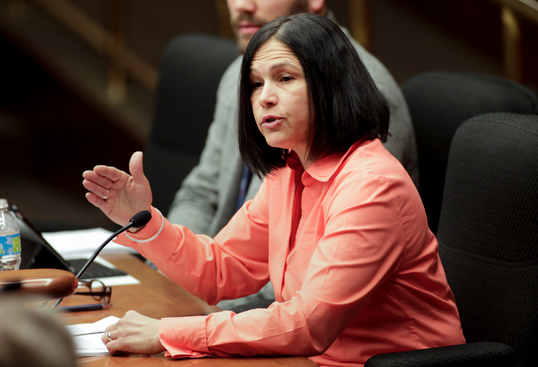
Gov. Mark Dayton believes students are losing valuable instructional time as the number of standardized test they are required to take continues to increase. He told legislators last week he wants to cut the number of such tests by one-third.That opinion made its appearance in bill form Thursday as the House Education Innovation Policy Committee began dissecting HF1591, sponsored by Rep. Sondra Erickson (R-Princeton). The proposed legislation serves as the Department of Education’s policy bill and contains a number of wide-ranging proposed policy reforms brought forward by Department Commissioner Brenda Cassellius.The committee is expected to resume its hearing on the bill Thursday evening with a motion to send it next to the House Education Finance Committee. Its companion, SF1495, sponsored by Sen. Chuck Wiger (DFL-Maplewood), awaits action in the Senate Education Committee.Focus on testingDiscussion focused almost solely on the proposed standardized testing reforms.The proposal represents “a reasonable approach to making testing more efficient and effective, so that teachers can better prepare our children for a competitive global marketplace,” Dayton wrote in a March 5 letter to chairs of the House and Senate K-12 education committees.“The disproportionate amount of time and test preparation that has resulted from the federal No Child Left Behind law and additional state requirements has stifled teachers’ creativity and ability to impart information to students,” he noted.Preserving ability to track progressUnder current law, the average student in Minnesota schools will take 21 standardized exams between grades three and 12. Tests subjects include math, reading and science that are administered multiple times at different grade levels, along with “career and college ready” exams students must currently take while in high school. Continue Reading
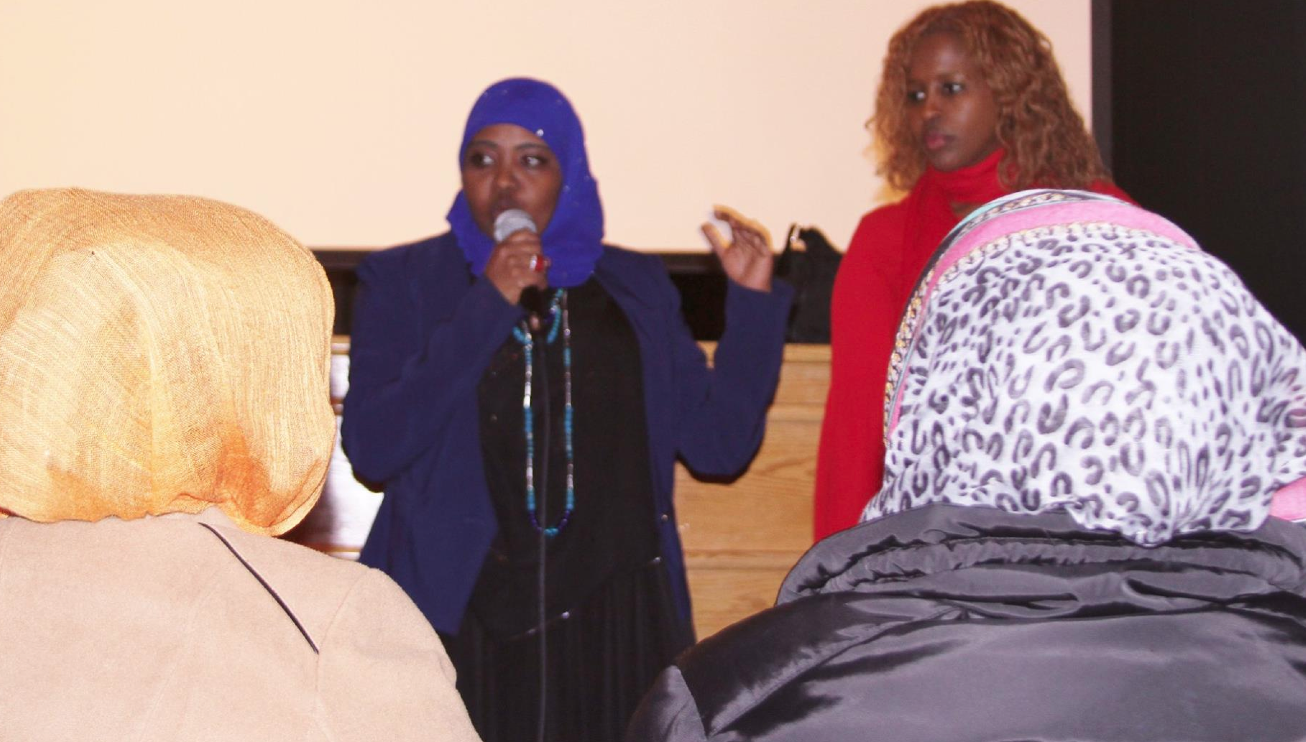
This past Thursday, around three-dozen Somali community members gathered in the auditorium of the Sabathani Community Center in South Minneapolis to engage with the Hennepin County Sheriff.