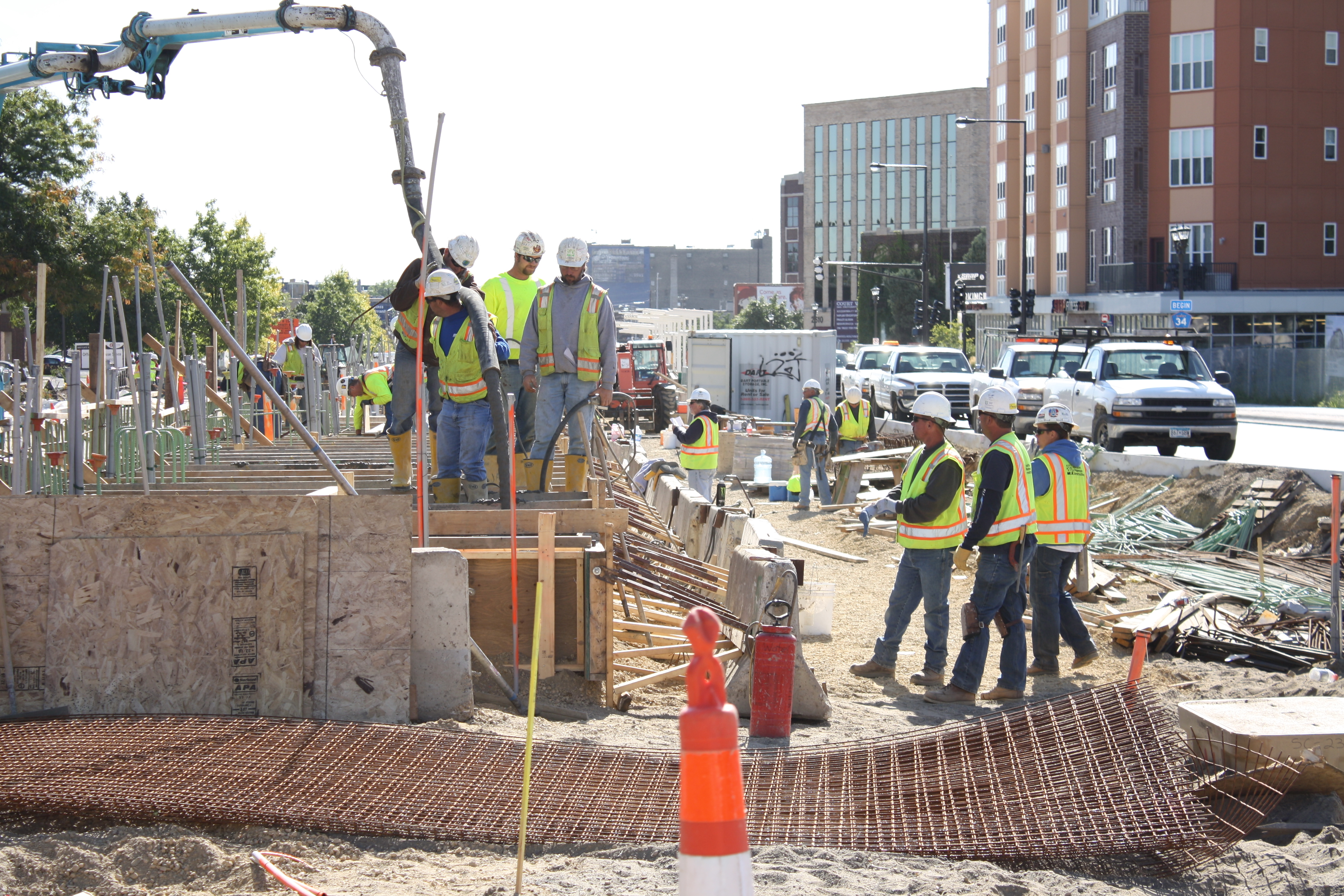
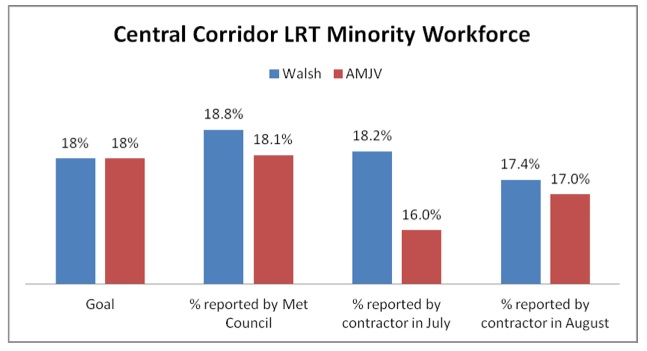
“Where are the Black people?” has been a constant refrain by Black folks who have observed the construction of the nearly $940 million Central Corridor Light Rail (CCLRT). A survey of the project on the Minneapolis end of the CCLRT, which expands from downtown through the University of Minnesota’s East Bank, by the Spokesman-Recorder two weeks ago observed 68 workers; two were Black, four appeared to be Native American and/or Hispanic, and four were women.A spot check by another MSR observer two weeks later counted 56 workers, two of them Black and two of them women.According to the Met Council, which is responsible for oversight of the project, nearly 1,300 jobs will be created by the project, which is about 20 percent complete. But questions have arisen about just how members of the Black community can obtain some of these jobs. The light rail is being constructed through a metro area that has some of the largest concentrations of minorities in the state of Minnesota.The CCLRT project, through the Minnesota Department of Human Rights (MDHR), has targeted goals for including minorities/people of color in the project. The project workforce is supposed to include 18 percent minority and six percent women.But at the bottom of the requirements for each major company involved in the construction is an asterisk with this message: “Actual participation may be supplemented by contractor Good Faith Efforts.”The MDHR has provided a number of ways for contractors to demonstrate “good faith” when workforce goals have not been met, including training programs and a list of nearly 1,200 minority and women workers and their skills put together by LRT Works, a project to help contractors and subcontractors locate available minority workers. Continue Reading

 Major construction on the Central