The electric future is quietly arriving

Something remarkable happened last year: The country’s mix of alternative-fueling infrastructure for cars suddenly flipped from being dominated by biofuels and lighter fossil-fuel byproducts to being primarily composed of electric charging stations—at least if you go by the pure numbers.There is an asterisk by “Electric” in the legend of the chart above, and the footnote says that each individual charging port is counted separately. But there were still 13,392 electric-vehicle chargers by the end of 2012, and even if the number is inflated by four or five times, it still outstrips the 2,654 stations for the nearest competitor—propane. If that sudden spike in growth is the beginning of a trend, electric chargers will be in the clear majority soon. Continue Reading
You’re invited to a Neighborhood Energy Party

On Saturday, May 18, from noon-3pm, the Our Power campaign will be hosting a party for Midtown-area residents involved–or looking to get involved–in local energy solutions. This event follows a similar event on March 16 where 25 neighbors met together to discuss the efforts that neighbors in Corcoran and a few surrounding neighborhoods have taken to create energy solutions through:Home energy education programsBlock groups raising awareness around energy solutions by chalking, house parties, and moreGroups buying insulation and solar panels in bulkCommunity solar projects and solar cooperativesNeighborhood, Minneapolis, and state-wide energy planning and policy initiativesLocal businesses leading the way towards energy solutionsAnd more!At this party:Enjoy free food and great conversationGet to know your neighborsLearn from people across Midtown who are helping neighbors cut their energy bills, generate clean energy, and create local jobsShare your own actions and ideasEnjoy hands-on how-to activities and information about support you can get to start your own neighborhood energy teamNoon-1pm: Lunch and conversation about community efforts.1-3pm: Updates on neighborhood efforts, information on support and opportunities, activities, and ways to get involved.Location: Stewart Park Multi-Purpose room, 2700 12th Ave S, Minneapolis, MN 55404RSVP at: http://midtownenergyparty.eventbrite.comContact mnourpower@gmail.com or (612) 548-1333 for details. Please invite your friends! Continue Reading

Does fracking mess up our water supply?

Fracking, or Hydraulic Fracturing, is a method of extracting hard-to-get oil and gas from shale. For the most part, fossil fuels originally formed in shale, which was in turn laid down by near surface life in anoxic seas. Sunlight powered a high turnover of near surface plankton, algae, and bacteria, but oxygen-poor conditions just a little deeper in the sea made it unlikely for much of that life to be recycled through other life forms. So, during periods of anoxic seas, which lasted for millions of years now and then in earth history, much of that organic material from near the surface of the ocean settled into the sea floor mud where it became buried and incorporated into the growing layers of sediment. This was eventually transformed into oil and gas rich shale. (For a detailed overview of that aspect of earth history, see this fascinating book.) Eventually, some of that oil and gas collected in deposits that could be easily removed through drilling. Once this oil and gas is removed, however, the remaining hydrocarbon fuels are much more thinly distributed in the shale. In order to access this fuel, modern day miners pump water mixed with sand and chemicals at high pressure into the shale, which causes it to fracture, allowing the gas and oil to accumulate and become more easily removed. It is a little like squeezing a few drops of the water out of a mostly dry sponge. Continue Reading

No such thing as the bus rider blues: Linden Hills Power and Light’s Public Transportation Initiative

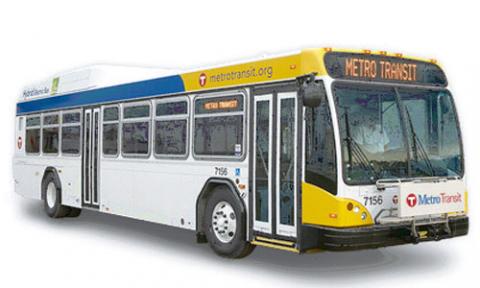
Linden Hills Power and Light has quite the green report card. Originally created with the goal of shrinking the community’s local carbon footprint, Linden Hills Power and Light (LHP&L) has utilized education efforts, community engagement and organizing to promote sustainable habits and energy conservation.LHP&L works on a number of projects ranging from a curbside composting program to energy efficiency services. The 2010-2011 City of Minneapolis Climate Change Innovation Grant enabled the group to turn its efforts towards increasing mass transit use in the Linden Hills neighborhood.For over four years, the City of Minneapolis has worked with residents, nonprofits, community organizations, schools and businesses to reduce greenhouse gas emissions at the local level with the Climate Change Innovation Grants. The 2010-2011 grant funding came from Minneapolis’ Energy Efficiency and Conservation Block Grant money from the U.S. Department of Energy. These sub-grants allowed recipients to implement their own sustainability initiatives, aimed at reducing fossil fuel emissions and improving energy efficiency in the transportation and building sectors. Continue Reading