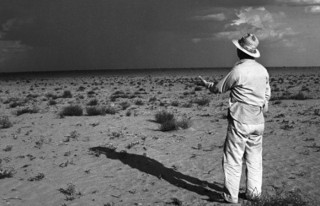
I am a product of small farm Midwest U.S. agriculture. Weather has been a major part of my life—as is the case with any farm family. Declaring disaster areas and offering emergency loans by a benevolent government might make folks feel better but will never replace the stress that comes with widespread, insidious devastating drought. Continue Reading
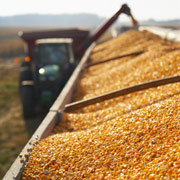
The reports of drought across the United States continue to worsen. Just this week, USDA decreased its estimates of corn harvests in “good to excellent” conditions to 24 percent. Corn futures are hovering near $8 a bushel, and wheat futures have started to rise as well. Continue Reading
This past April, when most gardens still looked like dirt, we were already enjoying green salads picked from our yard. The salads were made from the young leaves of a basswood tree, grape vine, a few dandelion leaves, plantain (a common weed) and a few early sprigs of lettuce from a raised bed in my front yard. With a little salad dressing on top, it was a tasty celebration of early spring.
In today’s edition of Radio Sustain, IATP program associate and long-time community activist LaDonna Redmond (pictured, above) discusses food justice, and IATP’s upcoming national conference, Food + Justice = Democracy.
Fellow Minnesotans emotionally and financially tied to the food industry are growing restless as drought conditions worsen across much of the United States while Congress appears in no hurry to pass multi-year farm and food legislation.
One of the many ironies of the U.S. Farm Bill debate over crop insurance and revenue “assurance” programs was a tacit bipartisan agreement not to say in public four words that summarized major drivers in creating the proposed programs. The U.S. Continue Reading
Subscribing to a CSA farm involves assuming risk. This is the community supported agriculture model in a nutshell. Because I value weekly deliveries of locally-grown fresh produce, farmed by a lanky guy who works an impossible dawn-to-dusk-and-then-some schedule, I shoulder a portion of the farmer’s gamble. Continue Reading
Genetically modified apples can’t be found at a grocery store in the United States, but a Canadian company could change that.Okanagan Specialty Fruits, a company based in British Columbia, has developed a genetically modified apple it claims does not turn brown when cut. The company is trying to get approval from the U.S. Department of Agriculture to market its Arctic Apple to consumers, prompting debate in the U.S. apple industry.David Bedford, a scientist with the University of Minnesota’s apple breeding program, said he thinks it will take modifying a trait more important than browning to change the views of the apple industry and the American public, which currently do not favor genetically modifying apples.The U.S. Apple Association said in a statement they do not want the USDA to allow Okanagan to plant their apples in the United States.“Ultimately, the future of [genetically modified] apples in the United States will be determined by USDA’s decision on the two petitions and by the marketplace” the association said in the statement. “The market will have time to decide, since new apple trees take years to come into production.”Crops can be genetically modified to have favorable characteristics like resistance to certain diseases or pests. Plants are usually genetically modified by adding genes to the plant’s genome that will produce the change. It can take decades to introduce this kind of change naturally though selective breeding.Genetic modification in the United States is highly controversial. Continue Reading
Minnesotans wondering how this summer’s heat and spreading drought may affect them might peek in at Lucy and Cliff Larson Jr. and their ventures that cover nearly every cog in the food chain.
 Aside from rural radio and newspapers, crop reports rarely grab major headlines.



 Subscribing to a CSA farm involves assuming risk. This is the community supported agriculture model in a nutshell. Because I value weekly deliveries of locally-grown fresh produce, farmed by a lanky guy who works an impossible dawn-to-dusk-and-then-some schedule, I shoulder a portion of the farmer’s gamble.
