Just ahead of the G-20 Leaders’ Summit in Brisbane, Australia (November 15-16, 2014), India and the United States announced a breakthrough in their trade negotiations impasse over agriculture. That fight had brought trade negotiations to a crashing standstill in July after the few months of tentative optimism among negotiators that followed the eleventh-hour agreement in at the Bali Ministerial Conference in December 2013. Confidence in the multilateral rules-based trading system had reached an all-time low, and while the response was muted (an agreement between two WTO members is not the same as an agreement among all), the media coverage made it clear the news of the U.S.-India agreement was very welcome in trade circles. Continue Reading
Last summer, Hampden Park Co-op put out a call to action to its members to increase sales at the Raymond Avenue food cooperative. General manager Greg Junge says that call appears to have been heeded.
Stephen Miller paid $3.15 for a gallon of 2 percent milk in August. Two weeks ago, he paid about $3.45 per gallon.Though it was a price increase of about 30 cents, Miller, the manager of Bordertown Coffee on 16th Avenue Southeast, said that extra money adds up for the shop, which goes through about 45 gallons of milk each week.As milk prices across the nation swell, local businesses, said Miller, are doing their best to keep prices reasonable while still managing to make a profit.Though Miller said the coffee shop is managing just fine, he said he thinks rising milk prices will contribute to a small increase in drink prices sometime next year.Because independent businesses like Bordertown and Espresso Royale usually don’t have extra money to dip into when facing large cost increases, they’re forced to raise prices.“In a small business, when you have margins that are as thin as they are — and the margins are very thin in small business,” Miller said, “there isn’t a lot [of money] to take … out of like a profit side of things.”The rising prices are tied to an increased international demand for the U.S.’s milk supply, said Marin Bozic, an applied economics assistant professor in the College of Food, Agricultural and Natural Resource Sciences.Milk prices change every day, said Bozic, who also serves as the associate director of the Midwest Dairy Foods Research Center.Since milk is produced at an unpredictable rate and can’t be stored for very long, he said, its price is generally linked to other dairy products like cheese, which has a longer storage time.U.S. farmers have some cows that produce milk for sale within the country and some that produce it for international sales. But in recent months, more countries began demanding American milk, which has strained the product’s availability here in the states, he said.Qdoba Mexican Grill in Dinkytown has seen a rise in expenses as well, said owner Randal Gast.While the restaurant’s dairy products, including its cheese and the chain’s signature “3-cheese queso,” have slightly risen in cost during recent months, Gast said other changes in Qdoba’s overall pricing, as well as the cost of steak, present larger issues for the restaurant.Dinkytown’s Espresso Royale goes through almost 150 gallons of milk every week.Regional Manager Dan Zielske said though the coffee shop’s milk expenses went down last month, he’s noticed the overall increase.“It tends to be one of those things … that fluctuates more than other products,” he said. “[But] when it’s a sustained rise, you definitely notice.”Though the prices may not climb at Espresso Royale, Zielske said coffee and milk tend to have the largest pull on the shop’s prices.The cost of milk fluctuates so much, Bozic said, because dairy farmers can’t just will it out of their cows, and it expires quickly.“Supply cannot change much if needed; demand wouldn’t budge much if needed,” he said. “And if anybody sneezes, the prices can go up really high or really low depending on if we have a shortage or a surplus.”After a heavy demand for a commodity like milk, Bozic said, it takes a few months for prices to catch up. Continue Reading
The last few years have not been good for the factory farm industry. High prices for corn and other crops (in part driven by the growth of ethanol) made feed costs incredibly high, while at the same time, environmental and animal welfare advocates have been winning ballot and marketplace battles to shift more meat production out of intensive confinement and industrial systems. Hog and cattle producers have been hit by disease, drought and weather related disasters, resulting in losses in both sectors. Continue Reading
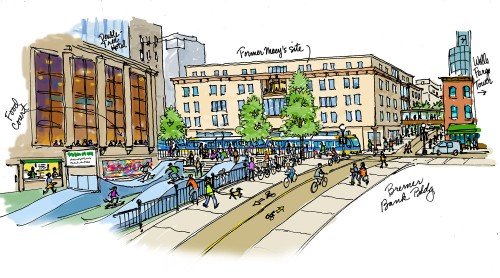
I live and work in Lowertown. Frequently my errands and wanderings take me up to the Rice Park/Landmark Center/7th Place areas. I’m always either on foot or bike. Over the last two-plus years of living here, I’ve become increasingly annoyed with the presence of the two “SuperBlocks”. These are the blocks that have 7th Street as the northern border, Wabasha Street as the western, 6th Street as the southern and Minnesota Street as the eastern border (See map). They house the Wells Fargo tower and the Bremer Bank tower on the north ends, facing 7th Street. The vacant Macy’s store and DoubleTree by Hilton face 6th Street on the south end. If you are coming from the mostly-pleasant 7th Street pedestrian mall and you want to go over to the eastern side of downtown, the most direct way is through the indoor “shopping” mall and skyway configuration of the SuperBlocks. Continue Reading
If you have Dinkytown memories and stories, you’re invited to share them this weekend at a couple of events and to reminisce about the area’s past and discuss its future.
It is hard to overstate the importance of the Mississippi River in the urban form of Minneapolis and Saint Paul. Once a source of energy and an important transport route, the river’s main value now is environmental and aesthetic. With the imminent closing of the Upper locks and the Upper Harbor Terminal–basically the Port of Minneapolis– the city has an incredible opportunity to redevelop 43 acres of riverfront land. More land will be available in the future, and the city has an extensive plan–the Above the Falls Master Plan–for developing the riverfront upriver from the Saint Anthony lock and dam. Continue Reading
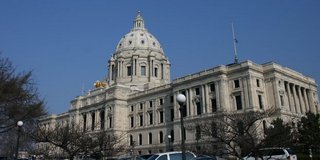
The issue of Sunday liquor sales is likely to come up again next year, with the new Republican majority in the state legislature.
Minnesota is one of only 12 states that require liquor stores to be closed on Sundays. And many Minnesota consumers cross the border to Wisconsin, where Sunday sales are legal. . . . Continue Reading
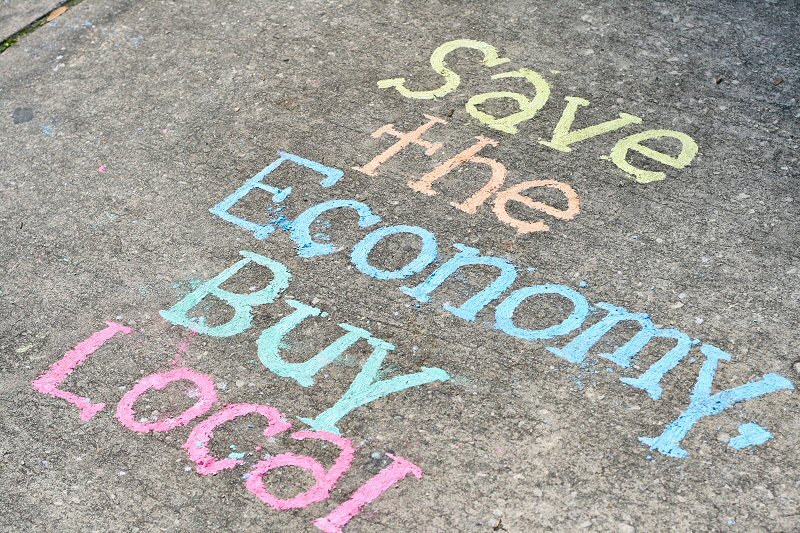
Communities across the United States and Europe are working to transform local economic systems so that they are more sustainable and equitable. Many states and communities are utilizing public procurement programs to support those efforts, especially bidding preferences for healthy, locally grown foods, energy or transportation programs that create local jobs and fair markets. Especially in the aftermath of the Great Recession, Buy American programs have helped ensure that taxpayer-funded programs create local jobs and serve social goals. Farm to School programs that incentivize purchases from local farmers have grown in all 50 U.S. states and many European countries. Innovative efforts are also underway to expand this approach to other institutions such as hospitals, universities and early childcare programs like Head Start. Continue Reading