Minneapolis City Council approves military activity oversight

Black military helicopters swept Minneapolis’ skies this August, flying closely past high-rise buildings — to the surprise of residents.Now a new ruling by the Minneapolis City Council means any future Department of Defense training exercises must get the council’s approval first.To prevent such military activity from being executed without proper public notice, council members unanimously voted Friday to approve a measure restricting the city from authorizing any municipal funding of military training without the council’s approval first.The motion, proposed by Ward 5 Councilman Blong Yang, included a second provision establishing an approval process for future requests to conduct disruptive activities, like military training, in Minneapolis.Most of the exercises in August took place at night in the Cedar Riverside and Seward neighborhoods, along with downtown Minneapolis and St. Paul, said Ward 2 Councilman Cam Gordon, who co-authored the proposal.The mayor’s office will approve any future military exercises — and the affected public will be duly notified, Mayor Betsy Hodges’ office said in an email interview.But Gordon and other city council members say the newly enacted plan doesn’t go far enough to protect residents from military training drills, which Gordan said he feared could have led to a crash.“City council should have the authority to restrict what they can do, prohibit what they can do and control what they can do,” Gordon said. “It’s not just notification.”Gordon said a perceived breach in trust belies why the council wants to regain even more control.Past military exercises, which sometimes involved dive-training in the Mississippi River, were smaller and never as invasive, he said.A number of constituents contacted members of the Minneapolis City Council when the flights started on August 18, upset with the unannounced military presence, Gordon said.“Some of the residents in the University area are refugees who came from different countries,” he said, “some of which are war-torn areas.” Continue Reading

Drones in Minnesota: What we know

On a remote tarmac, three steel-gray “Predator B” drones sit motionless, awaiting launch. Their tips balloon into metallic bulges that conceal sophisticated navigation and surveillance equipment. Their undercarriages sport pivot-mounted cameras, each capable of rendering detailed images from high in the air. Continue Reading

In Cedar-Riverside protest, youth link terrorist recruitment to lack of resources

A group of Cedar-Riverside youth marched through their neighborhood’s streets late Tuesday afternoon to demonstrate against terrorism, the stereotyping of Muslims and what they said was a lack of community resources.Wielding signs and chanting “power to the youth,” the protesters, led by the Cedar Riverside Youth Council, said the lack of opportunities and resources for local young people was due to foreign terrorist organizations’ recruitment of residents in the area.“Our real problems are community development,” said Mubashir Jeilani, who co-founded CRYC with general director Mohamed Jama. “We have so many different organizations claiming that they help our youth, but … they don’t help us.”In recent months, Cedar-Riverside has been the focus of investigations and efforts to stop extremist terrorist groups like the Islamic State, also known as ISIS or ISIL, and al-Shabaab from enlisting locals to join them overseas.While Tuesday’s protesters condemned terrorism, Jeilani said the larger issue the community faces is a lack of services, jobs and support.Aman Obsiye, a University of Minnesota alumnus, said he joined the protest because he believes recent “provocative headlines” have overemphasized terrorist recruitment from the local community.“Every subgroup has bad apples,” Obsiye told the crowd, adding that in other cases, that same lack of opportunities drives young people into gangs or narcotics use. “The real question that needs to be asked is ‘Why are they leaving?’”The demonstration outside of the Brian Coyle Center grew from a couple dozen to about 50 people when Rep. Phyllis Kahn, DFL-Minneapolis, joined her constituents and echoed their concern for the neighborhood’s young residents.“People who join a [terrorist] group like that are doing it because of discontent,” she said. “We want [them] to feel they have an opportunity here to do good.”Shortly after Kahn and other community leaders addressed the crowd, about 25 marchers left the gathering to walk along Washington Avenue and Cedar Avenue. Along the way, they criticized Pillsbury United Communities and its network of neighborhood centers, which includes the Brian Coyle Center.PUC President Chanda Baker said that despite the demonstrators’ calls for increased financial support for the neighborhood’s youth, the community organization itself does not allocate funds.“It just feels kind of weirdly placed for the protest to be on our grounds where we’re serving the community and have no funding to offer,” she said.But Baker said she acknowledges more should be done for Cedar-Riverside.“I’m not in disagreement that there needs to be more thought put into how we serve the community in a very dense area better,” she said. Continue Reading
Dancing for safety at the street corner

The launch of the light rail Green Line has spurred an increase of 20 to 25 percent in pedestrian traffic at the downtown Minneapolis Nicollet Mall station where Blue Line trains have stopped for years, according to a new study. Unlike its predecessor, the new line traverses its entire route through the heart of the Twin Cities, an area particularly rich in vehicle, bicycle and walking traffic. Continue Reading

Black community feels snubbed by Police Chief Harteau’s forum no-show

It appears that no one is safe in Minneapolis – not even the city’s chief of Police.

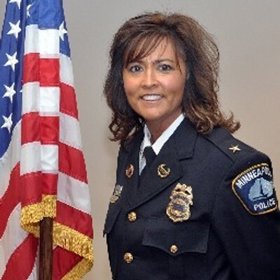
Minneapolis Police Chief Janeé Harteau was scheduled to be a part of a community listening session on Sept. 18 at Sabathani Community Center in south Minneapolis, but a couple of hours before the event was to take place, the chief pulled out citing “credible information” of a planned attack on her.

Continue Reading

Brotherhood Inc: Between troubled pasts and brighter future, a little coffee

Sidiq Abdullah has been involved in Brotherhood Inc. since it first opened its doors on Dec. 15, 2011. He is now the sales manager for the organization’s coffee business, but he remembers his days of making cold calls without much fondness.“‘How many times have I told you guys I don’t want it!’” he mimicked an angry voice on the other end of a phone line.Brotherhood Inc. is a nonprofit organization that employs 15 African American men between the ages of 16 and 24. Members of the program have criminal pasts or come from poverty and gangs.Brotherhood provides them with classes, employment and a safe place to spend their time. The heart of the program is inside a University Avenue storefront, where sparsely furnished rooms are painted striking red and the air is laced with the rich scent of Brotherhood Brew coffee.Located in the Frogtown neighborhood of St. Continue Reading