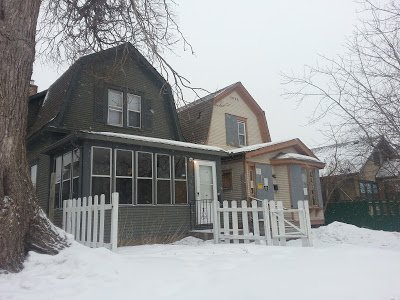
The newly-proposed conservation district ordinance should excite me. Either the preservationist in me should leap for joy that neighbors may have another tool available to preserve the character of their community, or the libertarian in me should bristle at the prospect of fewer property rights. Instead, I’m left shrugging my shoulders and responding with a resounding “meh.” Continue Reading
In my early 20s I became homeless after a series of cataclysmic events. Before my life started to unravel I was a happy, healthy, successful student at St. Catherine University. My diligent work at SCU earned me a place in the Antonian Scholar’s Honors Society, a Billie Rhodes Spellman all campus Leadership Award, and academic merit scholarships. I was becoming a confident and capable young woman with great convictions in the tradition of so many “Katies” before me. Continue Reading
Since we know that supportive housing is effective to stop homelessness, what are the barriers to going to scale? Why does it remain so difficult to assemble the funding? Continue Reading
The Green Line’s opening is four months away, but the train has already brought rent increases for Frogtown renters.Organizations working closely with Frogtown have been worried about rent increases for years, and recent data from HousingLink shows that these fears may be justified.According to Minnesota Housing Link’s third quarter analysis, median rent listings for the “shadow market” in Frogtown — duplexes, condos, single-family housing, and townhomes — have risen remarkably in the last year. In 2011, the median rent was $807. In 2012 it rose to $850, and by 2013, the median rent had jumped to $995. Rent listings for multi-unit apartment buildings have remained unchanged.The rent increase for duplexes, condos, single-family housing, and townhomes is particularly significant for Frogtown. According to the Minnesota Housing Preservation Project (MHPP)’s Before the Train report, 43 percent of the housing in the Midway East area (which roughly corresponds to Frogtown) is single family or duplex housing. Continue Reading
Professor Goetz’s comments reflect an obvious misunderstanding of our report and of the issues of urban racial segregation and fair housing. Yet we understand why he is upset. Our report challenges many of the activities at which he has invested much of his professional career and that he cares about deeply. We regret that he has expressed his anger by attacking the scholarly reputations of his colleagues rather that by taking the time to outline real and substantive concerns with the work itself.
Greater Minnesota, has faced a devastating foreclosure crisis, but it has played out very differently than in the Twin Cities metro area in the years since 2008’s housing crash.In the population centers across the state’s northern tier examined for this piece, the crash developed slowly. While home prices rose slightly pre-crash, a huge bubble never formed. There weren’t slews of sub-prime loans or adjustable rate mortgages being written. With the exception of a few lake towns, massive home construction never occurred in northern Minnesota.Find more articles in the Uneven Recovery series, an on going collaboration between Minnesota 2020 and Minnesota Housing Partnership.Instead, the Great Recession’s housing crisis-induced tidal wave is what hit Northern Minnesota. When people lost jobs in the Great Recession, they lost homes. Continue Reading
Last week the Institute on Metropolitan Opportunity (IMO) of the University of Minnesota’s Law School issued a report on subsidized housing in the Twin Cities region. Reforming Subsidized Housing Policy in the Twin Cities to Cut Costs and Reduce Segregation suggests, among other things, that too much affordable housing is being built in the central cities of the region compared to the suburbs. It further argues that the system of affordable housing production and the actions of nonprofit housing developers explain the imbalance and make the development of affordable housing in the central city more costly than comparable housing in the suburbs. Finally, the report suggests that affordable housing production in the central city does not generate neighborhood benefits. Unfortunately, the report’s conclusions regarding each of these are highly suspect due to the lack of adequate data and flawed analysis. Continue Reading
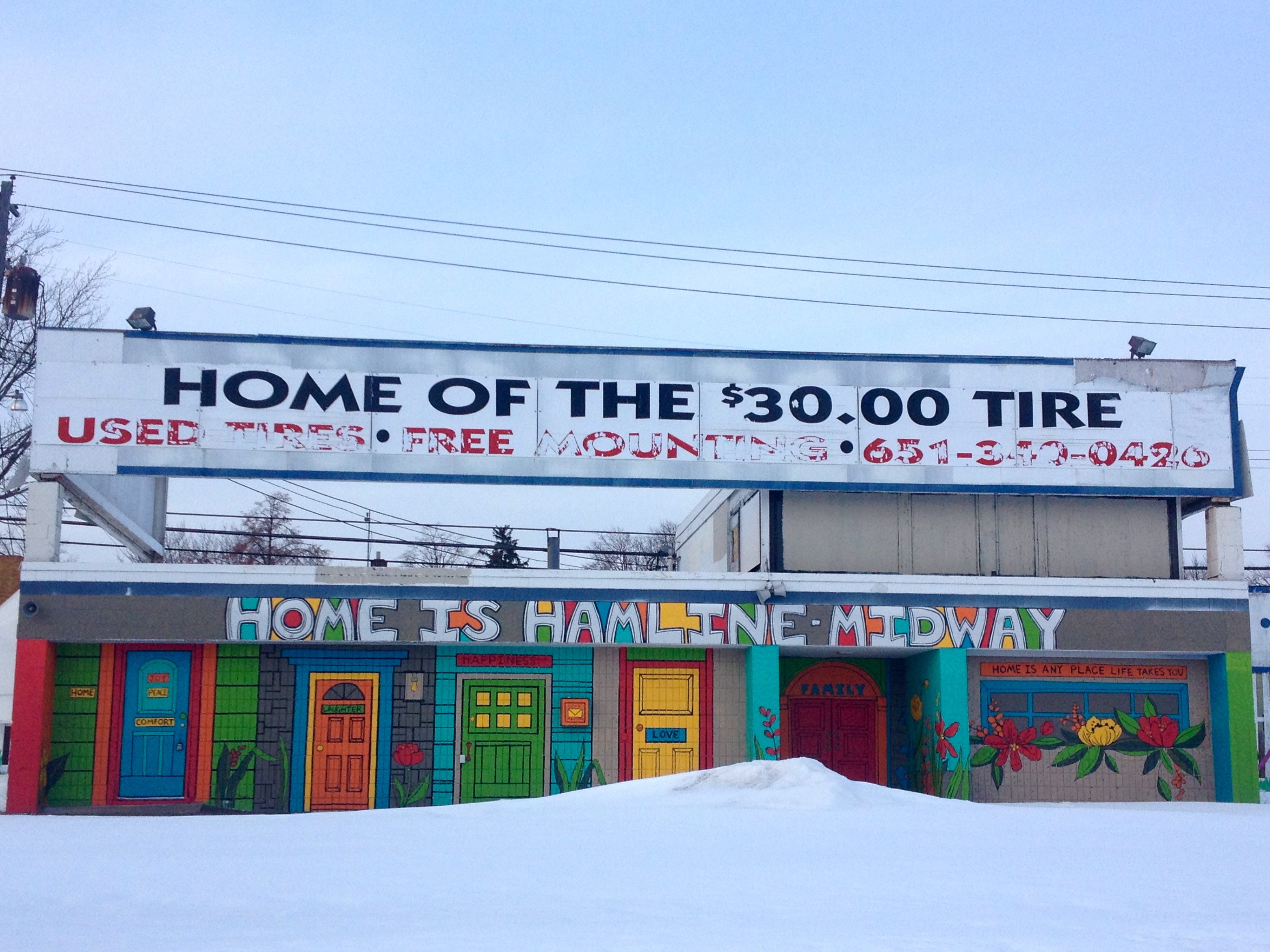
For Lucy Whitley Mott, 10, home is “where I have a roof over my head.”For Julie GebbenGreen, 47, home is less location-specific and more “sacred.”Whitley Mott and GebbenGreen traced projected images of the spaces they think of as “home” onto green canvases at a community art project on February 11. They met at the Hamline Midway Library as part of Artify’s THIS IS HOME community art project. Their work is currently on display on the 1300 block of University Avenue at the future location of a Project for Pride in Living (PPL) affordable housing development.Witt Siasoco, who runs the THIS IS HOME project with fellow Minneapolis-based artist, Mischa Kegan, was inspired by Artify’s theme of “Home is…” and his previous work with teens at Project Offstreets, a homeless-drop in shelter. “I had been working there for a year trying to figure out a project that would really speak to them,” he said. “And I came up with an idea about them talking about places they’ve lived and places that have felt safe to them.”Siasoco said that the THIS IS HOME project is similar to his work at Project Offstreets because it’s people “talking about where they’re from, and what feels like home to them.”All of the 22 participants are residents of the Hamline-Midway or Frogtown-Rondo neighborhoods. Continue Reading
Solutions for homelessness? Well, there’s the sledgehammer approach in Hawaii and protesters waving pitchforks and torches in Portland, but the more effective approach comes from Utah.Hawaii State Representative Tom Brower wields a sledgehammer, smashing shopping carts used by homeless people. Well — unless he can tell what store they belong to, in which case he dumps the homeless person’s belongings on the ground and takes the cart back to the store. HuffPost said he’s not worried about getting in a dispute with a homeless person:”When you are walking down the sidewalk with a sledgehammer,” he told the Star-Advertiser, “people get out of your way.”We wonder why.Brower is a Democrat, so you might think that the Republicans in Utah would be even more harsh. Not so — their idea is Utah’s HousingWorks program, according to its website, is aimed at preventing homelessness and at housing people who have been chronically homeless:”The State of Utah has adopted the Housing First approach which provides permanent supportive housing to chronically homeless individuals so they can focus on stabilizing their disabling condition in a safe and supportive environment. Continue Reading