In March, the Minnesota’s Office of the Legislative Auditor’s (OLA) released their audit of Minnesota’s four councils: the Councils on Asian-Pacific Minnesotans, Black Minnesotans, Chicano/Latino People, and Indian Affairs. Last week the MSR spoke in depth with Legislative Auditor James Noble about his report. “We laid out four options,” Nobles said, “but what we asked is, ‘What option is not just maintaining the status quo?’ Because we think that the voices of these communities need to be amplified and heard more.” The options:
Aside from the University of Minnesota’s multimillion-dollar request for construction and upkeep projects throughout its five-campus system, more state dollars are on the line this session.
This year’s House Omnibus Tax bill improves on reforms made last year to city Local Government Aid (LGA). In 2013, policymakers made significant improvements to the aid formula and increased the appropriation to partially replace what was lost over the preceding decade. However, that bill failed to finish the job of LGA by annually adjusting the appropriation to keep pace with inflation and population growth. Continue Reading
More than five years after Minnesotans voted to pass the Clean Water, Land and Legacy Amendment, I think we can look back and say the sales tax revenue generated has been a boon to our arts economy, despite the reactionary criticisms of its naysayers. I’m a big fan of the amendment- as someone who has personally benefitted from it as an artist and researcher but also as a person with a vested interest in the cultural life of my hometown. At the same time, I do think it’s right and appropriate to make sure that we are celebrating and preserving the cultural heritage of all Minnesotans, not just some, and for that reason, I support efforts to study the impact of legacy grants for communities of color in particular.This legislative session the Council on Black Minnesotans were pushing for a bill, authored by Phyllis Kahn, that would authorize a study, funded by the Minnesota State Arts Board, that would study the funding, impact and needs of artists from diverse racial and ethnic communities in the state. (Originally the bill called for a study on Black Arts in particular, but was later revised to include other communities as well, as reported by Session Daily previously.)According to Patwin Lawrence, the board chair of the Minnesota Council on Black Minnesotans, there’s no current movement on the bill, as the legislature is now in recess. “We will try to revive it after they return,” he said in an email. Continue Reading
A license plate reader (LPR) that many Minnesota law enforcement agencies have and the data it collects can know where you were five days, five weeks, five months, even 5 years ago. The data the LPR collects and disseminates can be used to get an individuals daily routine down pat. Just review the Star Tribune articles about former Mayor R.T. Rybak and reporter Eric Roper. Continue Reading
The Community Transformation Grant (CTG) program was initiated in 2011 by the Centers for Disease Control and Prevention (CDC) in an attempt to address health disparities, help control health care spending, and create a healthier future. To this end, federal funds from the Affordable Care Act were allocated to select communities across the U.S. to help support community-level efforts to reduce chronic diseases by expanding efforts in “tobacco-free living, active living and healthy eating, and quality clinical and other preventative services.” Minnesota fared well in the selection process: the state was awarded $4.7 million per year (including $1.1 million for Hennepin County) for what was supposed to be a five-year program.
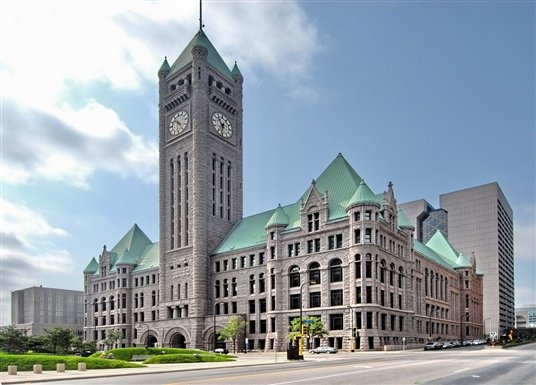
I have been spending a lot of time recently thinking about how to advocate at City Hall for good urbanism. We spend a lot of time writing good posts on Streets.MN and debating in online chatrooms, but does that really move the needle at City Hall? Meanwhile, those of a preservationist mindset are always emailing City Council members and showing up to testify at public hearings. Continue Reading
Andrew Johnson is the youngest member of the Minneapolis City Council at only 29 years of age. (“Also the only single one,” he reminds me to mention.) One of seven (of 13) CMs newly elected in November 2013, he is also one of the ones most likely to succeed Gary Schiff in being the leftward pull of DFL progressivism on the Council. Johnson says it has always been his dream to be an actual politician, but not one he expected to attain, nor did he have a master plan to get there. He says circumstances just “opened a path” and he took it. Before that he had made his living as an IT systems engineer, while working tirelessly in his spare time as a neighborhood and environmental activist. His style is robust activism, with an emphasis on innovation, yet tempered with a keen pragmatism beyond what is expected with his youth and inexperience.