Barbary Fig: Cuisine of the Maghreb on Grand Avenue in St. Paul

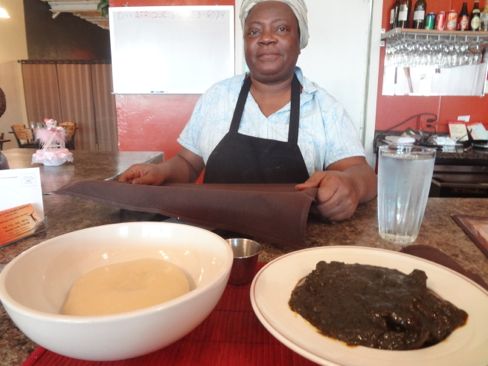
I have never quite understood why the cuisine of the Maghreb — that is, north Africa west of Egypt — isn’t more popular in the United States. It’s really a Mediterranean cuisine, closely related in style to Italian and Spanish and Turkish and Middle Eastern, with many of the same ingredients: tomatoes and peppers and olives and capers, fresh seafood, dates and flaky pastries. In France, it’s one of the most popular ethnic cuisines — Moroccan and Algerian restaurants and cafes advertising couscous and tajines are a common sight. In fact, thanks to Google, I just learned that couscous was recently found to be the third-most-popular dish in France. Couscous is steamed semolina (cracked wheat) topped with a meat or vegetable stew; tajines are stews, traditionally cooked in a special clay pot with a conical lid; typical tajines combine lamb or chicken with olives or a variety of fruits and spices. But in the Twin Cities, it’s almost unknown. Saffron, in the Minneapolis warehouse district, does offer four tajines on its menu: one with lamb shank with quince cooked in fall spices with white beans, sesame seeds and preserved lemon ($25), and another, which I enjoyed recently, made with duck meatballs in a sweet and spicy tomato sauce ($19/$27). In all of Minnesota, the only restaurant dedicated to this great cuisine is the Barbary Fig on Grand Avenue  in St. Continue Reading

Cheng Heng: Little Mekong’s Cambodian outpost in St. Paul

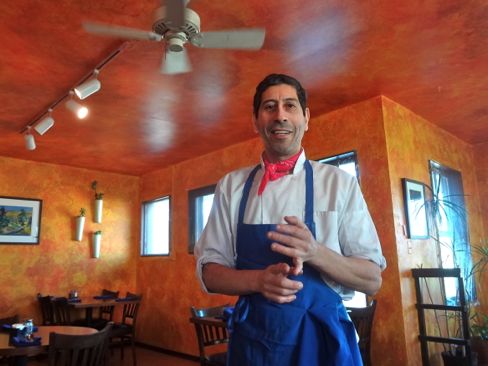
University Avenue is full of Asian restaurants, especially along the stretch that’s known as Little Mekong, from Mackubin to Galtier streets. I have lots of favorites along that stretch, but the special, warm feeling I get from eating at Cheng Heng, the Cambodian restaurant on University Avenue in St. Paul goes beyond the spiciness of some of the cuisine. Maybe it’s the friendliness with which customers are greeted. Or maybe it’s knowing that the owners, Kunrath and Kevin Lam, have donated some of the earnings from their restaurant to build schools back in Cambodia. But mainly it’s the cuisine. Although there are many  resemblances to Vietnamese and especially Thai cuisine, there are also enough differences to make for a refreshing change of pace. 

Continue Reading

Asian Flavors by Phyllis Louise Harris with Raghavan Iyer: history with recipes

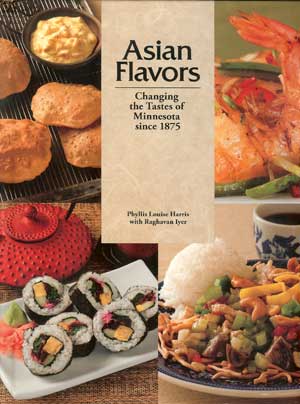
I have long been a fan of Phyllis Louise Harris’s restaurant writing. Harris, who was the restaurant columnist for the Asian Pages from 1991 until it stopped publication in 2011, doesn’t write restaurant criticism. Rather, her columns tell the stories of the people behind the restaurants, and the cuisines they offer. Many of her stories have been republished in the Twin Cities Daily Planet over the years, including her 2006 article on The Twin Cities Best Asian Markets, which ranks as one of the most popular articles we have ever published (not far behind our most popular article ever, Best Bars for Meeting Single Women.) So I was delighted to see that she has compiled her deep expertise about the local Asian food culture and history into a new book, Asian Flavors: Changing the Tastes of Minnesota since 1875, ($34.95 hardcover)  published last month by the Minnesota Historical Society Press. Harris wrote the book with Raghavan Iyer, a local cooking teacher and author with a national reputation as the author of three cookbooks on the cuisine of India. Asian Flavors is amply illustrated with beautiful food photography by Tom Nelson (and some historical photos as well) and also includes more than 150 recipes shared by the restauranteurs profiled in the book. Each cuisine gets its own chapter; Harris covers the flavors of China, Japan, Vietnam, Thailand, Cambodia,  Malaysia, Korea, the Philippines, and the Hmong community, while Iyer contributed the chapters on the cuisines of India, Sri Lanka, Indonesia and the Himalayas (Tibet and Nepal.) Alhough I have been writing about restaurants in the Twin Cities for nearly 40 years, I still learned a lot from Asian Flavors. Continue Reading