In state politics, there’s nothing new about tensions between rural Minnesota and the Twin Cities metropolitan area. Hard feelings between the two geographic regions have been simmering for decades, especially as demographic trends reveal the contrasts between a growing and diversifying Twin Cities and declining populations in many of Minnesota’s rural counties. But there’s been a renewed emphasis on those divides, mixed with a fresh political dynamic: Republicans reclaimed control of the state House last fall by grabbing 10 out of 11 seats from Democrats in Greater Minnesota districts. With a $1 billion budget surplus in play, Republicans now want to shift the focus of funding and policy work to areas outside of the Twin Cities, which they say were forgotten or ignored by the DFL majorities over the last two years. “I have a feeling with the election results of the last election, everyone’s going to have a focus on Greater Minnesota,” Republican House Speaker Kurt Daudt said on one of the first days of session. “We felt like the last two years, Greater Minnesota really got left behind. I don’t want Minneapolis and Saint Paul or the suburbs to feel like they’re left behind, but we do need to understand that the dynamics of the metro area and Greater Minnesota are different.”Not surprisingly, House Democrats take offense with that characterization. Continue Reading
He Filmed Long Distance Filmmaker Justin Schell traveled halfway around the world and back. He’s followed Maria Isa through the streets of Puerto Rico. Trekked to Thailand with Tou SaiKo Lee. And finally, heard the poetry from M.anifest’s grandfather in Ghana. It’s all for his feature length film We Rock Long Distance, premiering at Intermedia Arts this weekend as part of their Catalyst Series. The film weaves together history, ethnicity, music and the meaning of home and place through Twin Cities hip hop artists Maria Isa, Tou SaiKo Lee and M.anifest The film, hot off the editing bench, explores the lives and connections of these three musicians here in the Twin Cities and in their home countries. Continue Reading
Some rascality on transparency came into the legislative committee process today. Before the House Environment and Natural Resources Policy and Finance Committee, HF 181 (Outdoor herita Continue Reading
House members, in a joint hearing of the education and health and human services finance committees, pulled out their metaphorical magnifying glasses Wednesday to take a closer look at Gov. Mark Dayton’s proposed $130 million increase over the next biennium in early education opportunities for pre-K children of low-income families.The reaction to the proposal was mixed.Last month the governor unveiled in his 2016-17 biennial budget proposal, which calls for a $418 million increase in pre-K-12 spending. He targeted $109 million of that to expand pre-K learning opportunities for 31,000 children of low-income families and $19.4 million to eliminate the current 2,485-child wait list for Head Start enrollment.Rep. Mary Franson (R-Alexandria) said she was particularly concerned that only child care providers who participate in the Department of Human Services-sponsored “Parent Aware” rating system would be eligible to receive children whose families will use early learning scholarship dollars.Nearly 1,900 of more than 11,000 licensed providers across the state currently participate in the program.“It doesn’t seem like the providers want to participate in the Parent Aware program,” Franson said.Human Services Commissioner Lucinda Jesson emphasized that the Parent Aware ratings system is a voluntary program, but that providers have increased their participation since its statewide rollout in 2012.“I think you are far more likely, if you are parent, to make sure that your children are getting that kindergarten-ready experience if it is a rated program,” Jesson said.Others, like Rep. Jerry Hertaus (R-Greenfield), said they wonder whether the governor’s proposal – which includes a voluntary option for elementary schools to eventually “scale up” to include half-day, pre-kindergarten education for 4 year olds –creates unnecessary competition between public schools and the state’s already existing 11,000-plus child day care providers.The Department of Education is attempting to work with schools and providers to provide a system that leans on a multitude of early learning options, said Bobbie Burnham, director of the department’s Early Learning Services.Rep. Erin Murphy (DFL-St. Paul) praised the department’s efforts to combat the achievement gap by increasing state support for expansion of early learning opportunities for children who live in poverty. Murphy, who supports a universal pre-school model, said she wants the education and human services departments to explore opportunities to ensure that licensed child care providers can fit into such a system if it ever came to fruition.Rep. Jenifer Loon (R-Eden Prairie) questioned the governor’s proposal to move toward school-based pre-k programs and whether such initiatives are really targeted to help low-income families or whether they would, in effect, end up launching entitlement-based programs that apply to all children, regardless of income-based need.“With resources so scarce and economic questions on these programs, why move in that direction where it’s not targeted to those most in need?” Continue Reading
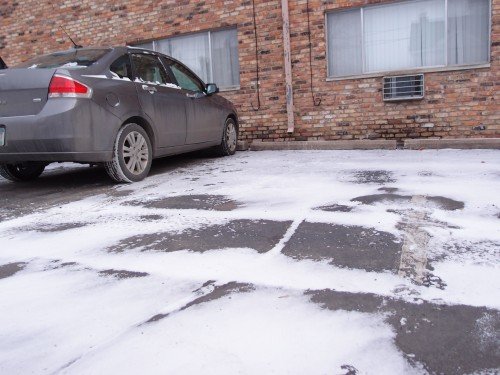
My apartment comes with a parking spot. I don’t use it, but I pay for it. My apartment, my parking spot–it’s a package deal. It sits empty through spring, summer, and fall. Continue Reading
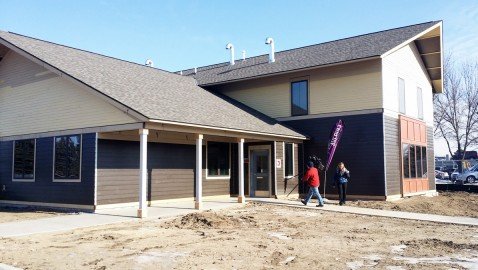
The first of its kind in a Minnesota suburb, a homeless shelter for youth in the City of Brooklyn Park, will open tomorrow (Saturday, Jan. 31) during an open house to celebrate the achievement. Brooklyn Park and the surrounding northwest suburbs referred to as the “African Suburb” is home to the largest concentration of African immigrants in the state that are homeowners.Called Brooklyn Avenues, it is a 12-bed, short-term shelter and transition housing program, for teens aged 16 through 20. The Minneapolis nonprofit, Avenues for Homeless Youth, will run the shelter built by the City of Brooklyn Park through its Economic Development Authority at a cost of $950,000. The City will lease it to Avenues for $1.The grand opening ceremony on Saturday will be open to the public in the form of an open house that will run from 1-4pm.According to the renowned Wilder Research in Saint Paul, more than 4,000 youth are homeless and living alone in Minnesota on any one given night. Continue Reading
The Advocates for Human Rights’ Executive Director Robin Phillips is in London today speaking about The Advocates’ human rights monitoring work at the International Bar Association’s colloquium on& Continue Reading
As debate swirled at the State Capitol in recent years over whether – and how much – to raise Minnesota’s minimum wage, lawmakers found themselves confronted with a question their own experts could not easily answer.How much do workers need to earn to meet their most basic costs?To zero in on an answer, the Legislature charged the Minnesota Department of Employment and Economic Developmentwith conducting a study.DEED’s Labor Market Information Office devised a plan to break down the cost of living not only statewide, but by county and region, taking into account geographic disparities in seven cost categories: transportation, housing, child care, health care, food, taxes and other necessities.Now the results are in, and DEED’s new Cost of Living tool, available on the department’s website, sheds light on the challenges and difficult decisions Minnesota’s working families face.The results, said John Clay, a research analysis specialist for DEED who devised the study’s methodology, don’t “represent a middle-class income. It also does not represent a poverty-level income. Rather, it’s a basic income that meets health and safety needs.”The annual cost of meeting those needs in the seven-county Metro Area is $25,932 for a single worker without children, according to the new tool. Given a 40-hour workweek and year-round employment, a worker would require wages of $12.47 per hour to reach that annual income level.In other words, even with the scheduled increases in the state’s minimum wage – up to $9.50 per hour next year for most workers – the Metro Area’s lowest-paid jobs are leaving workers without the resources necessary to meet their basic costs.Those costs go up, of course, with family size. A single parent of one child in the Metro Area requires full-time wages of $24.97. Continue Reading
As Minnesota leaders in K-12 education continue to work toward their shared goal of narrowing the achievement gap, the House Education Finance Committee is looking to the educators themselves for examples of progress.On Tuesday, principals and superintendents from public and charter schools and school districts that have reported improvements in that arena shared their success stories.The purpose of the hearing, said committee chair Rep. Jenifer Loon (R-Eden Prairie), was to allow the committee to glean from educators successful tools and strategies they have used that have proven effective in closing the gap between students of color and white students with respect to their scores on Minnesota Comprehensive Assessments (MCA) exams.One of those schools is Global Academy in Columbia Heights.The public charter school with an enrollment of 430 kindergarten through eighth graders — 75 percent of whom are students of color — has been designated by the Department of Education as a “Reward School,” a status that recognizes the top 15 percent of Title 1 schools that have demonstrated exceptional student outcomes in helping to close the achievement gap.“‘How do we do this?’ People ask us that a lot,” said Helen Fisk, director. “Sometimes we are pretty stumped ourselves. But I think the answer is really pretty simple: it never occurred to us that our students wouldn’t be anything other than very successful.”Fisk pointed to the school’s International Baccalaureate learning program, ability to control quality of teaching staff based on at-will employment model and its one-to-one student-iPad ratio as a few of the reasons for its high MCA scores across the board in math, reading and science.About 68 percent math of its black students in grades three through eight were measured to be proficient in math, Fisk said. About 63 percent measured proficient in reading and 62 percent in science.In the most recent round of MCA results released by the Department of Education last fall, the gap between white and black students continues to persist on a statewide level. In reading, 33 percent of black students in grades three through eight were achieved proficient for their grade level, compared to 67 percent of white students. Continue Reading