Not knowing Ferguson

How repetitious our history is. How predictable. Unarmed black teenager gets shot, big flurry of cameras and interviews and even some occasional outrage on the part of the news media. Then come the soothers, the ones who want to calm everyone down. Editorials are written, our black president acknowledges the pain of those who have lost a son or daughter and we all tip toe away, lose interest, start pouring water on our heads for ALS. I am not disparaging water pouring or tip toeing here. I am only saying that those who leave the scene after the fires smolder and the store fronts are rebuilt, and the long, tortuous process of the investigation continues, leave the scene. We, who do not live the life of black Americans, can turn our backs and not feel the consequences. Yet those who return to live in places like Ferguson, or Montgomery, or Chicago, or any small town or suburb in this country, cannot tip toe away or ignore the signs of repression that will surely come when the world is no longer watching: when Brian Williams or Anderson Cooper have left the scene. Continue Reading
Police violence against Blacks incites unrest nationwide

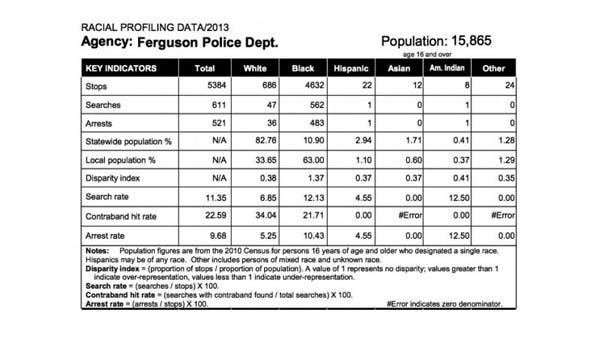
Last year, long before most people had heard of Ferguson, Missouri, the United States Supreme Court struck down a key provision of the Voting Rights Act, in essence declaring that racism in the United States had ended.Fast-forward more than a year and Ferguson resembles nothing more than a warzone after the protests over the shooting death of 18-year-old Michael Brown by a Ferguson police officer. The protests — initially peaceful — turned violent due to a heavy-handed response by police, using military equipment and S.W.A.T tactics.Ferguson, a suburb of St. Louis, has 21,000 residents, two-thirds of whom are Black, while its 53-member police department includes only three Black officers. Brown’s death at the hands of police was not only the latest racial incident embroiling Ferguson’s Black residents; it was the straw that broke the camel’s back.This article is reposted from TCDP media partner Minnesota Spokesman-Recorder. Check out the links below for other recent Minnesota Spokesman-Recorder stories:New Hennepin County service center opens on North SideA great voice for the people silencedLast year, St. Continue Reading

From Mayberry to #Ferguson

Andy Griffith, the television sheriff of the fictional town of Mayberry, grew up on the wrong side of the tracks in the real town of Mount Airy, North Carolina. Last week, just after I visited Mayberry/Mount Airy, I listened to a PRI program about Baltimore’s new curfew, described as “one of the toughest in the country.” As I drove across the country, the radio also brought stories about the police killing of Michael Brown in Ferguson, the protests, and then the police killing of Kajieme Powell. Continue Reading

OPINION | Who killed Mike Brown? What to do?

Mike Brown is dead. The Ferguson police took their time in giving up the killer, Darren Wilson. But we know the name of his accomplice. So we know who and what killed Mike Brown. It was the political, economic, social system called capitalism.It was this system that continues to manufacture the image of criminal Black people. Continue Reading

All cops are Darren Wilson

I know. It’s an inflammatory title, and easily disproved. I am sure there are many cops out there who wouldn’t execute a kid in cold blood for walking in the street.

But i want to talk solutions, and all the ‘good cops’ in the world didn’t save Michael Brown. They didn’t save Eric Garner. Or Terrance Franklin. Or Oscar Grant. Or Kelly Thomas. Or John T. Williams. Or any of the other 400 people/year who are murdered by police in the United States. Continue Reading

Al Flowers case prompts protest at MPD’s 3rd Precinct

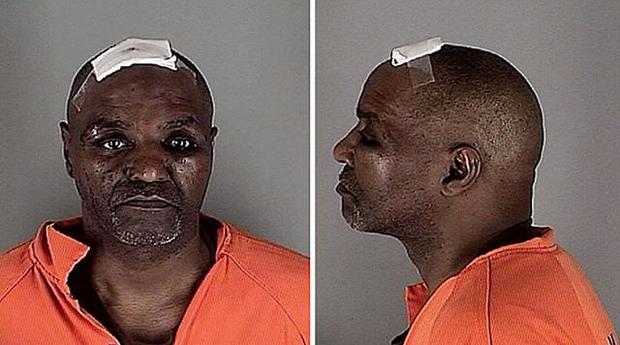
Minneapolis Mayor Betsy Hodges and police chief Janee Harteau say there will be an independent investigation of an incident where police injured community activist Al Flowers. He was in a violent encounter with police when they came to his home to arrest Flowers’ teenage daughter. Flowers says he asked to see a warrant for her arrest, and a scuffle broke out. [Audio below]”Once they attacked, I felt every blow,” Flowers said. “I got stomped.”The case is being held up by critics of the Minneapolis police department as evidence of their claim that the force routinely brutalizes residents.A group of about fifty people rallied outside the third precinct police station at Lake Street and Minnehaha. Continue Reading

Flowers incident rekindles fear and frustration for Minneapolis’ black community

For many of the community leaders who assembled Tuesday at the Minneapolis Urban League, the alleged beating of activist Al Flowers by police has re-opened a long-standing wound.The meeting came four days after Flowers had an altercation with police officers at his south Minneapolis home Friday night, an incident that put the community activist in jail for several hours and left him with head and facial injuries.Speakers at the event, addressing a crowd of about 100, expressed their anger and frustration over the arrest, accusing the Minneapolis Police Department (MPD) of racial profiling and intimidation against the African-American community. “This is old in our community,” said Spike Moss, a longtime civil rights leader. “We have suffered from brutality of police all across this country, everything from savage beatings to murders.”“Al’s incident is not isolated,” said the Rev. Jerry MacAfee, head of the Minneapolis chapter of the NAACP. “Those of you who have been around here for awhile, you know we’ve been fighting this for quite some time. The tragedy is that the climate has not changed.”Community Sketchbook focuses on the economic and social challenges facing communities, especially low-income communities and communities of color, and how people are trying to address them. Continue Reading

Police brutality cause for Minneapolis ballot issue

The Committee For Professional Policing is working to pass an amendment to the Minneapolis City Charter, which would be voted on as a ballot issue in the November 2014 election. This amendment would require police officers to carry personal liability insurance, much like the malpractice insurance doctors are required to carry.CFPP officially formed as a political committee in the spring of 2013. The original idea for the liability insurance model came from Communities United Against Police Brutality, an all-volunteer organization founded in 2000 which focuses on advocacy, education and political activity to end police brutality in Minneapolis and the surrounding metro areas.According to statistics gathered by CFPP, the City and its taxpayers have spent $20 million on police misconduct payouts since 2006.“Right now, the city covers pretty much all acts of misconduct by police officers, but it’s not actually required to do so,” explained Dave Bicking, the Chair of CFPP.This means that officers are covered only arbitrarily by the city’s current provisions.“This is not an anti-cop deal by any means,” said Michelle Gross, President of CUAPB. “It is a way to get rid of the bad officers and keep and protect the good ones.”According to Bicking, the impetus for the charter amendment comes from a long history of issues with holding police officers accountable for misconduct.“We’ve been frustrated with the fact that the city politicians, the police chief and the union really have no interest in disciplining officers or holding them to account for their conduct,” Bicking said. “All that’s been effective is lawsuits. Continue Reading