Residents get on board for Penn Avenue redevelopment

As reported by the Camden News last summer, the Penn Avenue Community Works Project has a collaborative team comprised of Hennepin County, City of Minneapolis, and Metro Transit employees. The project’s purpose is to enhance the economic, livability and mobility along Penn Avenue which will ultimately improve the quality of life for Northsiders. The team’s first project effort is to make transportation for Northside residents both affordable and accessible by implementing Bus Rapid Transit (BRT) that will extend from the Brooklyn Center Transit Center to downtown Minneapolis—which will conveniently connect passengers to the light rails. The Green Light Rail runs between the downtowns of Minneapolis and St. Paul, and the Blue Light Rail proceeds to the Mall of America in Bloomington. Continue Reading

Move MN pitches 10-year plan to fund needed transportation improvements

Unions joined businesses, non-profits and local governments today in unveiling a 10-year plan to finance improvements to the state’s highways, bridges and transit systems.Gov. Mark Dayton and legislative leaders have said transportation will be a top priority during the 2015 session. Move MN, a broad-based, transportation-focused coalition of more than 200 groups, jumped right into the fray, pitching its proposal at a Capitol press conference on the session’s third day.Move MN’s “10-Year Transportation Commitment Proposal” would generate an estimated $856 million annually with “modest increases” in fees and taxes that currently fund the state’s transportation system.The average Minnesota driver, according to Move MN, would pay about $1.60 more per week as a result of the increases, with Twin Cities residents paying an extra $1.30 per week as a result of a Metro-county sales tax hike, dedicated mostly to expanding public transit. Businesses would pay roughly $900 more per semi-truck annually under the plan.To justify the cost, transportation advocates pointed to Minnesota Department of Transportation statistics showing more than 65 percent of the state’s roads and 40 percent of its bridges will be more than 50 years old by 2025. Over the same time frame, freight semi-truck traffic is projected to increase by 30 percent, and the state will have 430,000 additional residents.State officials’ own estimates indicate Minnesota faces a transportation-funding gap of well over $1.5 billion annually.“Everyone agrees that an efficient, reliable transportation system is essential to Minnesota’s economic competitiveness,” Move MN co-chair Margaret Donahoe said in a press release. “But by 2025, Minnesota’s entire transportation system will be on life support as congestion, reliability and safety concerns put our state’s long-term economic health at risk.”Details of the proposal are available in Move MN’s full press release.Unions and labor federations supporting the Move MN coalition include the St. Paul Regional Labor Federation, the St. Continue Reading

Minnesota’s hidden intercity bus network

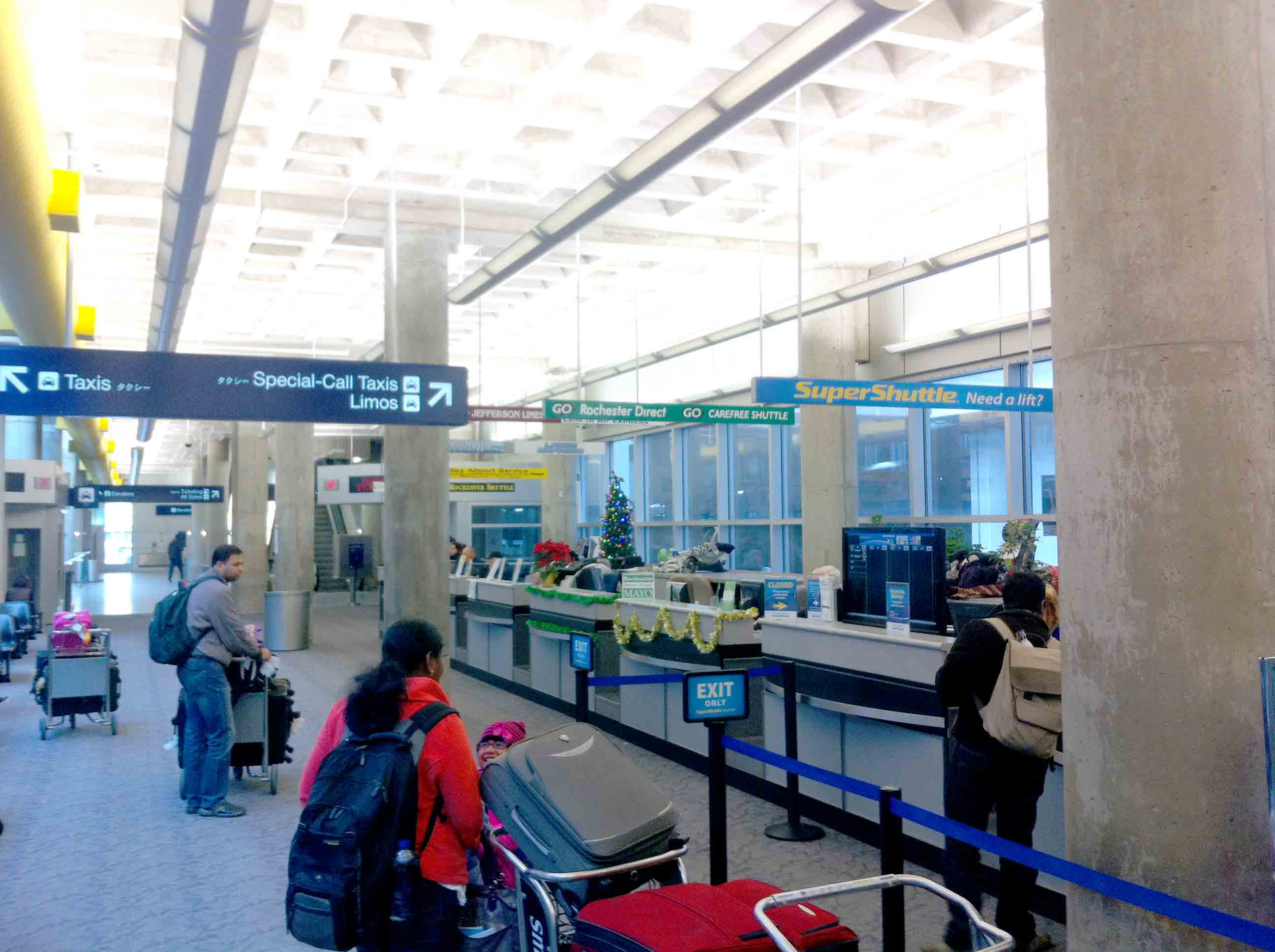
There was a time when buses and trains connected the Twin Cities with every corner of Greater Minnesota. The trains are gone except for Amtrak’s Empire Builder, which has become quite unreliable and inconveniently runs west of Minneapolis in the wee hours. Except for its express link to Chicago via Eau Claire and Madison, Greyhound has completely withdrawn from the state where it was founded in 1914. Locally owned Jefferson Lines has filled many of the gaps, but conventional bus service has become sparse, mostly bypassing the small towns and running only once or twice daily. Continue Reading

Minnesota’s broken transportation funding system

Not only is Minnesota’s infrastructure in badly need of repair but so is the system set up to pay for it. But it is not just Minnesota; the entire process for how America pays for roads, bridges, and other forms of infrastructure is vastly outdated, reflecting a carbon-intensive consumptive model of the world. For that reason, whatever the Minnesota legislature likely does this session when it comes to infrastructure and transportation funding, it will be outmoded from the start. Continue Reading