FREE SPEECH ZONE | MDH warns of deceptive sales of water treatment systems; Tactics use bogus tests, misrepresent agencies and standards

The Minnesota Department of Health (MDH) is reminding Minnesota residents to beware of false claims, deceptive sales pitches, and scare tactics being used by some water treatment companies to sell expensive and unnecessary water treatment systems. High profile investigations of groundwater contamination in Washington County and elsewhere in the state have resulted in a noticeable increase in the number of complaints regarding such deceptive sales activities.We usually don’t publish press releases — but this one is a particularly timely public service on a slow news week.Recently Richfield police issued an alert after residents reported getting green bottles left on their doorstep with a request for a water sample. After providing a sample, a homeowner received a visit from a salesman with an aggressive sales pitch for a treatment system costing more than $6,000 and had difficulty getting the salesman to leave. Officials in Falcon Heights also alerted residents after complaints of water testing kits and personal information requests being left at people’s doors. The city directed residents to call 911 if they saw anyone dropping off testing kits. Several cities have complained about a website containing misleading information about municipal water suppliers and what tests are done on drinking water. The website has been used to try to sell treatment systems to homeowners.While the pitch varies in these situations, the salesperson nearly always:Recites a list of recent groundwater contamination problems across the state, regardless of whether the contamination actually affects the resident or not.Conducts a series of water quality “tests” that the salesperson claims indicate the presence of contamination, when in fact they may simply indicate the presence of naturally occurring minerals in the water.Misrepresents state and federal drinking water standards, claiming the resident’s water exceeds those standards, and implying the water is unsafe to drink.Offers a “one-time only” offer of a water treatment system at a “greatly reduced” price, when in fact the systems are being sold at grossly inflated prices.In some of the worst instances, the salesperson has implied or said that he is working with the city’s water utility or the state health department. In most cases, the systems are being sold for thousands of dollars more than they would cost if bought through a reputable water treatment company.Even legitimate water treatment systems can be very expensive and if poorly operated or maintained may have limited effectiveness and, in some cases, make the water quality worse. Water treatment systems should be installed only if actually needed and selected to address the specific water problem.If you use city water, it is safe to drink unless you are notified directly by the city that the water is not safe to drink. The United States Environmental Protection Agency sets standards for public water supplies and the water is tested regularly to ensure that these standards are met. You may find out the results of tests on a public water supply by contacting your water utility.Water from a private well should also be free of unsafe levels of man-made contaminants if the well is properly constructed, is drawing from a safe aquifer, and has not been flooded or otherwise compromised. Continue Reading

Rideshare to Work Month brings incentives for Twin Cities drivers to beat the traffic, join a carpool

In the 1950s, long before America’s social atomization described in the book “Bowling Alone,” my dad went to work in a carpool. The other travelers were his fellow Ph.D. scientists at DuPont’s ivy-covered Experimental Station in Wilmington, Delaware. Many of the old laboratories on the DuPont campus are gone, and carpools are largely a thing of the past, as well.Among the Twin Cities’ 3 million residents, barely 7,000 people commute in registered car and van pools, according to the latest Metro Transit and Metropolitan Council counts. That’s not to say there isn’t continuing interest in this efficient and economical way of getting to work. This year alone, more than 3,600 people have searched for carpool partners using Metro Transit’s online ride-matching software.October is Rideshare to Work Month, Metro Transit’s effort to tell more commuters about the ease, reliability and perks that come with carpooling. Continue Reading

Don’t stop watering your gardens and trees

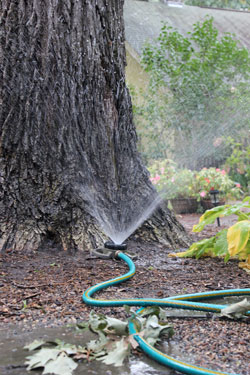
Poet Alfred Joyce Kilmer said, “I think that I shall never see, a poem as lovely as a tree.”So true, but with this summer’s drought and heat, we need to make sure our lovely trees, shrubs, perennials and lawns (or alternative ground covers) survive for admiration next season.The most important duty of a gardener is to water.Watering is a critical factor in survival, yet many of us do not recognize our plants’ needs for water, especially in the fall months when temperatures cool.Take a walk through Como Regional Park or College Park in the St. Anthony Park neighborhood and you will see that plants have drooping, folded leaves. This is how the plants are trying to survive, by limiting the amount of water loss from their leaves.Look at the soil. At the time of this writing, we had had no significant rains for our plants in the last two months. If you try digging into the soil in your yard where you have not watered, you will find it is hard to dig as the soil is deeply dry.So what should you do? Continue Reading

BBB Tips on Finding a Tax Preparer

Tax season is upon us again and the Better Business Bureau of Minnesota and North Dakota (BBB) is encouraging taxpayers to do some legwork before selecting tax preparation help. Doing your research ahead of time may help you avoid getting hit with fines and fees if your return isn’t correct or filed late. Continue Reading

U starts up bed bug hotline

Entomologists at the University of Minnesota have established bed bug phone and email hotlines for a new bed bug resource center that will offer guidance on how to deal with bed bug infestations.Bed bugs have had a recent resurge in North America as a result of increased travel, changing insecticide use and the lack of public awareness.In addition to the hotlines, experts at the University will conduct seminars throughout the state for landlords, hotel managers and consumers.Bed bugs are oval, flat, brown and wingless insects that are about the size of a wood tick. If the bed bug has consumed blood, the coloring may change to a purplish-red color. Bed bugs are parasites that feed on the blood of people and certain animals, and they require these blood meals to grow and reproduce. Bed bugs are typically most active at night and some people break out in a rash, while others see few symptoms beyond a red spot.The phone line for the University’s new bed bug center is 612-624-2200 or visit their website. Continue Reading

How to buy a bike: A guide for the first-timers, second-go-rounds, and the bike-curious at all levels

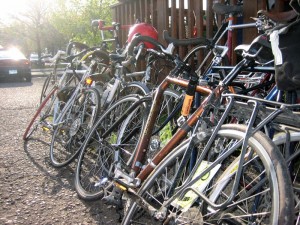
In the Twin Cities, there are three types of two-wheeled travelers: There are the competitive cyclists, who wear spandex and sniff at a 20-mile ride as “a good start.” There are the bike enthusiasts, who might commute to work or school by bike (even in the winter), who integrate cycling into every aspect of their lives and talk a lot about “bike culture.” And then there’s everybody else—people who ride bikes, who enjoy the thrill of getting around without a car, who don’t list “bicycling” under a list of hobbies but love a spin around the lakes in the summer and maybe even know how to change a tire. We probably don’t have any advice for those in the first two categories, and they probably don’t need it. But we do know something about people who ride bikes casually—and, more importantly, people who aspire to. Biking is cool for all the right reasons: it’s simultaneously functional and fashionable, and everyone looks good on a bicycle. Is there a better way to exercise and save the earth at the same time? Continue Reading