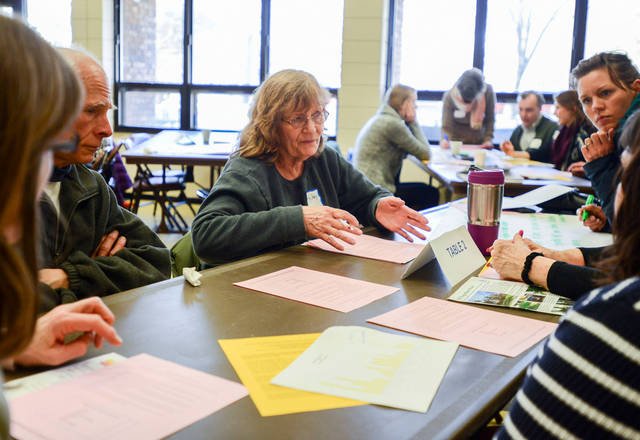
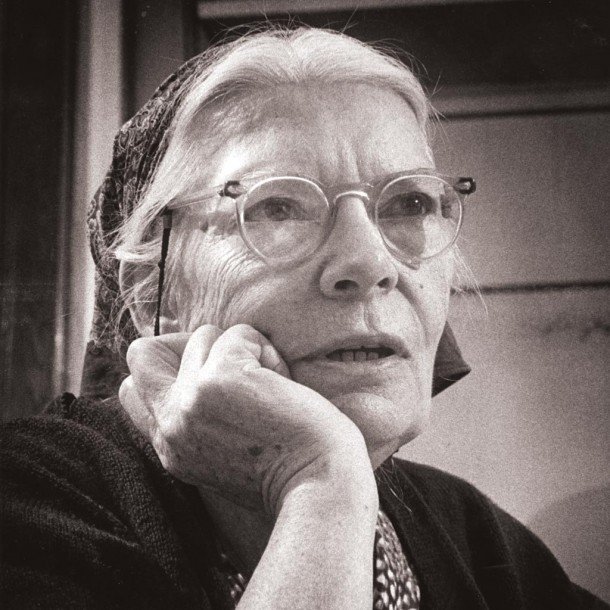
St. Paul District 12 zoning proposal meets opposition

The St. Anthony Park Community Council has tabled a proposal to change the zoning code in north St. Anthony Park to allow additional dwelling units to be built on single-family lots. The council is considering creating an ad hoc committee or task force to study housing density in District 12 and hear neighbors’ views about the zoning proposal.

Continue Reading

Affordable housing spatial inequality: A conversation with Myron Orfield

The podcast this week is a conversation with Myron Orfield, the director of the institute on Metropolitan Opportunity at the University of Minnesota. Orfield has also written many books on public policy and regional governance, and has spent years studying how municipal fragmentation has led to persistent inequality, particularly in the Twin Cities. Orfield made headlines a few months ago after publishing a study that called for the Metropolitan Council to build more affordable housing in the Twin Cities’ suburbs. We sat down in his office on the West Bank of the U of M campus a few weeks back to talk about his recent report, the problem with the affordable housing industrial complex, and why the Twin Cities are more segregated now than they were in the 1960s. Continue Reading

Redlining: Twin Cities banks still restricting home loans in “non-white” areas

Members of Neighborhoods Organizing for Change (NOC), ISAIAH, and Minnesotans for a Fair Economy stood together outside Minneapolis City Hall to accuse banks of continuing to “red-line” communities of color and refusing to refinance sub-prime mortgages from 2009-2012. Accompanying the activists and researchers were three Minneapolis City Council members — Blong Yang, Elizabeth Glidden and Cam Gordon, all of whom called for something to be done.

Continue Reading

Marcy-Holmes finalizing master plan, seeking feedback

The Marcy-Holmes master plan update, which will guide growth and development in the neighborhood, was released Wednesday for public comment.The 2014 update to the master plan incorporates the in-progress Dinkytown small area plan. Marcy-Holmes Neighborhood Association members discussed at a meeting Tuesday night how the plan can manage the current neighborhood’s divide on how to develop the area.Master Plan steering committee leader Bob Stableski said the neighborhood’s character spots — from the riverfront to industry and residential areas — are each facing different problems.“This isn’t a homogeneous neighborhood,” he said. “The value of the plan is that we can look at these things on a neighborhood-wide basis and also break them down into the five different character areas.”The neighborhood has come up with six themes that come into play throughout the plan: “Be one neighborhood,” “live here now,” “make the streets ours,” “make change contribute,” “love the riverfront” and “welcome the tension of complexity and contradiction.”Proposed projects include improving riverfront connections, encouraging investment along Fifth Street Southeast to create more livable streets, increasing the frequency of transit on University Avenue Southeast and Fourth Street Southeast, and expanding the Dinkytown commercial area while preserving its historic qualities.The update also proposes improving areas between campus and the Stone Arch Bridge. MHNA President Cordelia Pierson said the neighborhood is looking forward to partnering with the University to do that.“[The idea has] been on the books for about 20 years,” she said. “It’s just needed some focus and prioritizing, so we’re hoping to bring that to life.”The city approved the neighborhood’s first master plan in 2003, which came from hearing what residents liked or disliked about the neighborhood, what aspects they wanted to preserve, what goals they wanted to achieve and what they wanted to avoid. Continue Reading
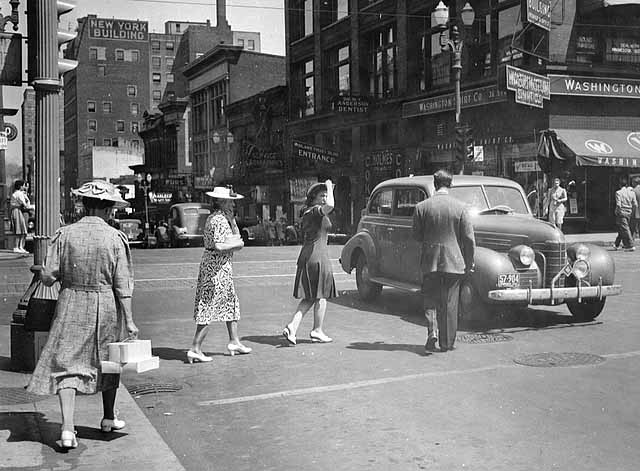
OPINION | Rest in peace, Dorothy Day: The Dayton’s Bluff Equity Committee looks at the process of siting a new Dorothy Day Center

The dust has settled on the proposal by Catholic Charities to site a new Dorothy Day Center on the Eastside. Unfortunately, Dorothy Day herself might have shuddered at how the discussion unfolded. A pacifist and anarchist, Day advocated “distributism,” the equitable division of property and the means of production.

Continue Reading