A few weeks ago, I attended one of those big civic dinners that take place annually in every city across the country. It was fun! The mayor, all the council members, the business community, key city staff, the planning commission (including me), philanthropic foundation heads, and lots of Saint Paul’s architects, developers, artists gathered in the downtown convention center banquet hall to celebrate our accomplishments over the past year. The keynote speaker was Katherine Loflin, a placemaking consultant from North Carolina who had spent a week in Saint Paul discussing the importance of place with local decision makers. She was also kicking off the “Forever Saint Paul Challenge,” a million dollar open-sourced grant competition for Saint Paul. Continue Reading
The format of this forum was to have the school board candidates and the mayor rotate through 7 tables. At each table, people could ask questions. A facilitator at each table managed time and opportunity. So the experience of every table will vary greatly. I only represent the viewpoint of one person at one table. Continue Reading
“It’s the people power here, I think, that makes a difference,” says Kelley Leaf, Community Relations Director of Feline Rescue, Inc.Yet despite the title, Leaf is not paid for her work; Feline Rescue is an all-volunteer no-kill feline rescue. Founded in 1997, the nonprofit houses and rehabilitates up to 70 cats at a time at its adoption center on Fairview, just north of University Avenue, in Saint Paul.The organization also maintains an extensive network of foster homes to care for kittens, whose special socialization needs require them not to be kept at the adoption center. In 2012, 277 cats were adopted from the rescue, making a dent in the hundreds of cats picked up by animal control each year in Saint Paul. This represented a 17% increase in adoptions over 2011, even as the shelter took in 10% more cats than over the previous year.Further helping to decrease the number of unwanted felines in the Twin Cities, Feline Rescue gets out into the community in partnership with MNSNAP and spays and neuters hundreds of feral cats (or as Leaf calls them, community cats). This year, a $24,000 grant is expected to increase the number of cats the organization can spay or neuter from the 719 ‘alterations’ performed last year.Those interested in adopting, volunteering or just visiting with the cats can stop by the adoption center seven days a week or visit the website at http://felinerescue.org. This is one of a number of articles produced by students at Macalester as part of a New Media class.CORRECTION: The official name of the organization is Feline Rescue, Inc. Continue Reading
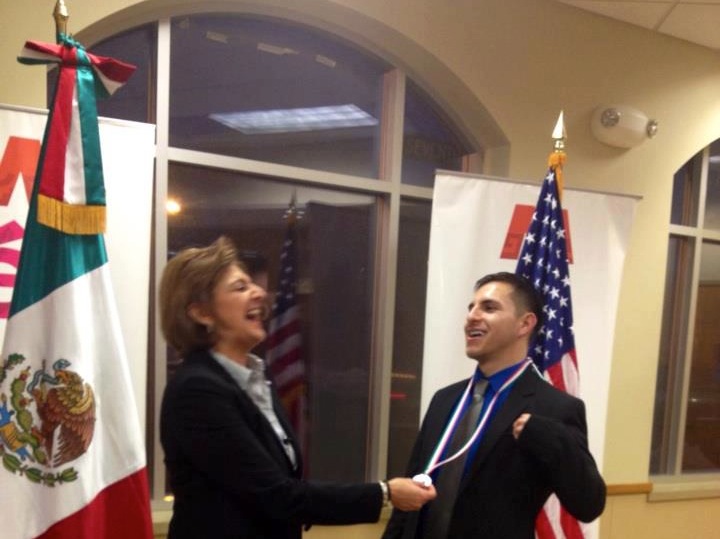
At 25, Juventino Meza is much younger than the typical recipients of the Ohtli Award and the Immigrant of Distinction Award. Meza was honored in a ceremony at the Mexican Consulate in St. Paul on March 7, with the Ohtli Award from the Mexican government. He received the Immigrant of Distinction Award on March 14 from the Minnesota/Dakotas Chapter of the American Immigration Lawyers Association, at the Hubert H. Humphrey School for Public Affairs of the University of Minnesota during a community forum on immigration reform.Ohtli is Nahuatl (an indigenous language in Mexico) for “path.” Meza has done much to improve the path of young immigrants in his community. Continue Reading
Hennepin County has asked for community feedback on the two-year Minnehaha reconstruction project for the approximately 2.2 mile stretch from 46th Street South to Lake Street. However, details about the project and how to submit feedback have been lacking, according to many. Dave Koch, manager at the Rail Station Bar and Grill, commented, “What can we do? It’s going to happen. We’re not looking forward to it, but it’s going to happen.”This is one of three articles on the Minnehaha reconstruction project. Continue Reading
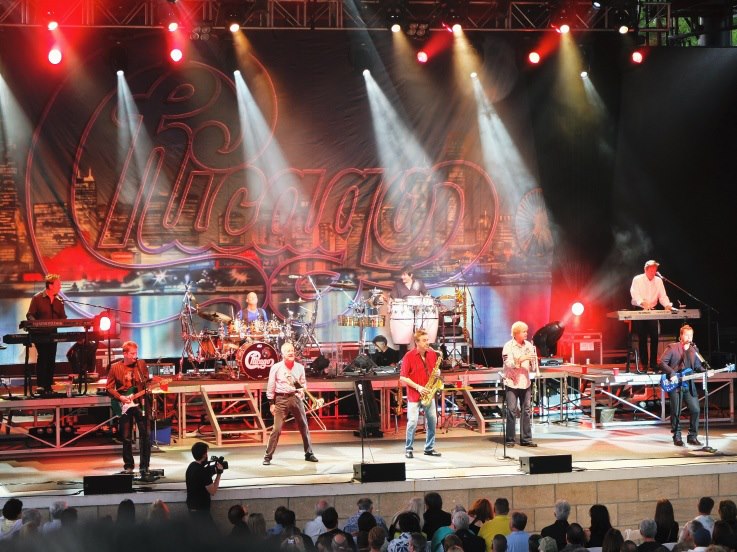
Once upon a time, way back in the late 1960s there were three bands who played rock music a la big-band style. They were The Electric Flag, Blood, Sweat & Tears and Chicago Transit Authority. Hipster authorities had it that the Flag were the baddest, followed in quality by the Al Kooper-led B, S & T, then the Kooper-less lineup, then the woefully commercial CTA (who quickly shortened the name to Chicago). Well, baddest to the bone or not, Chicago, charting higher and lasting a whole lot longer than the other two put together, wound up leaving an indelible, signature imprint on the music industry.April 27th, literal living pop-rock legends rolled into the Twin Cities at the State Theatre and regaled a sold-out house with a superb show of what the beauty of doing with it with horns is all about. They delivered sweet melodies, layered texture and excellent musicianship—all with kick-ass power. Continue Reading
Never heard of social enterprise? Well, it’s here and growing. That’s why RT Rybak has proclaimed this to be Social Enterprise Week in Minneapolis. Minnesota has sometimes been called the “Land of 10,000 Non-Profits,” so deeply embedded is the culture of compassionate support. It’s not surprising that the Twin Cities is ranked #1 for volunteering. But there are a few new twists on this story. Many Minnesota nonprofits are functioning as “social enterprises” – and yet they might not identify themselves as one. It’s a new term for a growing national and international trend. Social enterprises bridge the for-profit and non-profit worlds because they operate with a “double bottom line” — profits and social mission. They sell products and services, which then generate funds that can be used to address social issues.“Not enough people know about the depth of social enterprise leadership and innovation in our area, many started decades ago,” said Mayor RT Rybak.PPL Industries, for example, was launched 30 years ago. Instead of being primarily funded by grants or donations, they relied largely on fees generated by providing light assembly for larger businesses. Their operation provided essential work skills and job training for individuals with multiple barriers to employment. Following a merger with Rebuild Resources last year, the new $6 million organization has been rebranded as Momentum Enterprises.Why are more nonprofits starting or expanding a social enterprise? Some say it is because they are experiencing the “new normal”, based on increasing competition for both charitable dollars and government contracts. To become more self-sustainable, nonprofits are increasingly considering the “earned-income” strategies of social enterprise to support their mission.In 2002, CityKid Java was created to raise funds for a worthy cause: the revitalization of the South Minneapolis community. Since then, they have grown to become a $2 million business selling coffee through Target, Cub, and Whole Foods as well as businesses and faith-based organizations. The “profits” are used to fund Urban Ventures. CityKid Java is undertaking an aggressive growth strategy to use this “business model” to expand and support youth in other states. Social enterprises are as varied as the communities they serve. Twin Cities based social enterprises include the Beez Kneez, The Arc Value Village Thrift Stores, DumpTech, Finnegans, Genesys Works and Tasks Unlimited. Another twist is that more for-profit companies are operating with a double bottom line as well, such as Moss Envy and The Data Bank.The Social Enterprise Week proclamation is one way to raise awareness about the social and economic benefits of social enterprise in our communities. St. Paul Mayor Chris Coleman signed one for St. Continue Reading
Green Central is implementing a program called Developmental Dual Language, one of four dual language approaches in MPS, along with Two-Way Dual Language Programs, Transitional Dual Language Programs, and Heritage and Culture programs. The program is also in place at Jefferson in grades K-2 and at Andersen United elementary school. A working document from MPS describes the goals of DDL:”Developmental Dual Language Programs are informed by the principle that higher levels of proficiency (both oral and written) in a language are fueled by using the language for meaningful, challenging learning. As such, DDL programs strive to offer equal proportions of core academic coursework in English and in the Home Language.”Goal: Full Bilingualism & Biliteracy. At the heart of DDL is the conviction that full proficiency in two languages is a valuable asset and a powerful resource for learning. Students with a Home Language Other Than English are in a uniquely privileged position to develop such full bilingualism. Continue Reading
It’s a dimly-lit space, but it’s been a spot of brightness to hungry families in the greater Camden Community, as well as holding a key to keeping a 120-year-old church alive. The Camden Promise food shelf, and other programs of The Camden Promise, are joint efforts of three congregations worshipping at 4656 Colfax Ave. N.Gethsemane Lutheran Church, which celebrated its 120th anniversary April 14, shares its worship space with the NuWay Baptist Missionary Church and Brooklyn Center Seventh Day Adventist Church. The cheery, circular, newly remodeled worship space is reflected in the colorful glass bowl of the new baptismal font and new altar dedicated at that celebration.John Nelson, with help from his brother Jeff, constructed the table and baptismal font in honor of their father, Chuck. Connie Beckers made the bowl.Down the stairs from the sanctuary, there’s the area where children play while their parents shop at The Camden Promise Food Shelf in the original church’s former gym space—accessed through a maze of hallways and stairs. Continue Reading