Susan Hegarty is a freelance journalist and owner of Pencil Thin Communications, Inc., a public relations and marketing business she opened in 2007. Based in the Twin Cities Metropolitan Area, Susan has written for a variety of publications, both print and online. When she's not a news hound, she can be found traveling the world photographing sunsets.
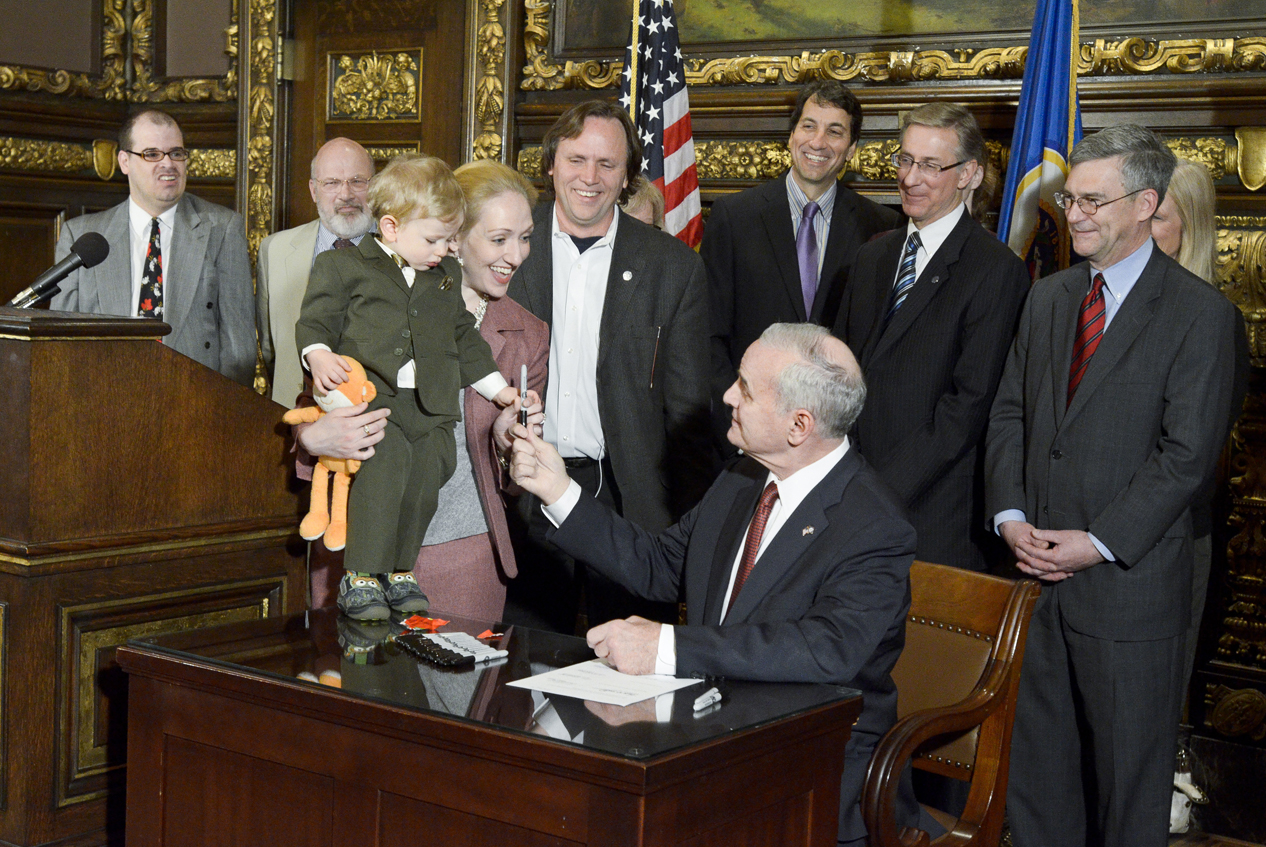
Policies regarding adoption, child support, and the care and safety of children, as well as Minnesota Family Investment Program provisions, are included in a new Department of Human Services policy law.Rep. Jim Abeler (R-Anoka) and Sen. Michelle Benson (R-Ham Lake) sponsor the law.Child protection and foster careThe “Give Life A Chance” provision gives mothers wishing to relinquish their newborns without prosecution another legal option besides hospitals.Effective Aug. 1, 2012, ambulances can pick up a child after a 911 call is placed by the mother or a person with the mother’s permission to give up the child. The timeline of when the mother may relinquish her child will expand from 72 hours after giving birth to seven days.Children in foster care who turn 18 will be able to stay in foster care until age 21, if they have not been adopted.If a child is discharged from foster care, the social service agency must develop a personalized transition plan with the youth during the 90 days preceding discharge. Effective Aug. 2, 2012, all children in foster care for at least six months will receive a progress review for permanent placement, whereas previously only children under age 8 were reviewed. Continue Reading
An omnibus health and human services law lays out a path for reform in several health care sectors, and restores or delays some of the cuts made in 2011 to balance the state budget.Sponsored by Rep. Jim Abeler (R-Anoka) and Sen. David Hann (R-Eden Prairie), the law authorizes spending $18.1 million.Because the bill accounts for $35 million in repayments from managed care organizations, whose gross revenues were capped at 1 percent, there is a positive balance of $16.8 million for the fiscal year ending June 30, 2013.Except where otherwise noted, the law takes effect Aug. 1, 2012.Welfare reform initiativesRestricting electronic benefit transfer cash card uses to Minnesota and surrounding states;disqualifying anyone found guilty of using an EBT card to purchase tobacco or alcohol for one year for the first offense, two years for the second offense and permanently for the third offense;allowing data sharing between the Department of Public Safety and the Department of Human Services for purposes of preventing welfare fraud, effective July 1, 2013;stopping landlord vendor payments on public assistance rent for convicted drug felons when the shelter is deemed uninhabitable;looking back 10 years for felony drug offenses when determining eligibility for Minnesota Family Investment Program benefits; andrequiring personal care providers to grant immediate access to records to the Health Department if investigating Medicaid funds.Children and family policy reformsExtending the number of absent days that child care providers can be reimbursed when children of young mothers, still in school, miss day care, effective Jan. 1, 2013;using 80 percent of grants for construction or rehabilitation of early childhood, crisis nursery or parenting centers for counties outside the seven-county Twin Cities metropolitan area;implementing a pediatric care coordination service for children with high-cost health conditions;requiring managed care and county-based purchasing plans to implement strategies to reduce incidences of low-birth weight; andrequiring postpartum depression information to be available at Women, Infants and Children (WIC) Program locations.Change to previous legislationRepealing the Minnesota Comprehensive Health Association’s six-month residency requirement for Healthy Minnesota Contribution Program enrollees;repealing a mandate that managed health care plans report the company’s five highest salaries, including all types of compensation, in excess of $50,000;delaying the 20 percent rate reduction to personal care assistants who are related to the assisted person until July 1, 2013;delaying the mandatory bed closure for adult foster care homes until July 2013 and conducting a needs determination study during the interim; anddelaying the 1.67 percent continuing care rate reduction until July 1, 2013, or until a federal waiver is received for persons with intermediate care facility or developmental disabled waivers.Adult-related provisionsRaising the allowable earned income level to $500 per month for employed adults with mental illness living in group homes, effective Oct. 1, 2012;providing exemptions to the nursing home moratorium;establishing a critical access nursing designation, effective April 29, 2012;issuing a mental health certification for adult foster care homes;enabling a variance for a fifth bed in a four-bed adult foster care facility to respite care;requiring adherence to new regulations regarding overnight supervision of residents in adult group homes;developing a Senior LinkAge Line referral service for older adults at-risk for long-term care;removing the Medical Assistance asset cap for employed persons with disabilities reaching age 65, to prevent “spending down” of finances or moving into more expensive shelter care, effective April 1, 2012;encouraging a provider for persons in individualized community living facilities to transfer the lease to the resident within two years; andexpanding the shelter options for “shelter needy” adults to live in units with more than four beds, provided no more than 25 percent of the units are used for this purpose.Studies and task forcesAppropriating $200,000 for a study focused on the incidence of autism among the Somali community;directing the Departments of Human Services; Education; Health; and Employment and Economic Development to study supportive housing models for children diagnosed with autism disorders;changing the name of the Ladder Out of Poverty Task Force to the Asset Development and Financial Literacy Task Force;establishing the Minnesota visible child work group to improve homeless children’s well-being;analyzing the differences in asset limit requirements in human services assistance programs and reporting findings by Jan. 15, 2013;requiring a nonemergency medical transportation advisory committee to advise and make policy recommendations to the Health Department;requiring the Human Services Department to do an emergency Medical Assistance study;establishing a Maternal and Child Health Advisory Task Force;conducting a study of health record access;requiring the Health Department to publicly report sexual violence data;directing the Human Services Department to do a feasibility study on licensing personal care attendant services;adding marriage and family therapy counselors to the State Advisory Council on Mental Health; andappropriating $137,000 to study the capacity need for radiation therapy facilities.Miscellaneous provisionsReimbursing for services performed by physician assistants and covered under Medical Assistance;biennially conducting an independent third-party audit of managed care plans and county-based purchasing plans, beginning Jan. Continue Reading
Minnesota now has a state soil. The designation of Lester as the state soil in the omnibus agriculture law coincides with the University of Minnesota’s 2013 celebration of the 100th Anniversary of the soil science program and the 40-year-old Minnesota Association of Professional Soil Scientists, according to Rep. Paul Anderson (R-Starbuck), who sponsors the law with Sen. Doug Magnus (R-Slayton).However, a large portion of the law will require new labeling of landscape and garden stock designed to help consumers choose hardy stock for Minnesota’s extreme growing conditions.The law is effective Aug. 1, 2012, unless otherwise noted.Planting guidelinesThe new law defines “non-hardy” as a plant that cannot be expected to survive or produce flowers in certain growing zones and requires non-hardy nursery stock to be labeled as such. Sellers of nursery stock will also be required to keep balled and burlapped stock moist at all times.Similarly, nursery stock collected from the wild must be labeled as such when sold, unless it has been grown in nursery rows at least two years; and vegetable and flower seed packets could list the number of seeds in the packet, instead of the net weight.The Department of Agriculture’s nursery and plant inspection and enforcement powers will expand to include the department’s Wholesale Produce Dealer, Grain Buyer/Grain Storage, and Warehouse oversight responsibilities. The department can enter sites, inspect and sample products, issue commissioner’s orders, and pursue administrative and criminal penalties for failure to follow the Wholesale Produce Dealer, Grain Buyer/Grain Storage, or Warehouse laws.Grains and livestockA public grain warehouse operator’s license must currently be filed before the purchase or storage of grain may occur. Continue Reading
Autism studies, group homes, personal care assistants and electronic benefit transfer cards are just a few of the dozens of health and human services reform policies in a conference committee report passed by the House.As part of HF2294*/ SF2093, the omnibus health and human services bill, an autism study of the Somali community would be conducted to try to find out why one in 27 Somali children are diagnosed with autism at birth. Another autism study would consider early intervention therapies and their projected outcomes.A mandatory requirement to close a foster care bed when a resident no longer needs it would be delayed until 2013, and instead a needs determination model would indicate where bed closures are most available. Also, a four-bed adult foster care home could accept a fifth person for temporary respite care, in some circumstances.Legislators decided last year to help balance the state budget by paying Minnesotans who are employed as personal care assistants for family members 20 percent less than their non-related counterparts. The rate cut was temporarily blocked by the courts and the Department of Human Services put off spending the savings. Under the report, the 20 percent cut would be delayed until July 1, 2013.One of the more controversial provisions of the bill focuses on increased restrictions for the use of electronic benefit transfer cards that are issued to persons who meet low-income requirements.A provision proposed by Rep. Kurt Daudt (R-Crown) would limit the card purchases to stores in Minnesota and adjacent states. Continue Reading
Mothers of newborns choosing not to keep their baby could have another legal option of where and when they can safely relinquish the child.The “Give Life A Chance” provision in HF1967/ SF1675*, sponsored by Rep. Jim Abeler (R-Anoka) and Sen. Michelle Benson (R-Ham Lake), would allow ambulances to pick up a child after a 911 call is placed by the mother or a person with the mother’s permission to relinquish the child.The House passed the bill 127-1, as amended with a technical amendment. It now goes back to the Senate where the original bill passed 64-0 March 22.Under current law, the mother has 72 hours after giving birth to relinquish her child to a hospital. Additionally, the bill would lengthen the time period from 72 hours after birth to up to seven days.Other provisions include clarifying language related to children’s adoption; protection, support and care laws; and aligning them with federal laws and definitions. It also addresses adult foster care and mental health issues. Continue Reading
When the RU-486 pill is dispensed to women seeking an abortion during the first few weeks of pregnancy, the doctor would need to be in the room when the drug or another chemical used to induce an abortion is administered, under a bill passed by the House.The doctor would also need to encourage the woman to return within 12 to 18 days to confirm that the pregnancy was properly terminated, according to HF2341 sponsored by Rep. Joyce Peppin (R-Rogers). The bill now moves to the Senate after the House passed it 80-48 on April 18. Sen. Paul Gazelka (R-Brainerd) is the sponsor.Opponents said the bill is an attempt to stop women from exercising their right to have an abortion and that it will lead to more late-term surgical abortions.The U.S. Food and Drug Administration approved RU-486 with the restriction that only a physician can administer the drug. That includes tele-medicine practices that have enabled doctors to administer the drug by remote methods. Continue Reading
The licensing of more social workers, whether voluntary or mandated, would be phased in during the next four years, under a bill now on its way to Gov. Mark Dayton’s desk.The modified regulations are part of HF1191/ SF753*, which the House passed 131-0. Rep. Jim Abeler (R-Anoka) and Sen. Julie Rosen (R-Fairmont) sponsor the bill. The Senate passed it 59-4 April 2.Under current law, a social work license is required to practice in Minnesota, except for some for whom licensing is voluntary, such as individuals employed by city, county and state agencies.Beginning July 1, 2016, social workers currently exempt from licensure could voluntarily obtain a license from the Board of Social Work and may be charged a fee for the board to perform a background check on the licensee.Newly hired social workers at city or state agencies after that date would be required to be licensed in order to work as a social worker. However, city, county and state agencies would still not be required to employ licensed social workers.The bill would apply to persons seeking licensure as a licensed graduate social worker, a licensed independent social worker, a licensed independent clinical social worker, and temporary licensees. Those voluntarily seeking a license would have between Jan. Continue Reading
A series of health care provisions were passed 114-17 by the House.Sponsored by Rep. Steve Gottwalt (R-St. Cloud), HF2627, as amended, would give small medical clinics that have only one or two doctors until Jan. 1, 2015, to comply with electronic prescription drug requirements.Another provision would allow the health commissioner to include coverage expiration dates on a monthly roster of Medical Assistance and MinnesotaCare enrollees if the provider requests them. This would help providers prevent lapses in public health care coverage.Counties and other local social service agencies would be given the ability to negotiate supplemental agreements with vendors regarding residential placement contracts. The agreement would be designed to encourage successful and cost-effective outcomes for clients and may include incentive payments for performance.Last year, Rep. Joe Hoppe (R-Chaska) successfully offered a provision to allow Minnesota to enter into a reciprocal agreement with Bermuda to enforce child support obligations. Continue Reading
Nursing homes would be able to distribute medications using an automated system designed to deter pharmaceutical waste and save money, under a bill passed 130-0 as amended by the House.HF2626/ SF2173* would expand a pilot program statewide that uses managing pharmacies to fill automated drug dispensers. Rep. Kathy Lohmer (R-Lake Elmo) and Sen. Benjamin Kruse (R-Brooklyn Park) are the sponsors.Because the House amended the bill to exempt rural areas of the state where pharmacies are not in close proximity to nursing homes, it now returns to the Senate where it was originally passed 65-0 March 27.As amended, the bill would allow for issuance of a restricted limited service pharmacy license in health professional shortage areas, such as the Little Fork Medical Center in Koochiching County.Automatic drug dispensers are refilled daily, resulting in fewer medication errors, reduced drug waste from blister packs and improved control over prescription drugs, Lohmer said.“Remote dispensing is a step forward to getting pharmaceutical waste out of the environment and saving taxpayer dollars,” said Rep. Melissa Hortman (DFL-Brooklyn Park). Continue Reading
State health care spending hinges on a couple of state and federal rulings, making the omnibus health and human services finance bill, HF2294, a moving target even as it was being discussed on the House floor with a stack of amendments awaiting their fate.Last week was pivotal for bill sponsors, especially after a Ramsey County District Court judge upheld the state’s decision to help balance the state budget last year by paying Minnesotans who are employed as personal care assistants for family members 20 percent less than their non-related counterparts.The cut was temporarily blocked by the court and the Department of Human Services put off spending the savings, pending the civil lawsuit. Now the bill’s sponsor, Rep. Jim Abeler (R-Anoka), says he would like to negotiate less of a reduction.“I’d like to save that money and make it only a 10 percent reduction, but I don’t know that I can because of the threat of an appeal,” he said.Another ruling, this one at the federal level, will decide whether the state receives a federal waiver to pay lower rates for continuing care services, such as group homes and assisted living facilities. A previous Legislature tried to lower rates in 2009, but the cuts were not permitted under the American Recovery and Reinvestment Act of 2009. The state then applied for a waiver, expecting to save$35 million; but the cuts were delayed one year. Human Services Commissioner Lucinda Jesson went to Washington, D.C. this week seeking to expedite the waiver. Continue Reading