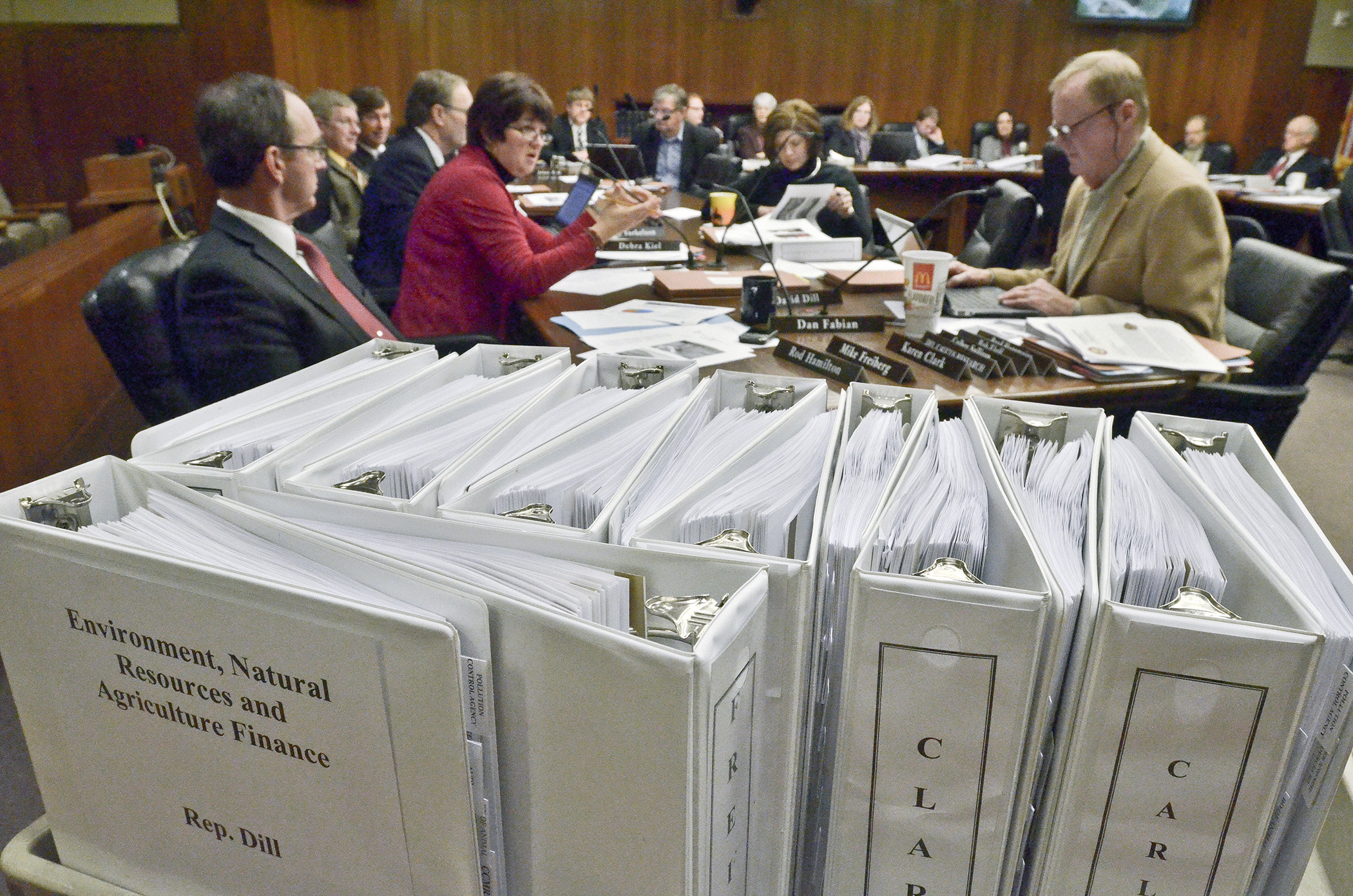
Despite charges of wasteful spending and unnecessary fee increases, the House passed the omnibus environment, natural resources and agriculture finance and policy bill 69-61 Thursday evening after four-plus hours of floor debate.
There’s $50,000 for commercial manure applicator manuals, $28.9 million for grants to county recycling efforts, and dozens of other appropriations proposed by HF976 — the omnibus environment, natural resources and agriculture finance and policy bill. Together, they total $837 million in expenditures for the coming biennium.
Despite receiving funding from the state’s taxpayers, neither the Minnesota Orchestra nor the St. Paul Chamber Orchestra has played a concert since last fall. Anyone upset by that fact may be cheered by language included in HF1183, which was heard by the House Legacy Committee Wednesday.
Saying he’d had the opportunity to “recalibrate” his initial proposal, Gov. Mark Dayton released his supplemental budget Thursday morning at the State Capitol, which would eliminate the unpopular business-to-business service taxes but also do away with his proposed $500 per homeowner property tax rebate.
More than $38 million to protect, preserve and enhance Minnesota’s natural, fish and wildlife resources was approved by the House Environment, Natural Resources and Agriculture Finance Committee Tuesday.
Seven days ago, the normally noncontroversial omnibus agriculture finance bill (HF473) stumbled at the starting line and failed to gain approval of the House Agriculture Policy Committee.
Pig’s Eye Regional Park sits southeast of the St. Paul Downtown Airport, just across the Mississippi River. It is a 1,200 acre complex of water, wetlands, prairie and woodlands with one of the largest heron and egret rookeries in an Upper Midwest metropolitan area. It also contains a 500-acre body of water named Pig’s Eye Lake.Because public access to the area is limited, the park doesn’t receive many visitors. HF116, which was heard and laid over, by the House Environment, Natural Resources and Agriculture Finance Committee Thursday, seeks to change that.Rep. Sheldon Johnson (DFL-St. Continue Reading
It may have been in the soap, deodorant or toothpaste you used this morning, the clothing you’re wearing now, or the kitchenware you’ll use for dinner tonight. If research from the Centers for Disease Control and Prevention is accurate, chances are it’s in you, too.
The trouble for HF473 and its chances of passing the House Agriculture Policy Committee as currently written, began about 20 minutes into the committee’s meeting Wednesday. Department of Agriculture officials were wrapping up an overview of the omnibus agriculture finance bill, when Rep. Roger Erickson (DFL-Baudette) asked a question about a $2 million expenditure.
The Department of Natural Resources’ strategic goals over the next four years are to ensure Minnesota’s outdoor recreation opportunities meet the needs of new and existing participants. But several House committee members question whether the department is actually making this happen.With nearly three-quarters of a billion dollars in expenditures proposed in Gov. Mark Dayton’s 2014-2015 biennial budget, it should come as no surprise the Department of Natural Resources has faced serious scrutiny from lawmakers over the past several days — and that was just from members of the House Environment, Natural Resources and Agriculture Finance Committee.Those examinations continued Thursday, as the committee held its third hearing of the week, listening as DNR officials detailed the agency’s recent operations and plans for the years to come.“There is a lot of information I think we’re going to have to digest,” said Rep. Jean Wagenius (DFL-Mpls), the committee chair. “DNR has a big budget and a lot of problems.”What’s Next?The House Environment, Natural Resources and Agriculture Finance Committee has tentatively scheduled its fourth hearing on the DNR budget for Feb. 28. The Parks and Trails, Fish and Wildlife and Enforcement Divisions are still presenting their overviews to committee members.Appearing before the committee Tuesday morning, DNR Commissioner Tom Landwehr called the budget “very complicated” and explained how the department’s “results-based management system” was used to link goals and budgets with indicators that measured results. Continue Reading