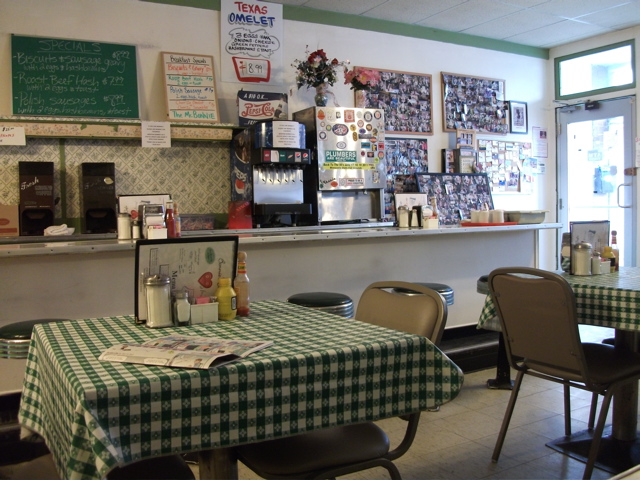
Bonnie’s Cafe: The St. Paul place where they know your name
|
“I had always wanted a restaurant,” said owner Bonnie Roell, the owner of Bonnie’s Café on University Avenue in St. Paul.
Twin Cities Daily Planet (https://www.tcdailyplanet.net/author/jeanette-fordyce/page/2/)

Jeanette Fordyce is a self-taught, local Minnesotan artist with over 12 years experience as a furniture maker, ten years as a mosaic stained glass artist and two years in pastels. The wildlife and landscape themes that run throughout her work were birthed in the valley of Mission Creek, Idaho where she first fell in love with the beauty of the expansive mountain ranges. Throughout the year, Jeanette opens her studio to the public by teaching mosaic stained glass design to students of all experience levels. Her stained glass designs have been featured in local restaurants and cafes and in homes across the state.Email: jeanette.fordyce@gmail.com
“I had always wanted a restaurant,” said owner Bonnie Roell, the owner of Bonnie’s Café on University Avenue in St. Paul.

“Our mission is to empower and educate,” said Marianne Baum, bike library program associate for Cycles for Change formerly known as Sibley Bike Depot. “With a bike you can get from A to B depending only on yourself. I don’t have to wait for a bus, pay for a car, or be stuck in traffic. It is very empowering and good for the environment.”
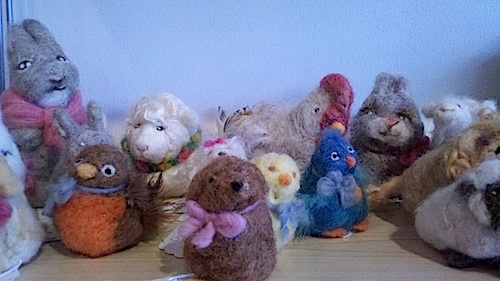
“The sale is huge and the bargains are amazing,” said Margaret Miller, the executive director for the Textile Center in Minneapolis. “People come from all over the country and have more fun than you can imagine.” That’s quite a claim for an annual garage sale/fundraiser, which will begin this year on April 13 in a new and expanded location. “It is a one day sale with a preview on Friday night. We usually get around 1,000 to 1,200 people attending,” said Miller. “The makers of sewing, knitting, weaving, spinning, felting, basket making, and beading come to the sale. We sell everything that the makers need to make fiber art from fabric to yarn to sewing machines, books, magazines, patterns, etc.”The new location this year at the University of Minnesota ReUse Warehouse, 883 29th Avenue SE, Minneapolis (near Hwy. 280 and Como Avenue SE). The ReUse Warehouse will also be open for selling tables, chairs, desks and filing cabinets for offices or studios. This year’s location has more space, more parking, and easier to get to than previous garage sales.The big garage sale is Saturday, April 14 from 8 a.m. to 4 p.m. Admission is $1.00 The preview sale is Friday, April 13 from 6:30 to 8 p.m. Admission is $25 which supports the Textile Center programs. Free parking in the lot for the preview sale. If interested in donating or volunteering e-mail info@textilecentermn.org or call 612-436-0464. The Textile Center is at 3000 University Avenue SE #100, Minneapolis, Minnesota 55414.The Textile Center is a national center for fiber arts that has offered classes and exhibitions since 1994. Their mission has been to honor textile traditions, promote excellence and innovations in fiber arts. “They are such a unique arts organization where the members actual practice their art,” said Tina Hughes, a fiber artist and member of the board. “Their exhibitions display high art forms.”The Textile Center was incorporated in 1994 and they bought their present building at 3000 University Avenue in 2001. They are now looking to expand and move to a new location because no parking spaces are left on University Avenue with the light rail construction. Their present building has galleries, a shop, 300-seat auditorium, classroom spaces, dye lab, and office spaces.Margaret Miller the executive director will be retiring on July 1, 2012. She has been the only director in the organization for the past 18 years. Miller organized a group of fiber art guilds in the early 1990s and had headed a capital campaign for the present day Textile Center facility. “We now have 50 guilds most of which are members of our center,” said Miller. “”Our library is one of the largest with 23,000 books. We are the largest textile center in the USA that makes and sells its fiber art.” After retiring she will provide volunteer services overseas.The Textile Center’s education department is taking registrations now for summer camps and workshops for youth that run from June through August. A few of the classes that are offered for adults are: quilting, dyeing, felting, needlework and embroidery, for teachers, technology Tuesday and business topics. Neighborhood classes are new this year. Continue Reading

“Practicing on bikes is a great way to inspire kids,” said David Blessing, a bicycle enthusiast from St. Paul.
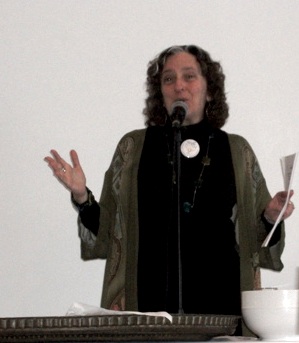
“Across all communities and all traditions people have been enslaved and freed,” said Rabbi Amy Eilberg at the Freedom Seder at Mount Zion Temple. Every year at Passover Jews gather to retell

Two directors and three actors of Penumbra Theatre presented a stage discussion of the play, “The Amen Corner,” written by James Baldwin, on Sunday, February 26 at Central Library in St. Paul.
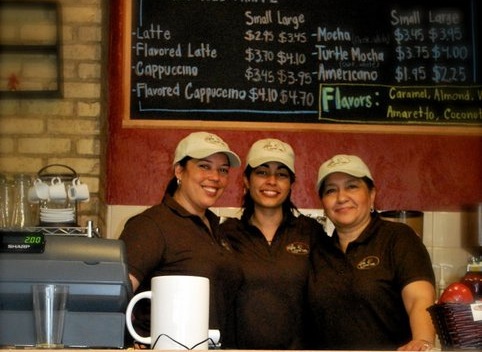
“We could not find one single coffee shop in Minnesota with Latin influences from our countries,” said Lilliana Feliciano, an owner and manager of the ALM Corner Café. “We all have a passion for coffee and decided to open our own place.” ALM Corner Café, 3301 Central Avenue NE, MinneapolisPhone 612-781-3526Hours: M-F 7-7, Sat 8-7, Sun 8-3They also can be seen at a fundraiser for Jewish Community Center on Sunday, February 26 starting at 1 p.m. www.zumbatropicalminnesota.comALM Cafe has a menu mix of Venezuelan, Puerto Rican, and Mexican foods and some traditional American items. The cafe opened in May 2011.Each and every customer at ALM’s is served by one of the owners themselves. All pastries and desserts are baked in house and main dishes are prepared and cooked on site.The three owners are Ana Maria Pinto from Venezuela, Lilliana Feliciano Agosto from Puerto Rico, and Martha Garces from Mexico. All three women have a passion for coffee and have run food businesses in their countries. According to Feliciano:”Martha has a coffee shop named ‘Cafe Latte’ in her hometown in Mexico. She has owned and operated it for around 10 years, bringing her experience and one of her sons -Sebastian- into our project. “Ana has worked in the food business in her country, Venezuela, for around 12 years as her family, have owned and operated different food small businesses. Continue Reading

“The highlight clearly was that this is a immigrant farmers’ conference; its their conference,” said Glen Hill, the executive director for Minnesota Food Association. “They are represented, feel comfortable, speak and share, and they feel empowered.” Nearly 500 people came registered for the Seventh Annual Immigrant and Minority Farmers Conference. According to Joci Tilson, assistant director for MFA, 278 of the registrants were farmers. Eleven states were represented with the larger groups coming from Minnesota, Wisconsin, Kansas, and Kentucky. Translation was provided for the following languages: Burmese, Karen, Somali, Swahili, Hmong, Spanish and Bhutanese…Hmong being the latest group of 163 people. The conference was hosted by Association for the Advancement of Hmong Women, Minnesota Food Association, USDA Farm Service Agency, and USDA Natural Resources Conservation Service and held on February 3 and 4 at North Central States Regional Council of Carpenters in St. Paul. A few of the workshops were on basic/intermediate farming skills including business planning and financial management, long-term financing, markets and equipment, history of farming in Minnesota, promoting your farm, need for more land, and getting started with chickens.“There is a concern for farmers’ rights. We want equitable access to USDA programs,” said Hill. “Farmers also have a huge interest in very specific technical production and marketing.”Vince Xiong, a farmer-in-training at the Big River Farms program of the MFA at Marine on the St. Continue Reading

“We are economic refugees, not illegals,” Alicia * told an audience of about 30 people at Lake Nokomis Lutheran Church on January 29.
Frogtown Gardens is inviting the public to a neighborhood-cooking event at the Rondo Library using backyard locally grown vegetables.