Lao Science Fiction On the Rise

Lao science fiction is making its mark! This weekend in Bloomington, award-winning Lao American playwright and poet Saymoukda Vongsay will be one of the guests of honor at the MarsCon convention, presenting “Kung Fu Zombies vs. Shaman Warrior.”In her presentation, she will discuss the often taboo subject of mental illness. She notes that for many communities it is often explained as demonic possession. Beliefs like this stem from centuries of folklore about demons, ghosts, monsters, and witch doctors. Continue Reading

The Inequality Debate Needs to be Careful about Scale

Two weeks ago, the Atlantic published a short (and facile) post called “the Miracle of Minneapolis” that (as is the way of media circles in insecure places) launched itself right onto the forefront of the Twin Cities social media scene. And, with good reason, the article re-kindledconversations about racial disparities that have been going on for years. Before I dive into my argument, I want to outline two crucial caveats. First, I love that we’re discussing racial disparities with increasing frequency these days. We have ignored the way that our cities have created wealth only for some (white) people, and made it almost impossible for others. The Fair Housing Act was only passed in the 60s, which isn’t very long ago, and we need to always remember how our cities treat people differently depending on race, class, and culture. Continue Reading

Growing the Herb: Marijuana and Indian Country

“I think that decriminalizing recreational use would benefit our people greatly since so many of us use it and many have been incarcerated for possessing it. The tribes certainly could gain by better controlling how it exists within our communities as well as financially with sales and possible taxation … We have retained aboriginal rights to utilize medicines within our communities the way we see fit.”Martin Reinhardt, Professor at Northern Michigan UniversityIt’s time to reconsider the regulation of marijuana and hemp. With the Pineole Pomo Tribe of California initiating the first tribal commercial marijuana grow operation and the Department of Justice’s announcement that it would not prosecute for marijuana or hemp, the door has been opened to look at the regulatory scheme. This December, Justice Department Director Monty Wilkinson announced, “The eight priorities in the Cole memorandum will guide United States Attorneys’ marijuana enforcement efforts in Indian Country, including in the event that sovereign Indian nations seek to legalize the cultivation or use of marijuana in Indian Country.”In turn, the Pomo tribe, which is located in Mendicino County, one of the largest marijuana growing counties in the country, announced a commercial venture with two partners, Colorado-based United Cannabis and Kansas-based FoxBarry Farms. The 250-member tribe announced that it will grow thousands of plants for the medical marijuana business on its 99-acre reservation.What’s the catch? There are a lot of them, especially in any states which have not yet legalized marijuana. Continue Reading

Leadership forum crafts united urban agenda

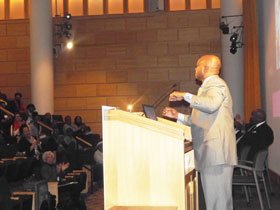
They came together for the greater good. A one-day gathering of several hundred at the University of Minnesota Humphrey School of Public Affairs was convened by the African American Leadership Forum (AALF) and it brought together some who may have had diverging thoughts but common goals. These goals are to put into plan actions that will empower area African-Americans – many of whom have been marginalized and are not seeing the same economic, educational and political gains as their white neighbors. At a time when Blacks in the Twin Cities and throughout Minnesota are woefully lagging behind in areas of jobs, housing, education, health and political leadership, and are encountering the criminal justice system at near epidemic proportions, Jeffrey Hassan, the executive director of AALF, said the issues facing Blacks are at a critical level.African American Leadership Forum executive director Jeffrey Hassan addressing the attendees of the recent Crafting a United Agenda conference.”It’s been critical for 400 years,” said Hassan, underscoring the persistent struggle from slavery to current day for Blacks in America. “But at this time – at this moment – we have everything we need to move forward. So as Kim (Nelson, a speaker at the forum) said, if we don’t get things done now, it’s on us.”In addition to Nelson, a senior vice president at General Mills, forum attendees heard from Congressman Keith Ellison; Minnesota’s only Black state legislators, State Sens. Bobby Joe Champion and Jeff Hayden and State Rep. Rena Moran; Harvest Network founder and CEO, Eric Mahmoud; the Rev. Jerry McAfee and a host of others. Continue Reading

House considers uniform sexual assault policy for state’s colleges and universities

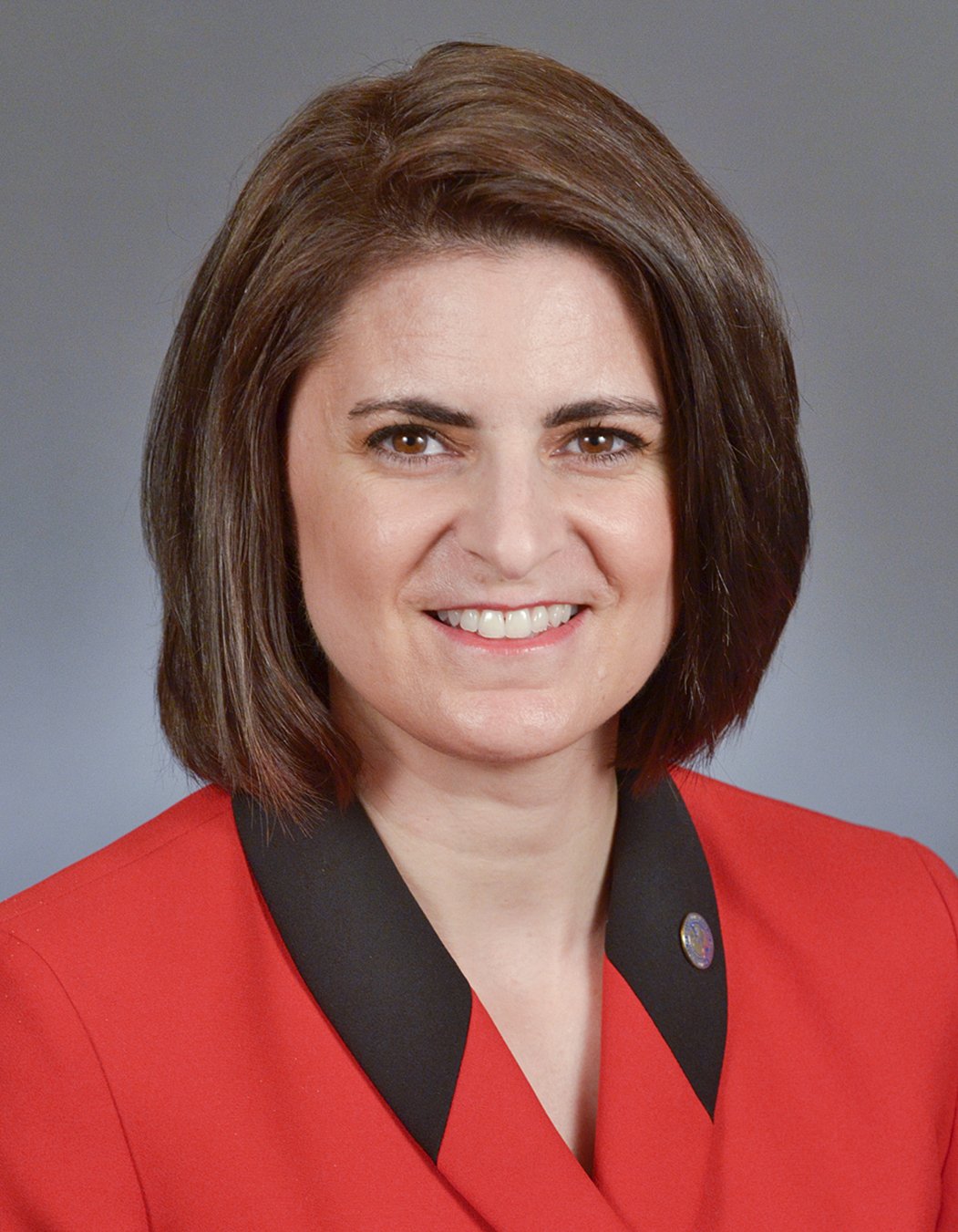
 Courtney Blake said the first time she was sexually assaulted, it took her more than a week and a half before she could muster the courage to report the incident to University of Minnesota authorities.“I was afraid of confirming what happened to me,” the university student told the House Higher Education Policy and Finance Committee on Tuesday. She supports HF742, which would require public and private universities and colleges across the state to enact uniform sexual assault prevention, reporting and victim support policies.Rep. Marion O’NeillSponsored by Rep. Marion O’Neill (R-Maple Lake), the bill would also mandate that such policies on sexual harassment and sexual violence apply to incidents occurring at activities, programs, organizations or events sponsored by post-secondary institutions.Approved by the committee, the bill was sent to the House Public Safety and Crime Prevention Policy and Finance Committee. Its companion, SF1300, sponsored by Sen. Michelle Benson (R-Ham Lake), awaits action by the Senate Higher Education and Workforce Development Committee.The bill would require postsecondary institutions to create an online reporting system through which students may report incidents — including anonymously — of sexual harassment and sexual violence. Blake said such a reporting tool would go a long way toward helping victims of sexual assault to take the important step of telling someone.Schools could not sanction students who make good faith reports of sexual harassment or violence for violating the institution’s student conduct policy on drugs and alcohol.A provision that would require new students to take a course on sexual assault prevention within 10 days of beginning class is included in the proposal.The bill strikes an important balance in ensuring accountability on behalf of colleges and its students without being overly burdensome to college campuses across the state that vary in size and resources, said Joelle Stangler, president of the University of Minnesota Student Association.“This really does support victims by making sure postsecondary institutions are doing all they can to work with law enforcement agencies to address this topic and provide resources,” Stangler said.Other provisions would require the following from all public and private postsecondary institutions recognized by the Office of Higher Education:comprehensive training on preventing and responding to sexual violence to campus security officers, campus administrators, and individuals responsible for receiving reports of sexual assault;a memorandum of understanding must be entered into with local law enforcement that details procedures for responding to allegations of sexual assault;collection and reporting a number of different pieces of data about sexual assault on campus.restricted access to the data collected through the online reporting system;a requirement that students complete an online training on sexual assault prior to registering for class;development and implementation of a policy that requires student health providers to screen students for incidents of sexual assault; anddesignation of an existing student health worker as a confidential advocate  Continue Reading

CenturyLink may exclude service to minorities, critics say

Competition is good, right?Of course it is. Competition in business is so needed that there are rules in our nation that guarantee a competitive marketplace. So it may come as a shock that when CenturyLink announced it wants to compete against Comcast – Minneapolis’ only cable provider since 1983 – the communications company was met with opposition. But those opposed to CenturyLink say they agree with competition in a free marketplace, what they don’t agree with is CenturyLink being able to cherry pick where to compete – especially if CenturyLink chooses not to service areas of lower income that tend to be minority concentrated. “I would support cable competition,” said Pete Rhodes, who operates BMA Network, a channel dedicated to multicultural programming and distributed through Comcast. “It’s good for our consumers and minority communities as long as it provides minority business and programming opportunities and a fair and equitable distribution of services.”In its application to the city CenturyLink has said it will launch via new and existing lines with a 15 percent minimum coverage, but at issue is the low threshold and the company’s unwillingness to say where that area of coverage will be.”We do have maps of coverage, but we don’t want to show them in a public forum because they’re competitively sensitive and Comcast would love to have that information as well,” said CenturyLink executive, Jim Campbell during a hearing of the Minneapolis City Council Ways and Means Committee.Ward 8 Councilwoman Elizabeth Glidden said the 15 percent coverage was too low of a threshold to start and called for a minimum 30 percent city coverage and a growth plan beyond that. Continue Reading

Student fees set for an increase

If the fees committee’s initial recommendations stick, student fees will increase by more than $30 each semester.Next year, University of Minnesota students may have to dish out $467 each semester in student services fees — an increase of more than $30 from the current charge.The Student Services Fees Committee on Tuesday released its initial funding recommendations, fulfilling most of about $35.7 million in requests from campus organizations. If those initial recommendations stick, fees for full-time students will increase next school year.“The quantity of requests this year was very high,” said student groups committee Chair Achintya Saurabh, adding that the amount of funding requested was similar to last year. Two separate committees —one for student groups and one for administrative units — allocate funding each year to University campus organizations. The committee responded to administrative units’ requests, which are often larger, on Monday.Though 91 student groups requested funding, the committee only recommended funding 78 groups with nearly $2.5 million.Last year, the committee approved funding for 77 student groups with about $2.1 million.Saurabh said when recommending funds, the committee examined how the groups benefit the wider student community and whether their finances are sound.“We looked at specifically how each student group impacted all students on campus,” he said, “and what is the breadth of the services they provided.”Although worries that some student groups had mishandled funds popped up last year, Saurabh said there wasn’t much concern this year.“As a whole, there was nothing big,” he said.Eight student cultural centers requested a combined total of about $464,000 in funds this year but were recommended only about $324,000.One of these organizations, the Disabled Student Cultural Center, was recommended only $18,751 of its nearly $37,400 request because many of the group’s budget items were unclear, according to SSFC documents.In a trend continued from last year’s fees process, some faith-based student groups didn’t receive their full requests.One example of this was Catholic Students United’s $83,645 request, for which the committee’s initial recommendations offered $32,570. The group received $3,450 in fees last year.Organizations will be able to appeal funding recommendations in public forums Wednesday and Friday. Final funding allocations are due out in spring. [See original article here: http://www.mndaily.com/news/campus/2015/02/24/student-fees-set-increase] Continue Reading

The original visionaries of Lao Minnesota: Phouninh and Khoutong Vixayvong

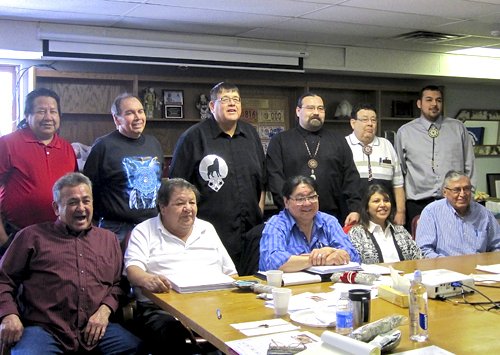
For the Lao in Minnesota, heritage preservation was robust and vital in building community roots in the late 80s through early 90s. Lao PTA and Lao Assistance Center of Minnesota had programs focused on Lao language, culture and arts; and even a Lao Summer School for youth. One of the many well-known leaders during the resettlement period was Phouninh Vixayvong, a retired educator with a fierce teaching style. She’s also a long-time social services veteran at Lao Assistance Center of Minnesota, where she still assists elders navigating the public system one minute and debating with Lao men in the lobby about the latest community issue the next minute. She is one of many maes to the Lao community, teaching the first wave of Lao refugee immigrants for 15 years and founding the first ever Lao Women’s Association in the state, addressing teen pregnancy and breast cancer awareness. Continue Reading

Who Pays for the Transport Costs of School Choice?

My University of Minnesota colleague Elizabeth Wilson lives on the quintessential neighborhood street in St. Anthony Park (St. Paul). While riding her bike to work she was sucking diesel exhaust from four different school buses running down her street; these four buses were taking kids to four different elementary schools. She thought about the transport and environmental implications of such; she corralled Julian Marshall and me (and others) to do a study. Continue Reading

City may adopt new fossil fuel stance

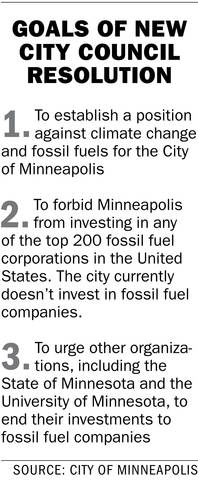
A group of students and other Minneapolis residents gathered at City Hall on Monday in support of the city’s continued divestment from fossil fuels and urged other state agencies to follow.City officials passed a motion at a Health, Environment, and Community Engagement Committee meeting that asks the city to take a clear stance against the use of high-carbon energy and refrain from investing in fossil fuel corporations in the future. It also aims to push other bodies, including the state of Minnesota and the University of Minnesota, to divest.Councilmembers Cam Gordon and Alondra Cano, of Wards 2 and 9 respectively, proposed the resolution, which the full council will vote on March 20. More than 15 students and community members were present for the hearing portion of the meeting, and six speakers were current or former University students.Cano said the turnout at Monday’s public hearing was a sign of support for the resolution. She said she’s proud of the young people who speak out against fossil fuels, and the priority of this resolution was to establish the city’s stance against fossil fuel companies.If the state were to pass legislation and approve divestment, Gordon said, it would be following the precedent set in the 1980s when Minnesota divested from apartheid South Africa.Noah Shavit-Lonstein, an officer of the University student group Fossil Free Minnesota, said it’s important to get people in positions of power to pressure other groups to divest, causing a ripple effect.Shavit-Lonstein said Fossil Free Minnesota started with the help of Minnesota 350, a nonprofit dedicated to divestment from fossil fuels.He said the plan to get the city to support divestment started last year when Minnesota 350 and Fossil Free Minnesota contacted city officials.Patty O’Keefe, divestment coordinator for Minnesota 350, said Fossil Free Minnesota and the proposal are all part of the same movement.Minnesota 350 started in 2010 to combat climate change, O’Keefe said, but the push for divestment from coal, oil and natural gas gained traction in 2012.“Climate change is threatening all life on this planet … including humans, and the fossil fuel industry is … driving us further and further into this crisis,” O’Keefe said.At the committee meeting Monday, O’Keefe said $50 billion is currently dedicated to divestment nationwide. And although the motion by city officials is largely only symbolic, she said it’s a step in the right direction.“The city of Minneapolis, along with its residents and activists and organizers are leaders in this area,” Cano said. “Being a leader isn’t easy … it’s really important that we take this step and show the nation that this can be done.”  [See original article here: http://www.mndaily.com/news/metro-state/2015/03/02/city-may-adopt-new-fossil-fuel-stance] Continue Reading