
FREE SPEECH ZONE | Say Yes to Voter Freedom!
|
On April 4, 2012, a bill was passed that would ask voters to determine if Article VII of the Minnesota Constitution should be changed.
Twin Cities Daily Planet (https://www.tcdailyplanet.net/tag/voting-rights/page/4/)
On April 4, 2012, a bill was passed that would ask voters to determine if Article VII of the Minnesota Constitution should be changed.

A devout Methodist friend passed along a photo his daughter snapped while driving down University Avenue in Coon Rapids. Continue Reading
The October issue of The Atlantic magazine included a number of articles billed under the general theme: “You call this an election?” The stories deal with the corrupting flood of money that has poured into election campaigns; how congressional districts are gerrymandered to get certain partisan results; and the recent history of “anti-voter fraud” efforts, which have targeted black and Hispanic neighborhoods in order to intimidate the voters in those precincts.On the financing issue, James Bennet asserts, in his article, “The New Price of American Politics ,” that the “growing river of anonymous money [from Super PACs] is a result of the brokenness of our political system; no branch of government made an affirmative decision to let this money in. If it chose, the IRS could demand that the politicking social-welfare nonprofits, as well as business associations like the Chamber of Commerce, disclose their secret donors.”Bennet mentions that Senate Republicans filibustered the Disclose Act, which “aimed to compel groups to name the big contributors behind political advertising.” He adds that in the infamous Citizens United case, eight of the U.S. Supreme Court justices favored disclosure.So, citizens of this country will go to the polls on Nov. 6, and cast their votes, as a tidal wave of money from billionaires and corporations has been poured into electoral campaigns to skew the results. However, our votes could still make a difference in some electoral contests:In Minnesota, Republicans in the Legislature put two measures on the ballot this year, which would change our state constitution. They are both very bad proposals.The voter ID measure, which would require voters to show a government-issued photo ID in order to vote, has a certain common sense appeal, but it is essentially a solution to no problem. Continue Reading
For decades, Minnesota has been #1 nationally for voter turnout.
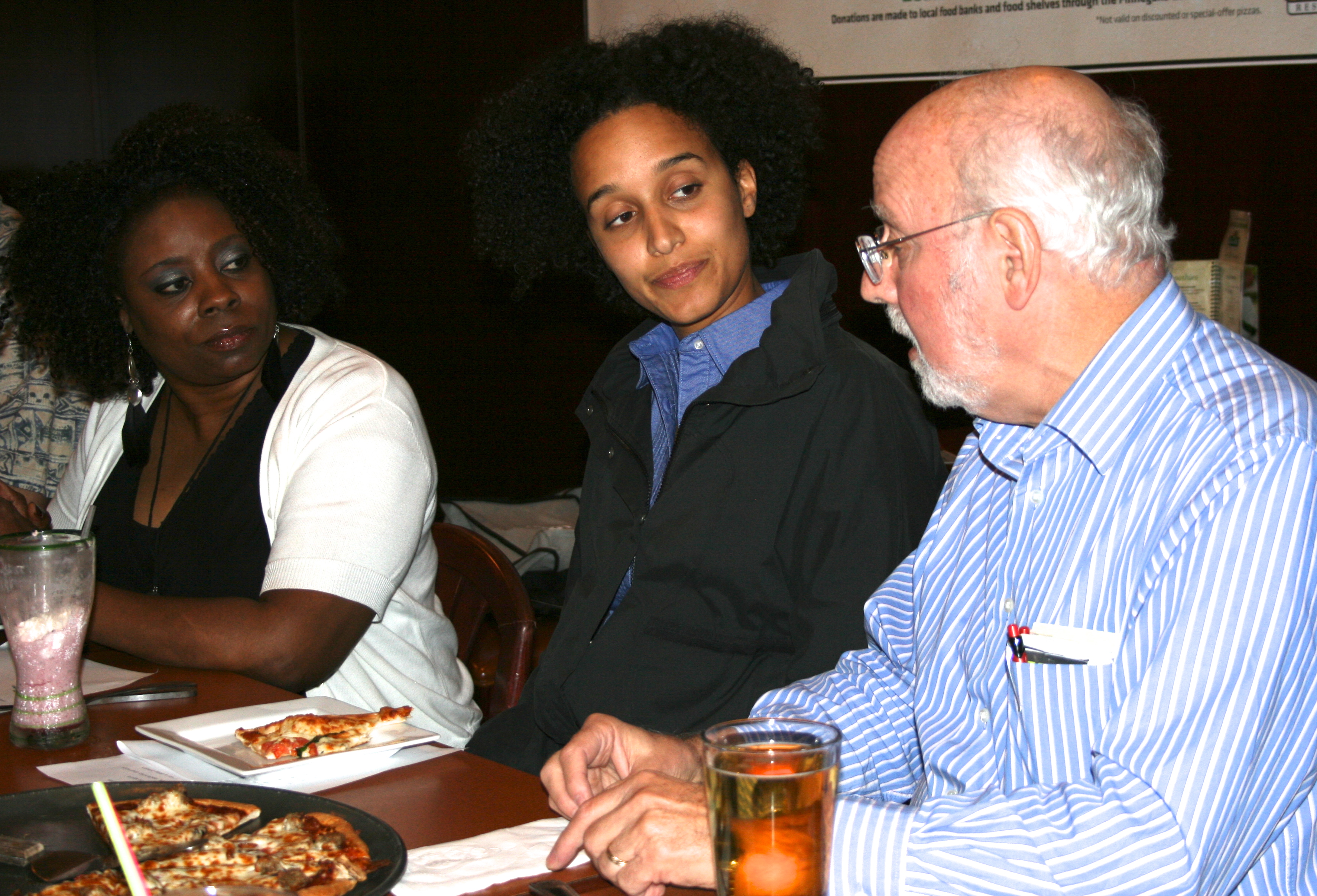
Emotions ran high at times during last month’s TC Daily Planet election circle. The subject of the evening: the proposed constitutional amendments. Everyone attending agreed that the Minnesota Constitution should not be amended to further limit same-sex couples’ freedom to marry. There is already a statute on the books banning marriage between same-sex couples, passed by the legislature in 1997. However, there was difference of opinion over the value and motivations of a voter ID or voter suppression amendment being promoted by Republican legislators.Among the participants on hand to discuss possible changes to the Constitution were:Kathy Bonnifield, executive director of Citizens for Election Integrity MinnesotaRicardo Levins Morales, author of a blog piece, “The Marriage Amendment as decoy and how to fight the real danger,” connecting the two amendments Alan Shilepsky, a former DFL activist, who was active in the Independence and Reform parties before joining the Republican Party. Continue Reading
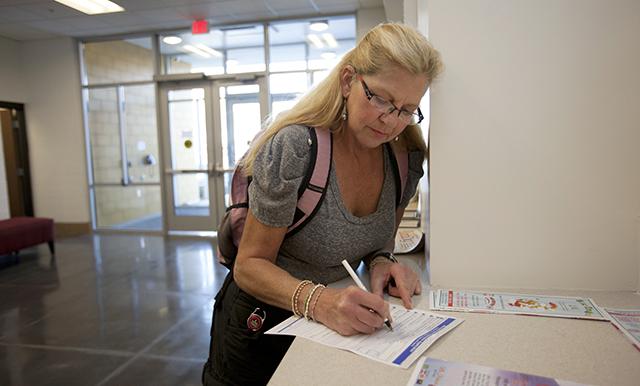
Like many Americans, Deborah Handley has had a lot on her mind lately to distract her from the upcoming elections: her joblessness, newly diagnosed diabetes, a past battle with cancer and, oh, yes, her homelessness.That’s changing. Settled a few weeks ago into an efficiency apartment at Higher Ground on the outskirts of downtown Minneapolis, the 58-year-old former waitress and bartender is working to get her life together – and that includes preparing to vote in next month’s elections.She is among hundreds of homeless and formerly homeless people across the state filling out Minnesota Voter Registration Applications so they can vote in the November election.Community Sketchbook focuses on the economic and social challenges facing communities, especially low-income communities and communities of color, and how people are trying to address them.It is made possible by support from the John S. and James L. Knight Foundation, The Minneapolis Foundation, and some Minneapolis Foundation donor advisors.Community Sketchbook articles may be republished or distributed, in print or online, with credit to MinnPost and the foundations.Her issue? She’s worried about losing Social Security. “I don’t have a pension,’’ she says.Advocates for the homeless hope to bring 1,000 more voters to the election rolls this fall — not an insignificant number in a state with the recent history of a very close U.S. Senate election – as part of a statewide effort that includes smaller private shelters as well as the big players such as People Serving People, Catholic Charities of St. Paul and Minneapolis and the Minnesota Coalition for the Homeless.High stakesOrganizations working with the transient poor have been helping to register homeless people living in temporary housing and recently homeless voters for more than a decade. Continue Reading
In last night’s Debate Minnesota forum between Minnesota Majority executive director Dan McGrath and ISAIAH Project executive director Doran Schrantz, McGrath made two curious claims about the peti Continue Reading
Politics is always full of contradictions, and hypocrisy, but a significant one now in play is the proposed amendment toMinnesota’s Constitution to require a more restrictive voter ID. Adding to this is the irony that many of those who favor this amendment are adamant about their fidelity to our American Constitution and historic values regarding elections.Well, actually this proposed amendment runs contrary to the way our Constitution was ratified…the changes it sparked regarding voter rights…and the 225 year history of voter enhancing enfranchisement in our nation.Prior to the Revolutionary War, and subsequent ratification of the Constitution, the American electorate was modeled after most European nations – dominated by monarchs and with enfranchisement to vote highly restricted and limited to wealthy males, often connected to royalty. Thus, at birth, we too were far from a “democratic” nation. The process of ratifying our Constitution changed that and stimulated a powerful desire for voter reform. Indeed, that was an essential element of what the Revolutionary War was about.Consequently, when it came to ratifying the Constitution in the period of 1787-1790 (when it was finally adopted) it was at that point in history the greatest, broadest, most unrestricted voter plebiscite in the history of mankind. It was the first time that the people of a nation freely determined their form of government. Continue Reading
Recently, the Land Stewardship Project joined “Our Vote, Our Future,” a coalition of over 70 organizations working to oppose the voter Continue Reading

This post is my way of virtually banging my head against the wall in frustration over how Democratic sloppiness keeps helping the GOP sell it’s claim that voter fraud is real. Continue Reading