Ten tips for creative placemaking emerge from Get Connected! meeting in St. Paul

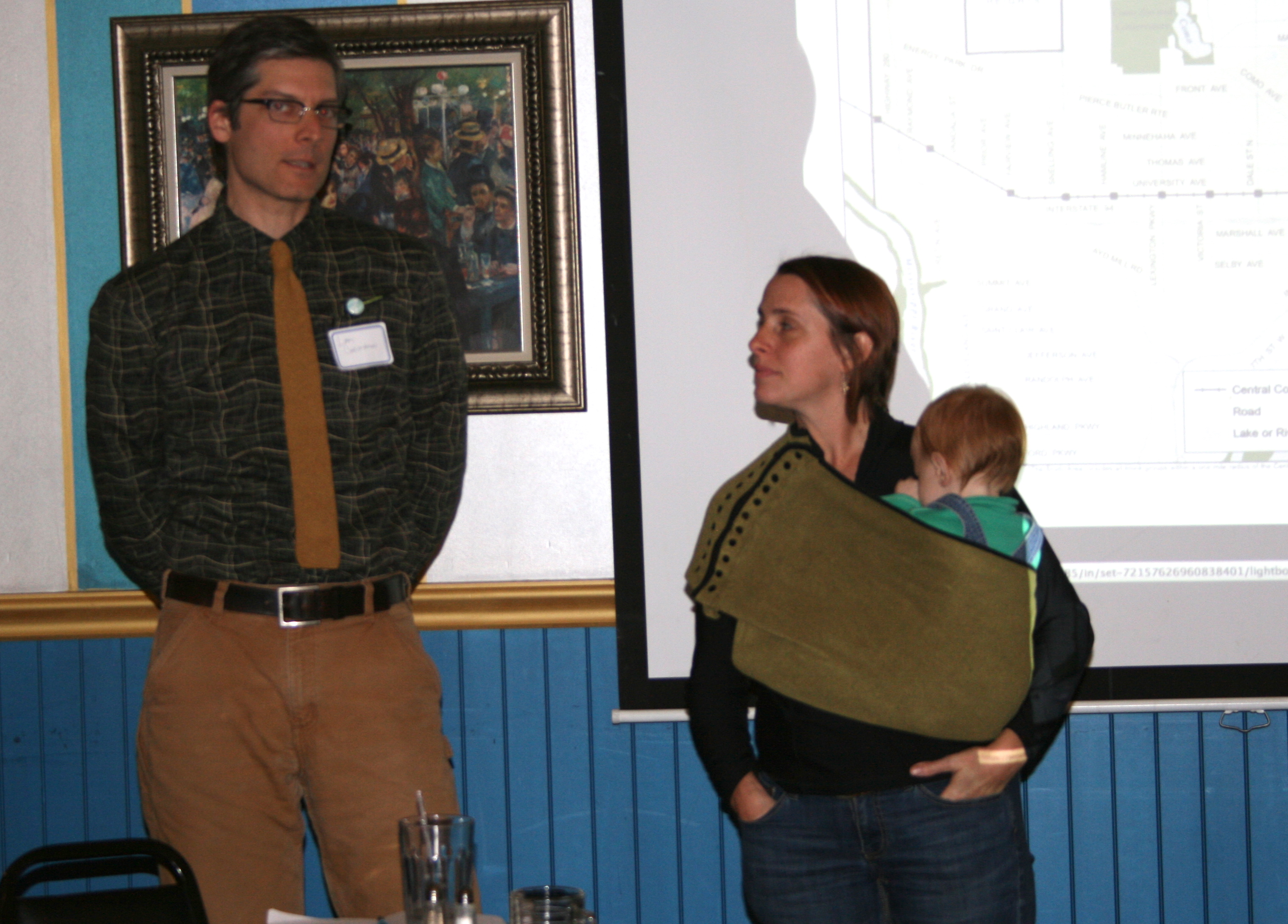
Have you ever wondered what creative placemaking is? A top-ten how-to list from Jill Mazullo, Envision Minnesota’s director of communications and development, reveals what it is by describing how to do it: Go where the people are.Block off the street.Make it easy for people to come.Feed people.Show pictures of what’s possible.Have people vote with post-its.Give people something to do.Have fun projects for kids and grownups.Invest people in the outcome.Use social media to your advantage.Irrigate, an artist-led creative placemaking initiative that spans the Central Corridor Light Rail line in Saint Paul, gives a more formal definition of “placemaking” as, “The act of people coming together to change overlooked and undervalued public and shared spaces into welcoming places where community gathers, supports one another, and thrives.“ Placemaking can involve temporary activities such as performances and chalked poetry, or more permanent installations such as landscaping and unique art.Connecting over placemakingCreative placemaking was the focus of the final Twin Cities Media Alliance Get Connected! community meeting, held in partnership with Envision Minnesota at St. Paul’s Chatterbox Pub on October 30. Mazullo’s list comes from a blog she wrote about the event, synthesizing the lessons of the Charles Avenue Friendly Streets group.The Get Connected! event featured opening remarks by Mazullo and Envision’s executive director Lee Helgen. Most of the evening was devoted to presentations by Hamline Midway Coalition members Lars Christensen and Erin Pavlica, and Twin Cities Media Alliance neighborhood engagement coordinator, Marcos Lopez-Carlson.Lopez-Carlson, in his presentation, illustrated how blogging, Reddit, and other new media tools can play a major role in placemaking. Continue Reading
Taking Care of Business on the Central Corridor – the good, the bad, the ugly

How could the long term impacts of light rail construction be better anticipated? What level of outreach has been successful? How we can we best help local businesses survive and thrive amidst long term construction? More than 30 community leaders and organizers focused on these questions November 21 at the Organizer Roundtable: Taking Care of Business, hosted by the Alliance for Metropolitan Stability at the Rondo Community Library.

Continue Reading

Cheng Heng: Little Mekong’s Cambodian outpost in St. Paul

University Avenue is full of Asian restaurants, especially along the stretch that’s known as Little Mekong, from Mackubin to Galtier streets. I have lots of favorites along that stretch, but the special, warm feeling I get from eating at Cheng Heng, the Cambodian restaurant on University Avenue in St. Paul goes beyond the spiciness of some of the cuisine. Maybe it’s the friendliness with which customers are greeted. Or maybe it’s knowing that the owners, Kunrath and Kevin Lam, have donated some of the earnings from their restaurant to build schools back in Cambodia. But mainly it’s the cuisine. Although there are many  resemblances to Vietnamese and especially Thai cuisine, there are also enough differences to make for a refreshing change of pace. 

Continue Reading

Central Corridor, Southwest transit line updates shared

The Central Corridor Light Rail Transit project is on time and on budget, while the proposed Southwest line is far from certain.Those were the messages shared by Met Council personnel with the Legislative Commission on Metropolitan Government.Mark Fuhrmann, deputy general manager for Metro Transit, said the $957 million line between downtown Minneapolis and downtown St. Paul is still on track to open in 2014. The project was 74 percent complete through AugustAt a Sept. 25 commission meeting, business representatives spoke about how they have been negatively affected by construction of the 11-mile line, including customers unable to easily access businesses. However, council representatives were not given a chance to respond at that time.Given that opportunity, Fuhrmann spoke of how the council has worked with local businesses to address on-street parking impacts, including a $1.25 million parking grant program to help create additional spaces; fines for construction vehicles parked in wrong places; when intersections were closed or had lanes reduced; and fixing sometimes confusing signage.Robin Caufman, the council’s assistant program director for administration, communication and public involvement, spoke of how the council has helped businesses by going door-to-door to provide updates, featuring a different business in weekly construction updates, providing extra signage to indicate retailers and restaurants are open and spending $1.2 million on a business marketing program.The council has set aside $4 million in loans for small businesses. Continue Reading

Connecting around equitable transit and safe, livable communities

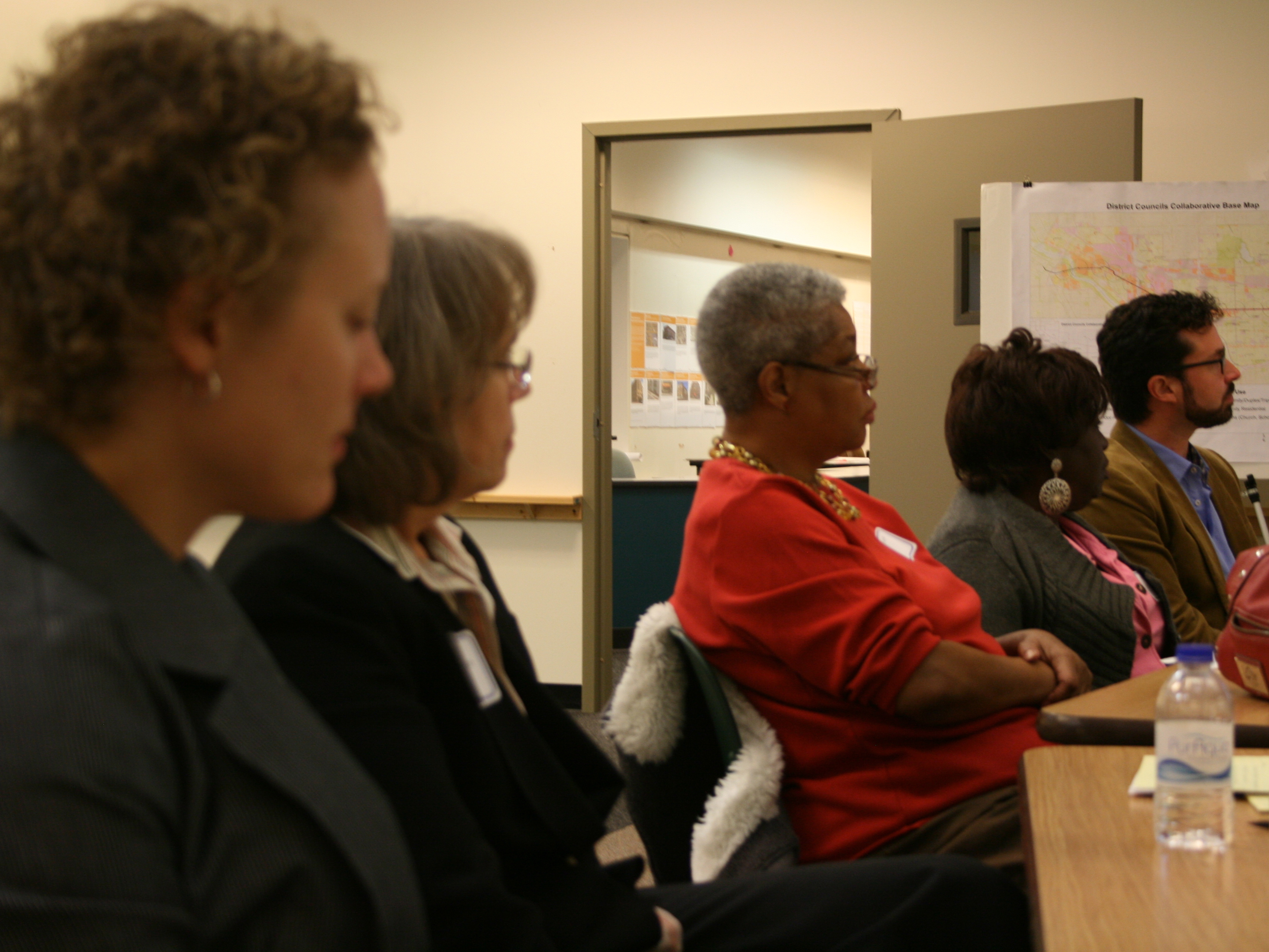
The District Councils Collaborative (DCC) of St. Paul and Minneapolis is all about connecting and engaging members of communities along the Central Corridor, ensuring that residents and business owners’ voices and concerns are heard so that the new light rail green line benefits everyone. At a Twin Cities Media Alliance-sponsored Get Connected! event held on September 18, DCC’s executive director, Carol Swenson, explained that the organization has been active in environmental review processes and the Stops for Us campaign, which added three stops to the line. DCC, which represents the coming together of all St. Continue Reading

Central Corridor light-rail system will reduce runoff pollution with tree trench system

When completed, the Central Corridor light rail will be known as the green line.Sustainability measures used in construction of the project as well as infiltration trenches will help the project live up to its name.The project team is using recycled materials throughout construction, but the big sustainability focus is the incorporation of a $5 million tree trench system.Tree trenches are urban infiltration systems used to filter runoff and ease street flooding and environmental issues.Eight miles of filtration papers will lie beneath the sidewalks lining University Avenue in St. Paul.Storm water will seep through permeable brick pavers passing through several layers of soil and drainage rock. The runoff will in turn water 1,200 newly planted trees along the light rail’s route in St. Paul.“The mechanics are elaborate, but the idea is simple,” said Nick Landwer, manager of engineering and design at the Metropolitan Council. “Basically, the trenches will collect water, filter pollutants and nourish trees.”Landwer said the trenches will capture and breakdown pollutants like gasoline, oils, phosphorus and other contaminants.“The system won’t eliminate street flooding in low-lying areas of University Avenue, but it will lessen the impact,” Landwer said.Tree trenches are becoming more popular in urban construction, said Metropolitan Council spokeswoman Laura Baenen.“Ours is catching the attention of other cities planning similar public service projects due to the significant positive effect on the environment,” Baenen said.The city tested the infiltration system this summer, and it was successful, she said.But Landwer said the real results won’t come for many years as researchers monitor the long-term reduction of pollutants entering the Mississippi River.“This is a huge sustainability effort that we are really proud of,” Baenen said. Continue Reading