Minnesota Rep. Steve Gottwalt announces intention to resign
|
Rep. Steve Gottwalt (R-St. Cloud) announced his intention to resign the seat to which he was elected to serve a fourth term.
Twin Cities Daily Planet (https://www.tcdailyplanet.net/author/leeannwahi/page/5/)
Rep. Steve Gottwalt (R-St. Cloud) announced his intention to resign the seat to which he was elected to serve a fourth term.
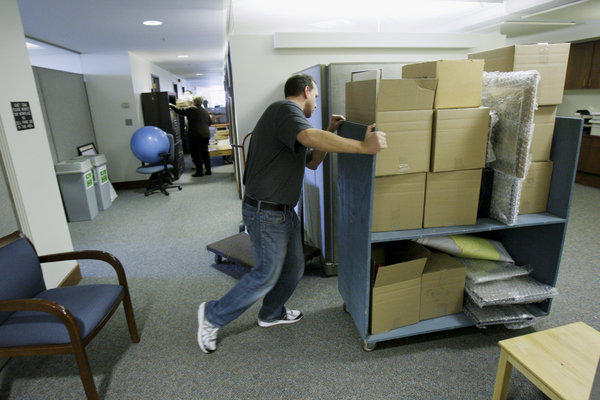
When there’s a shift in party control after an election, House members find themselves moving to new offices. Historically, the fourth and fifth floors of the State Office Building are reserved for those in the majority, while the second and third floors hold the minority members’ offices. Now that the DFL has taken control from the Republicans, there’s a whole lot of moving going on.
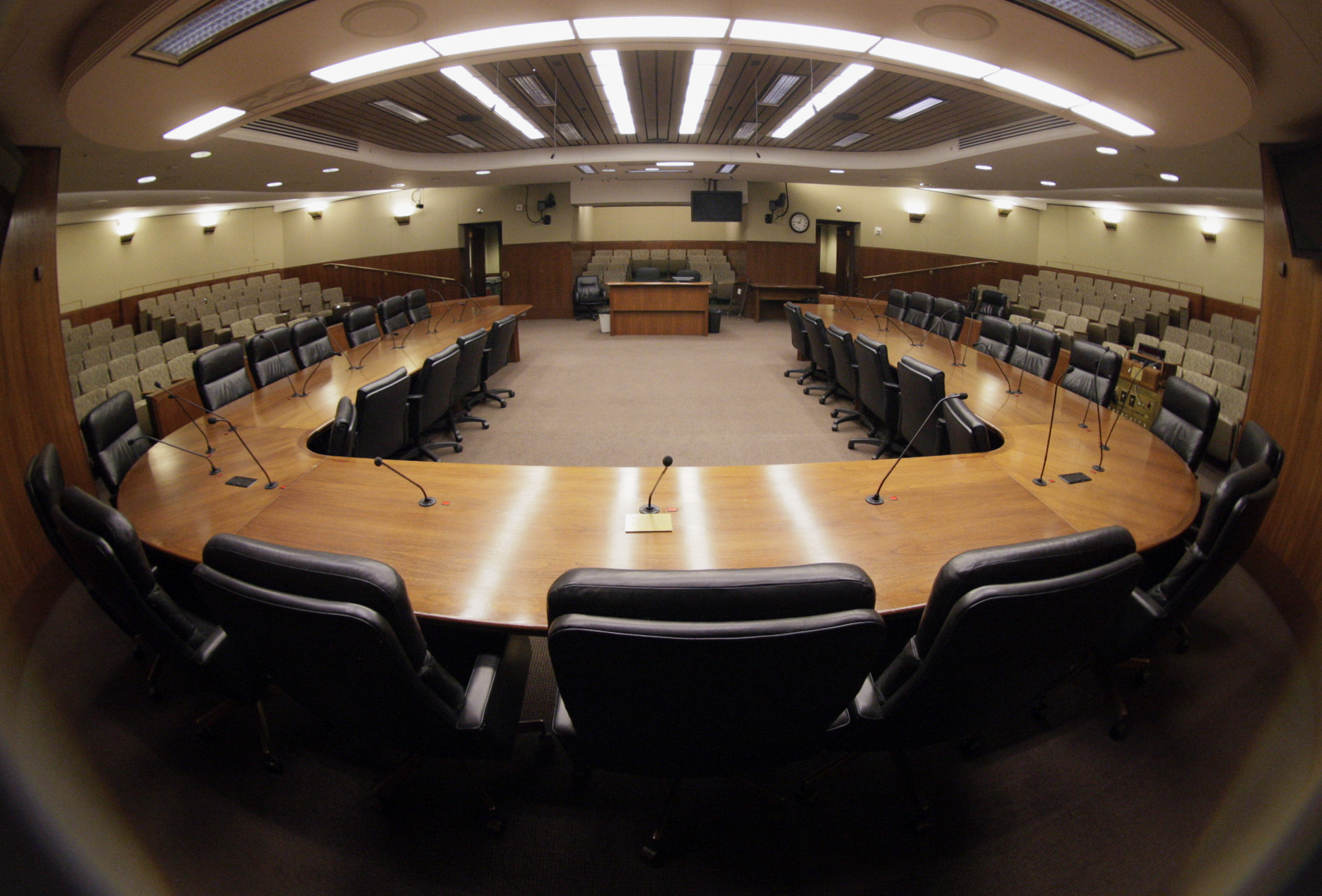
DFL leadership announced the chairs and committee structure for the 88th legislative biennium scheduled to convene Jan. 8, 2013. (Click here for the listing)

Election Day puts an end to campaigning, but pre-session planning kicks into high gear.
Fresh off Tuesday’s takeover of the Minnesota House of Representatives, the DFL caucus met Nov. 8 and nominated current House Minority Leader Paul Thissen (DFL-Mpls) as speaker-designate. They also chose Rep. Erin Murphy (DFL-St. Paul) as their majority leader. She will be the fourth woman to hold the post in the House’s history. The first was Connie Levi in 1984.
The Legislature accepted $28.5 million in federal money last session to help implement a state-run health insurance exchange. But the Legislative Advisory Commission exhibited some buyer’s remorse, saying funds are being used to develop a program that has too many unanswered questions.
Comprised of five House members and five senators, the commission reviewed the latest $42.5 million federal grant, which some say would move the state further down the road to a program mandated through the federal 2010 Affordable Care Act, which may see significant changes depending on upcoming election results.
Gov. Mark Dayton has called a special session of the Legislature for 2 p.m. Aug. 24 to consider a $167 million funding package to help residents and communities in parts Minnesota severely affected by June 14-18 wind storms and flooding.After weeks of negotiations, the governor and legislative leaders agreed to the package, and also that the special session last no longer than one legislative day and it consider only a Disaster Relief Appropriation bill, and another bill allowing for technical corrections to be made, if needed.The bill has not yet been drafted, but once agreed to by the governor and leadership, no amendments would be accepted or voted on by the bodies.“I’m glad this part is over, and the parameters are established,” Dayton said at a press briefing.Money will come from the budget reserve and the surplus remaining from the previous budget year, he said. Additional funds will be allocated through the Trunk Highway Fund resulting from the cancellation of some proposed projects. Dayton said that any unspent money from the appropriation would be returned to the General Fund.President Obama declared 15 counties and three tribal lands a major disaster. With such a declaration, the federal government pays 75 percent of costs to help fix public infrastructure and requires a 25 percent match. Continue Reading
Three tax bills, two vetoes.As the session neared closure, it was clear, at least to the House Taxes Committee chairman, that the session’s success was conditioned on passage of a bonding bill to appease the DFL; support for a new stadium to house the Vikings, a measure pushed by the governor; and business property tax relief, a Republican session priority. You could call it a “trifecta” for job creation in Minnesota, said Rep. Greg Davids (R-Preston).But in pretty short order, he saw Gov. Mark Dayton put the kibosh on the first tax bill, termed “smokin’ hot” by Davids. That was followed up shortly after with the veto of a second, trimmed down version of the first tax bill. Both addressed the Republican priority of tax relief for business; but both, according to the governor, were “out of balance.”A third bill offering some targeted property tax relief to eligible homeowners, but mostly making technical changes to statute, made it to law; but neither the bill’s sponsors or the governor were too happy with the product.Credits – who pays?The governor termed the first two tax bills “fiscally irresponsible,” saying they provided tax relief for only one sector while ignoring others.The first bill (HF2337*/ SF1972/CH285) contained several tax credits for businesses and a proposed phase out of the state property tax levy paid by business owners and seasonal/recreational property owners. It would have cost the General Fund $71.8 million in the 2014-2015 biennium. Continue Reading
Although not thrilled with the size of spending in the capital investment bill, Gov. Mark Dayton, nonetheless, signed off on the nearly $500 million plan.“It’s not as much as I had hoped for, but […] I signed the bill, and most of them are good and important projects, ones that will benefit the people of Minnesota, and benefit the institutions where they are going, and most importantly, will put thousands of people throughout Minnesota to work, which was the No. 1 priority of this legislative session,” he said.The law required some heavy-lifting from the DFL to move it off the House and Senate floors. Largely because of the jobs it will provide, the minority party put up the majority of the votes needed to move the bill along, even though many members said it should have included more projects. Republicans reminded them that when combined with the nearly $500 million in bonding enacted last year that puts the biennial total close to $1 billion.Sponsors Rep. Larry Howes (R-Walker) and Senate Majority Leader David Senjem (R-Rochester) shepherded the bill in and out of committees, watching it morph and change at each stop.The party divide remained evident in debate on the House floor. Several DFLers acknowledged the projects in the bill, but also pointed out those that were sidelined.“We missed an opportunity to build strong regional centers,” said Rep. Alice Hausman (DFL-St. Continue Reading
Following a gubernatorial veto of the first omnibus tax bill, HF2337*/ SF1972, the House Taxes Committee chairman said that when it comes to trying to improve the state’s tax climate, “We’re never going to quit.”Rep. Greg Davids (R-Preston), who sponsors the bill with Sen. Julianne Ortman (R-Chanhassen), is now urging Gov. Mark Dayton to sign HF247*/ SF872, a stripped-down version of the previous tax bill. A conference committee reviewed the new bill this morning, and the House passed it 73-56 this afternoon. The Senate is expected to act on the bill late tonight.Dayton’s primary objection to the previous bill was the long-term cost of the bill’s proposed credits. It would have cost the state more than $145 million in the out years.The General Fund impact of the new bill would be $46 million over the 2012-2013 biennium. The financial hole would be filled by a $27.9 million transfer from the budget reserve, with the rest (approximately $18.4 million) expected to be filled by cost savings achieved in other bills passed this session.The cornerstone to the previous tax bill was a freeze on the state property tax levy paid by business property and seasonal property owners. Continue Reading