CLIMATE CHANGE | The lord and the lady: COP16, day 4

I found Lord Christopher Monckton sitting all alone at the Committee for a Constructive Tomorrow (CFACT) booth in Cancunmesse on Thursday afternoon. Lord Monckton is one of the better-known climate change deniers (or skeptics; take your pick of terms) and achieved notoriety in Copenhagen by calling a group of young activists “Hitler Youth.” He spoke in St. Continue Reading

CLIMATE CHANGE | There’s no place like home? COP16, day 3

While waiting for a side event to start on Wednesday, I sat down next to Dr. Irma Allen, delegate and negotiator from Swaziland. A native Texan, Dr. Allen has headed Swaziland’s Environmental Authority (their equivalent of the EPA) for many years. We talked about development.

Continue Reading

CLIMATE CHANGE | The Conference Begins: COP16, day 1

The 10-mile shuttle bus ride from the hotel zone to Cancunmesse, the gateway venue for COP16, took two hours and 25 minutes Monday morning. We left around 8:30am and wound our slow way through the stop-and-go rush hour traffic punctuated by police checkpoints until finally arriving around 11. Continue Reading

CLIMATE CHANGE | Plazas & Bubbles: COP16, day 2

The largest hall at Cancunmesse is dominated by three of COP16’s major players: the United States, Mexico, and the European Union. Each has several hundred feet of floor space and each has done mildly spectacular things with it. The U.S. Continue Reading

CLIMATE CHANGE | COP 16 in a Nutshell

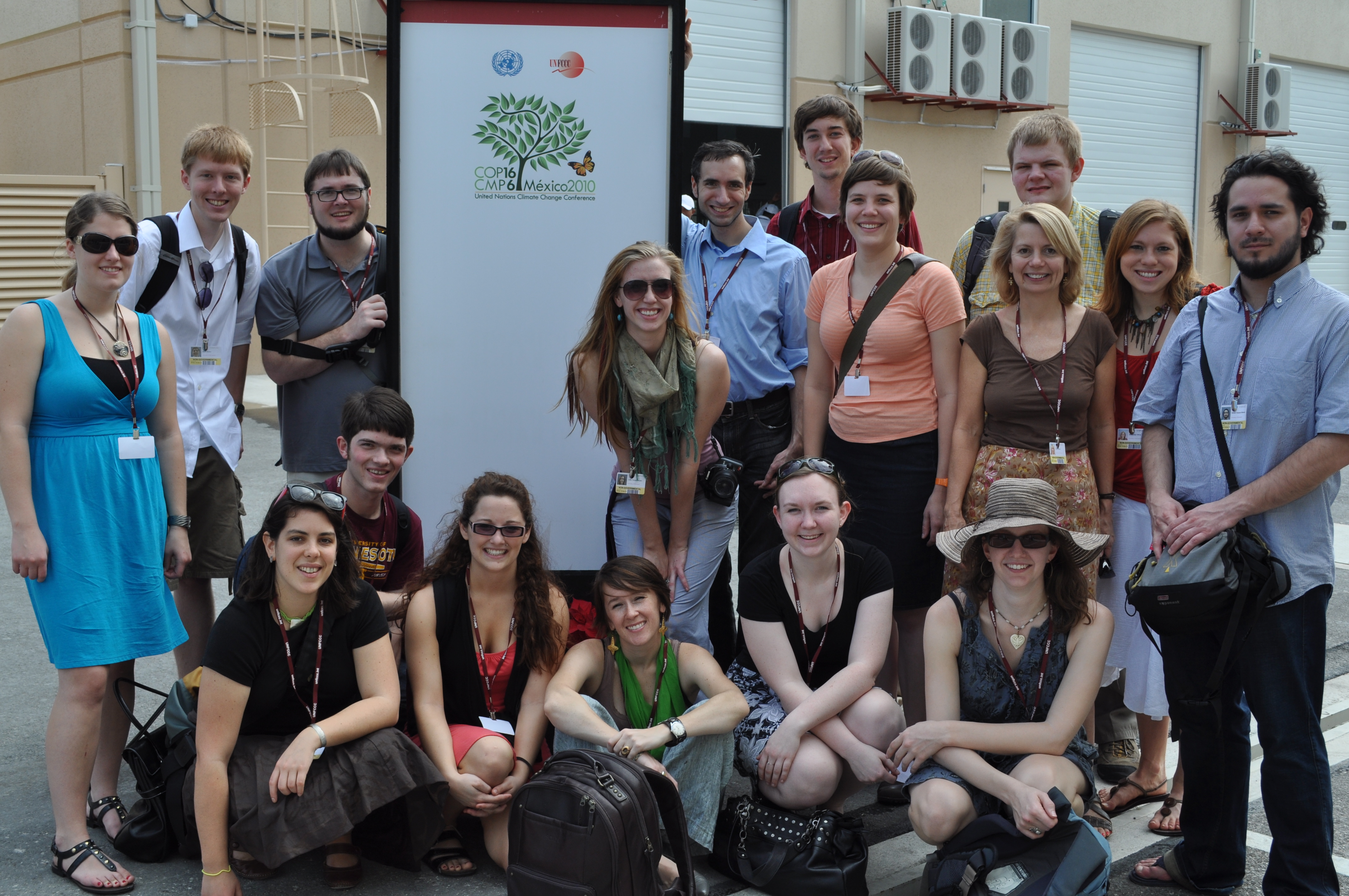
Sunday began the journey of the University of Minnesota delegation at the UNFCCC COP 16.  Our group consists of a diverse group of undergraduate and graduate students of a range of interests including law, ecology, political science, and civil engineering.  We are led by Minnesota Senator Ellen Anderson and Representative Kate Knuth.  Our delegation will be observing of Continue Reading

CLIMATE CHANGE | UNFCC COP16 – How did we get here?

The United Nations Framework Convention on Climate Change recognizes that the climate system is a shared resource whose stability can be affected in part by anthropocentric emissions of carbon dioxide and other greenhouse gases. The UNFCCC was formed in 1994 in recognition of the need for nations to address global warming.

Continue Reading