Perhaps just as the glass ceiling is being broken, women are yet again being blamed for their failure to succeed. Or so it seems according to Sheryl Sandberg and Marissa Mayer. Continue Reading
Should president Obama have been surprised that the Senate rejected almost all of the gun measures despite the fact that large majorities supported some of the ideas, such as universal background checks? Not really. In part rejection of the gun control measures speak to the power of money in politics or the power of a well organized group to act more effectively than unorganized public opinion. But more specifically, the gun measure speaks to a broader and more serious problem in Washington–how Congress has become a counter-majoritarian institution and is now functioning in ways contrary to what and how the Constitutional Framers envisioned the government to operate. Continue Reading
It may very well be that the legacy of Barack Obama is that he will destroy whatever is left of the liberalism of the Democratic Party. At least this is the conclusion one can reach given his recent budget proposals and his continued advocacy for the use of drone warfare. In so many ways, Obama looks even more conservative than his adversaries on the right. Continue Reading
The economic situation and choices for America are not terrific. This is clearly the case after the April 2013 unemployment report indicated only 88,000 new jobs generated last month, coupled with nearly 500,000 individuals leaving the job market. But the jobs’ numbers only point to one part of the overall American economic paradox. Continue Reading
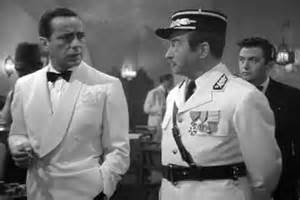
Are we to be shocked and surprised that the estimates for the pulltab revenues for the Vikings stadium were essentially made up by gambling interests and not verified by the governor and legislature? Perhaps we should be no more so than was Captain Renault in the movie Casblanca when he declared that: “I’m shocked, shocked to find that gambling is going on in here!” The story of the Vikings pulltab debacle unfortunately is a common occurrence, the result of pressure politics, money and politics, and the often lack of capacity or will of public officials to analyze and digest complex information. Continue Reading
So after two days of arguments before the Supreme Court, what are the prospects for legalization of same-sex marriage across the United States if not in Minnesota? The best guess right now is that there are not five votes to strike down all bans on same-sex marriage across the country but that instead potential inaction by the Supreme Court may be one of the best things to happen for those who support the right of gays and lesbians to wed. Continue Reading
Is American higher education closing its door to the poor and blue-collar students? According to a recent New York Times article the answer is yes. In “Better Colleges Failing to Lure Talented Poor” the Times discusses a recent study finding that poor but talented students are increasingly unlikely to apply to elite colleges, instead opting to attend community and weaker state schools that offer lesser prospects and educational challenges for them. The study suggests that schools are not doing a good job in enrolling blue-collar students because of poor recruitment techniques. Continue Reading
In a February 25-27, Star Tribune poll that was reported on March 6, “Fifty-three percent of Minnesotans say the state statute banning same-sex unions should stand. Only 38 percent say legislators should overturn the law this year, while 9 percent are undecided.” The is poll has generated significant discussion, with opponents of same-sex marriage contending that its results validate their argument that the rejection of the marriage amendment last fall does not translate into support for same-sex marriage in Minnesota. Supporters of same-sex marriage contend that the poll was flawed, pointing to the language or wording of the questions. Continue Reading
By March 15, we will have a better idea of what Minnesota Democrats in the legislature are made of. But if early indications are correct, timidity, cautious, and maybe disorganized are the words that best describe the DFL majority approach to governing this year. Continue Reading
Absent a dramatic turnabout in events, sequestration begins to kick in on March 1. What once was thought of as the dumbest of all dumb ideas now has the real possibility of coming to fruition and its impact on the economy will not be good since it is essentially an austerity program. But even without sequestration, US economic policy is already one of austerity, raising doubts about the medium and longer term prospects for American economic growth. Continue Reading