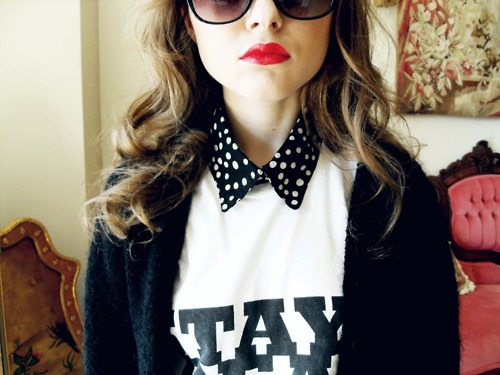
 In a Thought Catalog post titled “Why I Hate ‘Fashion,'” Chelsea Fagan defends herself against a commenter who told her to stop posting photos of her outfits, since—according to the commenter—Fagan will never be as stylish or interesting as professional fashionistas. It reminded me of a comment on one of my best-tweet roundups for The Tangential: “If you’re going to include comics/comedy writers on this list, you might as well just pull everything from Favstar or Witstream. I don’t see the point in including the general public when pretty much everything on there is bound to be funnier.” In other words, leave the tweeting to the pros.
There’s always been a tension between amateur and professional—from sports to theater. I’m in the middle of this debate as someone who both writes critically about the arts and creates various art-like things myself. As a critic, I’m expected to be pointed and (hopefully) insightful but also to discuss art in the proper context: reviewing community theater is different than reviewing professional theater. My view is that various developments—including, significantly, technological developments—are eroding the traditional distinction between pro and amateur, and that it’s a very good thing.
In the pre-Internet media world, getting your voice heard required having money, or being in the favor of people with money. If you wanted to be a fashion icon, you had to be in magazines and on TV. If you wanted to be a famous comic, same thing. You had to work your way up through clubs and small shows until you attracted the attention of someone who could give you wider exposure. Content curators and major media still have tremendous influence, but as people start getting more and more of their information from the Internet, it’s easier and easier for relatively inexperienced content creators to make a DIY splash. Chelsea Fagan pays as much for her Tumblr—that would be nothing—as Vogue does. “The general public” can tweet just as easily as Steve Martin can.
Commenters like the one Fagan was responding to, and the guy who commented on my best-tweets post, are responding to this development by telling the general public to sit down and shut up. Because an experienced fashionista will recognize that Fagan isn’t steeped in the fashion scene like Derek Lam is, and because an avid follower of professional comedy will notice when someone accidentally repeats a joke that a famous funny person made first, the amateurs should either get serious or get off the Internet.
That isn’t going to happen—and why would you want it to? These critics are undermining themselves in the very act of their criticism. If Chelsea Fagan is so irrelevant in the fashion world, why are you bothering to follow her and comment on her blog? If my best-tweet roundups are so infected with the subpar tweets of “the general public,” why aren’t you off reading Favstar like you think I ought to be doing instead of sharing some funny tweets by people who might not be on the Favstar radar? They’re up in our business because we’re putting ourselves out there and finding an audience, even if we’re relatively ignorant of the official establishments governing fashion and comedy. They may not like it, but they’re going to have to deal with it—specifically with reference to fashion, sites like Pinterest are going to make “amateur” tastemakers even more influential over the next few years.
We’re not totally ignorant, of course. Fagan obviously has some notion of what’s fashionable at any given time, and I have some idea of where to find professional comedians on Twitter. The general suggestion that amateurs should pay attention to the pros so as to learn from them is well-taken, but does the fact that Fagan has other things to pay attention to besides fashion mean she should stop posting photos of her outfits? Should I stop sharing funny tweets unless I’ve first taken the time to make absolutely sure that there isn’t anything funnier anywhere on Twitter? I think not.
I’m sorry for the inconvenience people like these commenters are caused by having to encounter sub-professional content on the Internet, but taking the decision about what’s fashionable or funny out of the hands of a couple of decisive arbitors has made the world a richer place. It’s not taking any skin off the backs of Anna Wintour or Jay Leno to say that I’m glad that in 2012, I get to decide for myself which looks are worth Liking and which jokes are worth retweeting.
This particular decentralization of taste has been spurred and accelerated by the Internet, but it’s not the first time in history that something like this has happened. In 19th-century Paris, a government-sponsored Academy was the official arbiter of what constituted “good” art—you had hardly a prayer of making it as a painter unless you worked in the detailed, historical-epic style the Academy favored, so you could be included in their big salon shows. But then, things changed. Paint got cheaper, more people became interested in buying art, and the centralized Academy system gave way to a decentralized system of independent dealers who had far more diverse ideas about what constituted “good art.” That opened a door for a few talented artists who didn’t follow the rules and were considered amateurs by the official establishment. Over 100 years later, you might still recognize some of their names: Cézanne, Monet, Van Gogh.
Look by Bebe Zeva
Comment