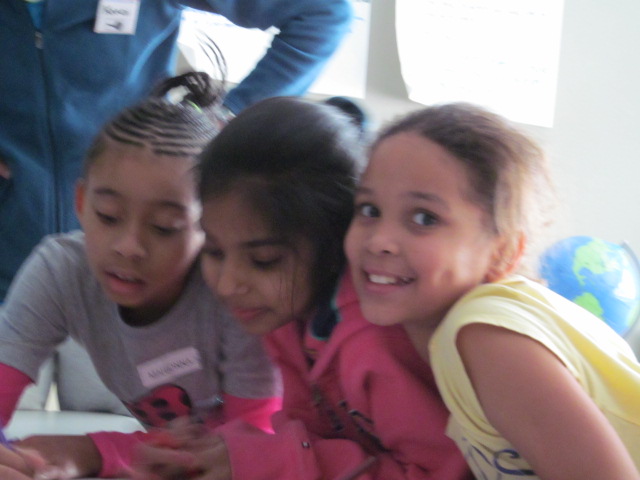
Now that it offers programs for kids from 3rd-12th grade, Fred Wells Tennis and Education Center Executive Director Margot Willet says Tennis2College is fully equipped to function as a “pathway of age appropriate on and off-court activities” designed to empower kids to achieve high school graduation and college enrollment.
Part three of a three-part series. (Read part one and part two.)
FULL DISCLOSURE: The writer does part-time communications work for Fred Wells Tennis & Education Center.
In doing so, it offers one much-needed solution to a problematic trend in the United States: the well-publicized national achievement gap between well-off white students and their low-income minority peers. Minnesota has some of the largest academic performance gaps in the country—and, as the Pioneer Press reported in 2012, the gaps are persisting despite overall increases in scores around the state.
After school programs like Tennis2College have been proven to make a difference in individual achievement, but they have to be done right. High quality programs share certain characteristics: they’re safe, educational, interactive, reflective, well-staffed.

Willett and Associate Director Tom Miller have tried to incorporate such characteristics into Tennis2College, which serves close to 100 percent low-income students—though they’ve had to improvise on many fronts.
“The fact that Tennis2College focuses on underserved youth starting at 3rd grade and works with them all the way to college is really unique,” says Tony Stingley, Director of Diversity and Inclusion for USTA Northern. “Most programs work with younger kids with tennis and/or life skills, but don’t connect the dots and track them all the way to entry into college.”
“I was asking USTA Northern Executive Director Mike Goldammer if there were any other programs nationally that we could model ourselves after,” says Miller. “He told me, ‘No, not really.’ This place is really unique; there aren’t many programs doing what we’re doing. There are a lot of tennis organizations, but most are about trying to get more people to play tennis. Ultimately, we’re about life skills programming, and getting kids to stick with our programs for the long haul.”
Though Tennis2College is quite a young program, staff is already seeing measured benefits in outcomes like academic attitudes and physical and emotional health. The real challenge, though, lies in sustaining those gains—helping students use short-term progress to achieve long term goals, like graduating from high school and getting into college.
“The face time we’re able to get with the youth is huge,” says Middle School Program Coordinator Justin Margolies. “We can form deep relationships with the youth we serve and directly improve their performances.”
“We’re slowly adding ways to fulfill that ultimate goal of having this be a pathway for kids to succeed in high school and develop post-secondary goals,” says Willett.
It’s Miller’s hope that expanding summer programs, strengthening ties with community groups and increasing outreach to parents will help retain kids through some of the trickiest—and most important—times in their young lives: the transitions from elementary to middle and middle to high school.
“The transition from eighth to ninth grade is an especially critical stage,” says Miller. “If kids don’t successfully make that transition, they’re much more likely to drop out. It’s a strategic time to work with kids in ultimately trying to help them graduate.”
“We have to do a better job of communicating with families directly,” says Willett. “We’ve started to send home a synopsis of what the student has done. We’ve tried having phone calls and family mixers. What we really need to do is go to family homes, and sit down with the student and say, ‘We want to invest in you and your child. This is what we can offer you.’ They have to understand why it’s important.”

Getting kids to show up for the next session, says Miller, is a matter of two-way communication. FWTEC is working on communicating with kids and parents, but kids also need a chance to communicate with The Center about what kind of programming they want to see. Middle and high school students were directly involved in shaping the Wells Academy curriculum—a win-win, as students got experience they could put on a résumé and FWTEC ensured that its programs were developmentally appropriate and engaging.
“We know the program will always be better if the kids help plan it,” says Miller. “It gets them excited and creates a sense of ownership. It makes them feel like it’s really their program.”
Which, of course, is the whole point—as Wells Academy Program Coordinator Ali King told high school students at the start of their third session. “This isn’t like school—we’re not teachers with our own agendas we have to fulfill,” King said. “This is really for you guys. It’s all for you.”
Learn more about Fred Wells Tennis & Education Center and Tennis2College at fwtec.org.
Comment