For years, I’ve been hearing about how an Asian diet is so much better for health and longevity than a traditional Western diet. These diets have, we’re told, cardiovascular, blood sugar, and weight loss benefits, and we’d be better off eating Asian than our typical diet.
Maybe it’s true. Traditional Chinese and other Asian foods are cooked with the clear intention of increasing health benefits. It’s certain that the Chinese have an interest in healthy eating, the same way Americans do. But sometimes, the theories of just what to eat and what to avoid differ from culture to culture.
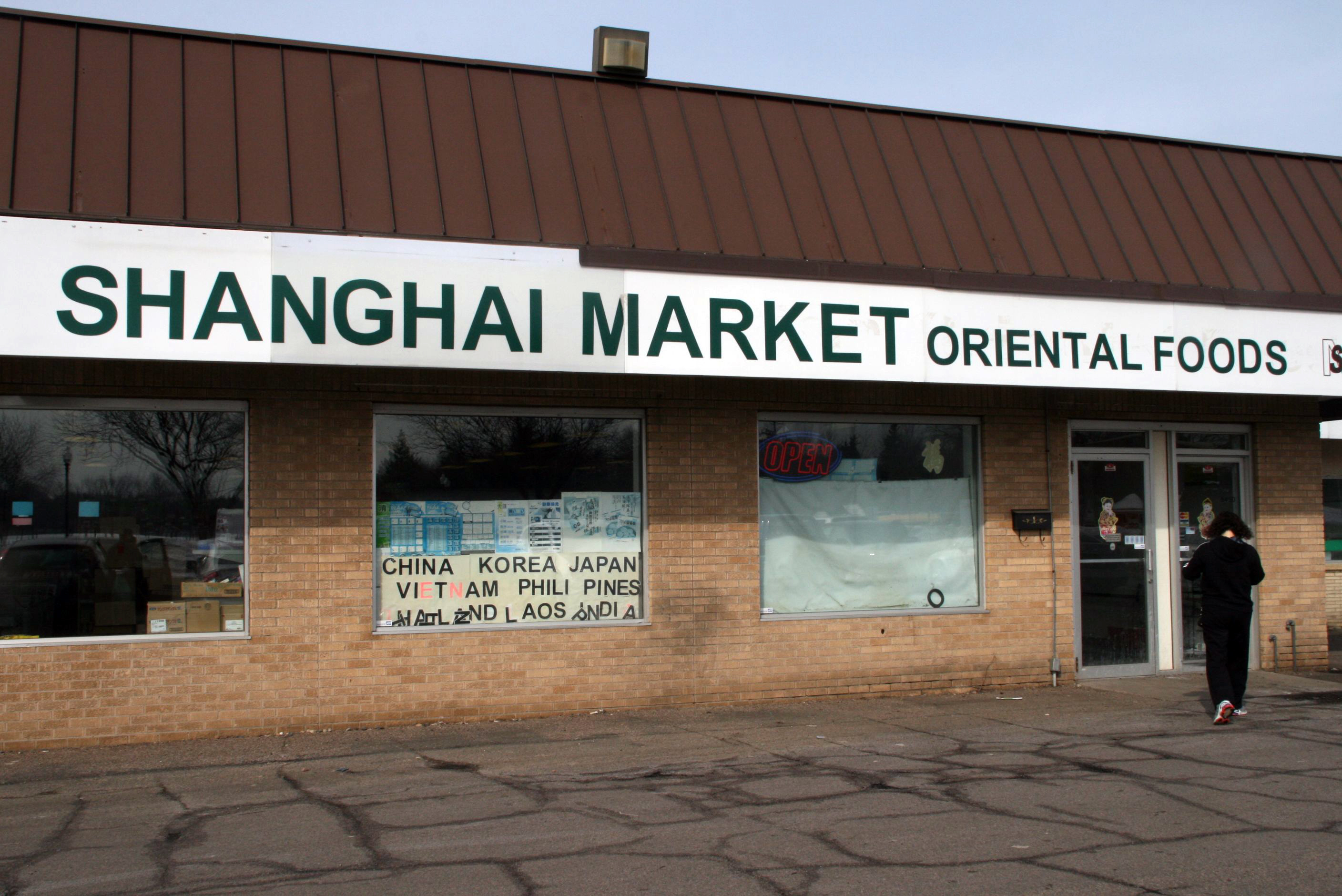
On a visit to Shanghai Oriental Food in Hopkins, I found a bit of that cultural clash. Ready to heat-and-eat glutinous fried rice, jars of peanut and wheat gluten, sweet desserts like mochi (sweet and colorful glutinous rice cakes), something called “Big Gluten Ball,” and various kinds of short grained sticky rice (sushi rice, wild pink sticky rice, forbidden black rice) are customer favorites.

“In the U.S., people have a different way to eat,” said Gui Yang, the store’s owner. “The Chinese make noodles and dumplings and when you eat, it’s healthy for the body. In America, people eat bread with a lot of salt and sugar. Then they put butter on it. In China, you don’t have that problem.”

Yang has owned Shanghai Oriental Food with her friend Linda Ximei for eight years. She moved to the Twin Cities from China nearly 30 years ago, after her husband got a job as a researcher at the University. She’ll apologize about her English, but she’s highly knowledgeable about the products her store carries and will answer questions in great detail.
Asians have their own ideas of healthy, she insisted, and she makes sure that Asian health food is available for her customers. There’s zakkokumai, a nutty, chewy ten grain mix of brown, red, black and sticky rice, millet, amaranth, quinoa, barley, oats and sesame seeds, used mostly to make a breakfast porridge or side dish. It’s high in fiber and nutrients, but, of course, it’s got gluten, mostly from the sticky rice.

“You can steam it like rice,” Yang says. “For a side dish, use one cup of the grains to 1.7 cups of water. For a porridge, use one cup of grains for seven cups of water and you can add meat and vegetables.”
There are other Asian health foods available. Pineapple vinegar, made by the Excellence Food Biochemical Co., comes in individual packets, ready to drink. Fruit vinegars are said to help reduce cholesterol, help with weight loss and enhance immunity. It’s a light tasting sweet/tart drink, a perfect little aperitif. Vinegar bars are starting to pop up all over Asia but they haven’t reached here, yet. Maybe soon?

There is a whole section of various instant jellyfish products including instant natural, pearl, jellyfish pieces and jellyfish head. I tried the “natural.” It’s all texture with a cartilage crunch. It needs a dressing—soy sauce, sesame oil, vinegar and a little sugar—to have any flavor at all. Does it have health food properties? Probably not. It’s 94 percent water. But then, it is gluten free.
The also store stocks a large choice of cooking wines, cooking and soy sauces, Asian soft drinks, various tofu products (regular tofu, yellow tofu, fish tofu, and tofu noodles) as well as Asian cookies, candy, crackers, and chips. They carry a limited selection of Chinese medicines and have a small but high-quality fresh produce section.

Karen, a regular at Shanghai Oriental Food, came to the counter with an overflowing shopping basket to chat with Yang. “I shop here because they have vey good quality,” she said. “It’s my favorite place. Here, you get the real stuff.”
Shanghai Oriental Food is located at 8450 Excelsior Boulevard (near Blake Road and Excelsior) at the St. Louis Park side of Hopkins. Look for the shopping center with the big Goodwill store sign.


Correction 3/20: When first published, this article contained some mistaken information about gluten in foods sold at Shanghai Oriental Food. These errors have been corrected.
Comment