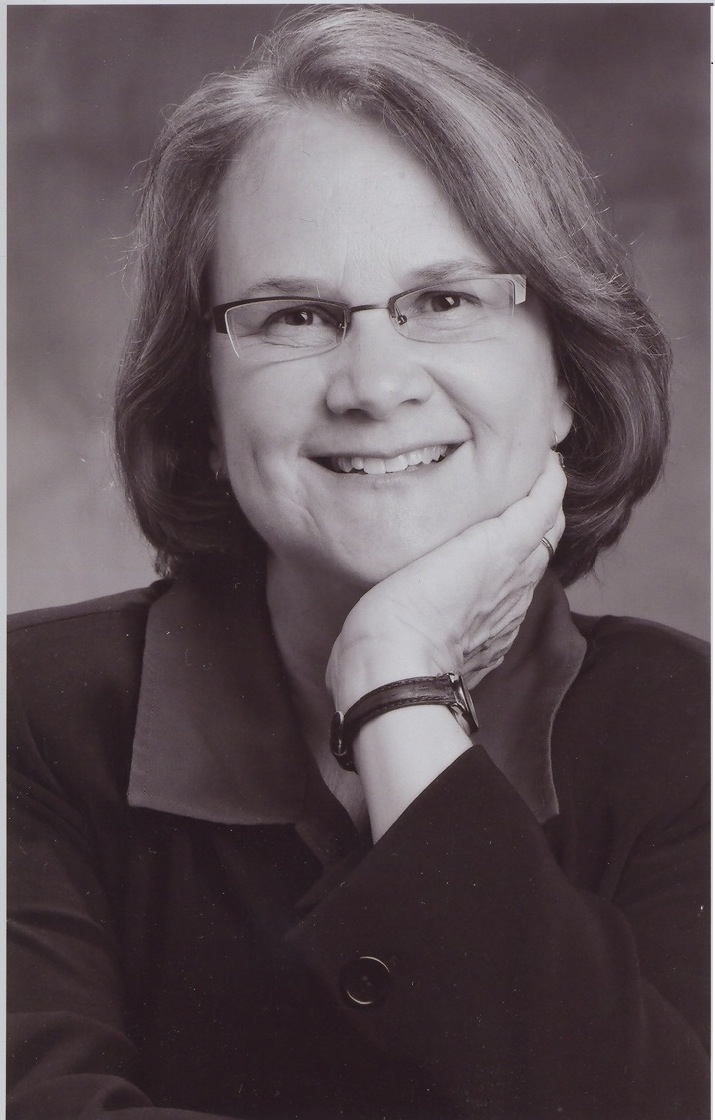
Ask any educator what the biggest problems facing Minneapolis and St. Paul schools are, and the achievement gap will be among the top three answers. As a parent, former teacher, activist, school board member and advocate for children, Pam Costain has both a realistic grasp of the difficulty of closing the achievement gap and a commitment to keep trying.
The achievement gap, defined simply, is the gap in test scores between white students and students of color. It’s a gap that persists at all grade levels, in both Minneapolis and St. Paul, and throughout the state of Minnesota. The Daily Planet has published numerous articles about the achievement gap and about successful and less successful attempts to close it.
Costain resigned from the Minneapolis board of education last year to take on leadership of AchieveMPLS, a non-profit partner of Minneapolis Public Schools (MPS). In a December 17 talk to the Committee on the Achievement Gap, Costain posed three key questions for the community:
- Do we really, as a community, understand the seriousness of the achievement gap in the Twin Cities and in the state of Minnesota? I don’t think we do. I don’t think the state has any concept of both the amount of failure we have in educating certain kids and the consequences for those kids’ future.
- Do we really believe as a community that all kids can learn? My perspective is that in liberal progressive Minnesota, we don’t. We think kids can’t learn because they are poor, because they are children of color, because they have another language spoken at home …
- What would our educational system look like if the needs of children were at the center of every decision we make?
| Committee on the Achievement Gap
The Committee on the Achievement Gap was convened by former Minneapolis Mayor and Congressional Representative Don Fraser under the sponsorship of the DFL Education Committee, and has operated as a non-partisan forum for all people concerned about the achievement gap. A December e-mail from current co-convenors Don Fraser and Rev. Grant Abbott announced: “First, we are expanding to St. Paul. We have had St. Paul participation from the outset, but we have not held meetings in St. Paul. Moving forward, we plan to hold two meetings a month, one in Minneapolis and one in St. Paul. All are invited to attend both meetings. “The St. Paul meetings will be held at noon on the last Friday of the month at House of Hope Presbyterian Church, 797 Summit Avenue. We’ll kick-off the St. Paul meetings on January 28 with a presentation by Mike Anderson, executive director of the St. Paul Public School Foundation. (The St. Paul Public School Foundation is co-hosting the event.) “The Minneapolis meetings will continue to meet at University Lutheran Church of Hope, 601 13th Avenue SE. We will aim for the second Friday of each month. [On January 21, Duane Benson, Executive Director, Minnesota Early Learning Foundation (MELF), will talk about the work of MELF including the active support of “Parents Aware” and the use of scholarships to fund quality early childhood education for eligible families.] “Second, we welcome the opportunity to partner with the St. Paul Area Council of Churches. The Council will help host Achievement Gap Committee events and be our fiscal agent. The Council has a long-standing interest in the achievement gap, and sponsors several programs for Native American and African American youth. Our Committee will continue to operate independently, not as a Council program. The Achievement Gap Committee will continue to provide the same quality, nonpartisan information and networking opportunities it has in the past.” For information or to get on the email list, contact Don.M.Fraser@gmail.com or GAbbott@spacc.org |
Costain looked back to 2005-2006, when she won a seat on the school board and when the district was losing enrollment at the rate of 2,000 a year. Minneapolis Public Schools (MPS) has an enrollment of 32,000 now, compared to 50,000 just one decade ago. The loss of students has slowed dramatically, however. During the most recent two years, enrollment has stabilized, with a decline in enrollment of 100 in one year and 200 in the other year.
One result of declining enrollment is excess infrastructure, Costain said, with empty or underutilized school buildings and “one of the most awful things you have to do as a school board member,” painful decisions of closing school after school.
In 2005, the school system also saw the beginning of “a profound decline in state revenue,” leading to a present state education commitment that Costain characterized as “at best mediocre.”
During the past five years, two key MPS commitments were increasing quality of education across the system and an explicit commitment to equity – that “all schools will be great schools for all kids.” That work, she said, is nowhere near done. “At a time when we wanted to make huge reforms, we were also in the most serious budget crisis we have ever been in. … The structural problems of our state are not going away, they are deepening.”
Some steps on the road to reorganization have been taken: a big, though still not fully-realized, commitment to parent-community engagement; exploration of new structures including charter schools, teacher-led or self-governed schools, and other models; and the difficult completion of boundary changes to ensure a clear pathway from kindergarten to 12th grade for all students, with “choice, but limited choice.”
People, however, are the district’s core asset and challenge. “If you don’t have effective principals and if you don’t have quality teaching, you can bag it.”
The problem with principals was long-standing. The board “had to recognize – it’s painful to admit even now – we had never had an evaluation system for principals. We had never systematically evaluated principals. When teachers said to us, ‘You have principals who are not performing well,’ they were right, but we had not way to deal with that.”
Costain said that the district now must tackle the teachers’ contract. “We had 27 years of the district ceding control to the union,” she said, with a 220+ pages contract that allows teachers to decide on hiring and placement, removing control from principals and senior administrators. “When we lost control of teacher assignment, we lost control of lots of ability to turn around schools.”
“It is very difficult to communicate with the public about what the public institutions are actually doing,” Costain said, and this is especially true for public schools. “In schools, you are making decisions about people’s most precious resource. And nobody has any perspective on that – it’s their kid. How do you talk to a parent about their child, but also about the fact that every single child in this city is as important as theirs? “
Public education concerns not only the individual students, but also the community. “There are no easy answers for public education, especially in the urban core,” Costain said. Public education is intimately involved with “the hard questions for communities to deal with – race and class and disability and are we going to live together as a community or as separate communities – it’s all happening in the public schools.”
“Changing a large public legacy institution is really difficult,” Costain said. “I had always been an activist and an agitator, and I knew exactly what someone in government should do. And then I got there. It’s really hard to change, even when most people want the same thing, when they agree on direction. And change can be stopped by one or two people who don’t get it or don’t do their job.”
Despite the problems, “We still live in a community that cares about children,” Costain said, citing overwhelming voter support for increased school tax levy increases, with “a white, affluent, middle-class voting to support children who don’t look like them.”
“We live in a generous community. We have to create the synergy” for success in Minneapolis Public Schools and students, Costain concluded. “It’s even in our crass self-interest, as well as our moral interest, to get this right.”
Comment