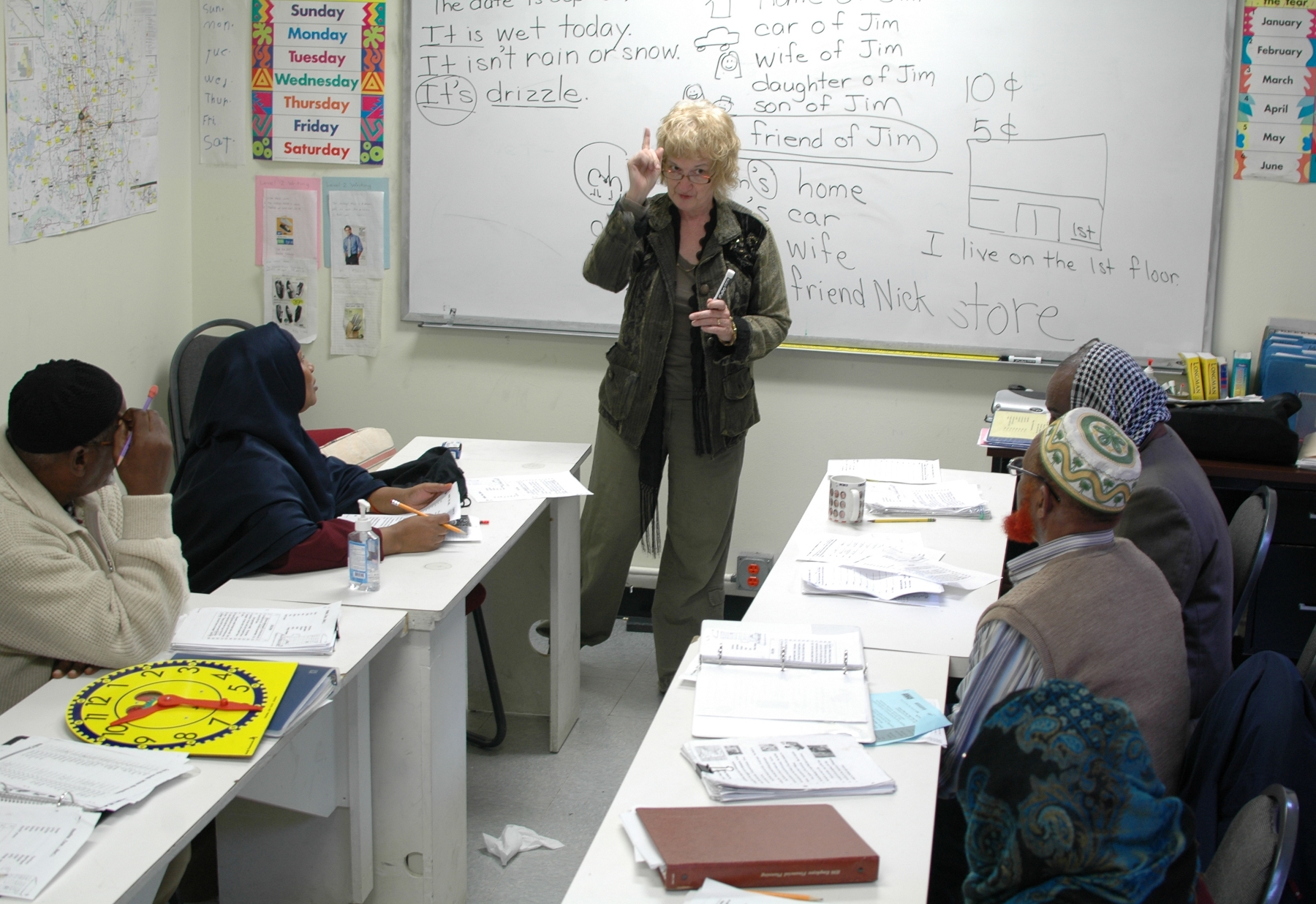
I visited Karen Amit’s English as a Second Language classroom at Riverside Plaza. She uses repetition, encouragement and, as she puts it, lots of big-gestured “Italian talking” to reach her students.
I’m researching a multimedia project on the adult ESL program, which is based out of the Riverside Plaza Tenants Association (RPTA) office. It serves close to 400 students a year, according to RPTA Director Fredda Scobey and Interim Education Coordinator Craig Erickson. This number includes men and women from Somalia, Ethiopia, South Vietnam and other countries. They range from 18-year-old job seekers to lifelong learners as old as 80.
Amit’s introductory immersion course meets every weekday morning from 9 to 12. About ten students attend. They include gray-haired men and mothers in their 20s. Many of them, Amit said, never experienced formal schooling before this. Some students nurse injuries from advanced age, or from war-related wounds they sustained in their home countries. Amit brings several throw pillows so these students can pad their chairs for extra comfort.
Amit said much of her efforts go toward preparing students for a standardized test that’s tied to the program’s funding. She makes sure, though, that she weaves practical information into these lessons. Her students learn how to deal with merchants, landlords and potential employers, and to advocate for themselves and their families.
Later this week I will attend an advanced class taught by John Morson, an ESL instructor who’s been working in the Cedar-Riverside community since 2001. I’m very excited to get to know him and his students. In the meantime, I leave you with a photo from Monday.
 High-rise ghettos or urban villages? High-rise ghettos or urban villages?Are the Riverside Plaza and Seward high-rise apartment complexes, home to low-income residents for more than 35 years, “beyond merely shabby” and filled with crime? Or are they “a vital and fascinating mix of cultures … a series of villages in the city with the opportunity to begin life in the United States among one’s countrymen?” Our series highlights concerns and facts, featuring the voices and stories of people who live and work in the communities. Click here for links to all of the articles in the series. |
Comment